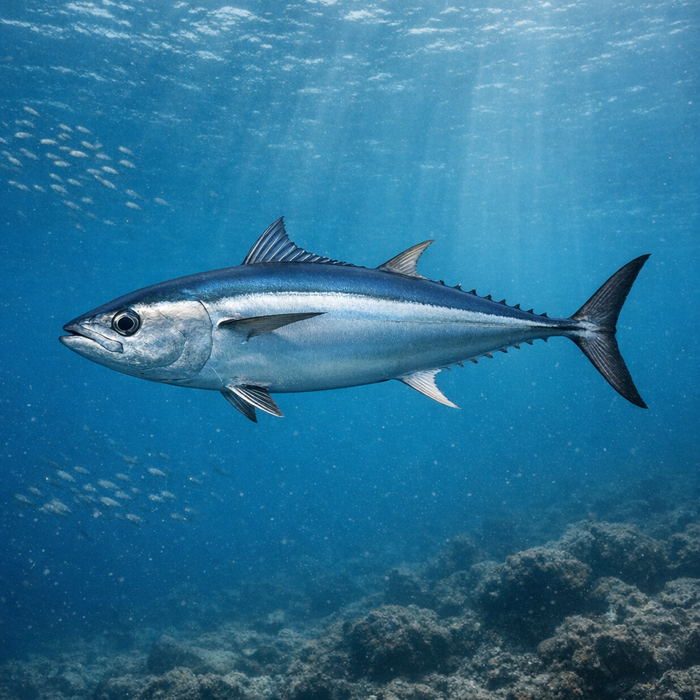
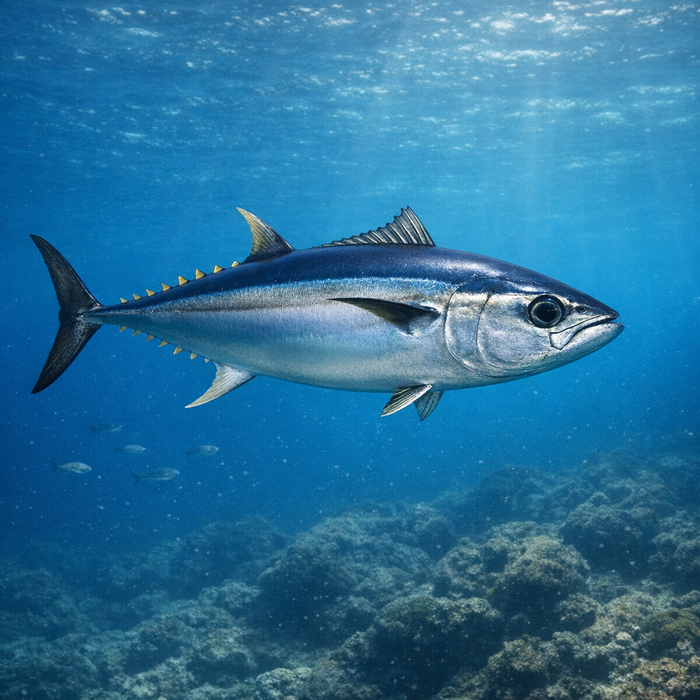
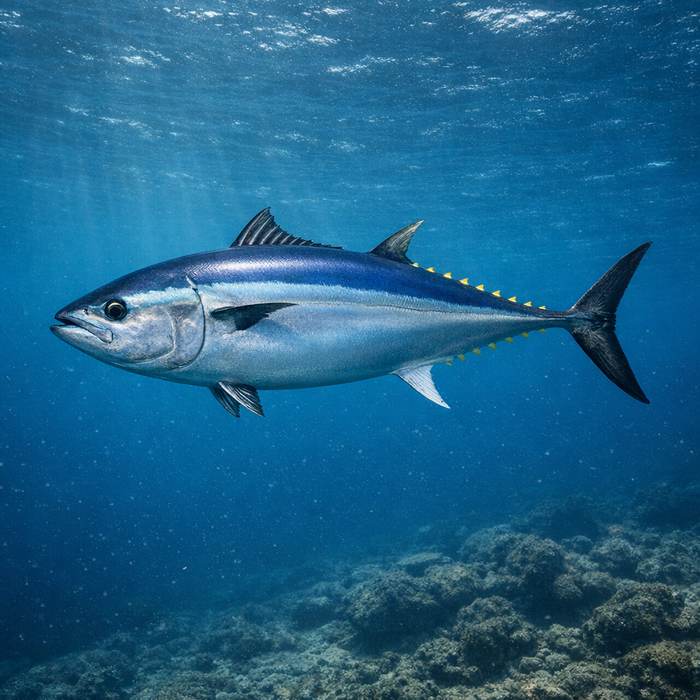
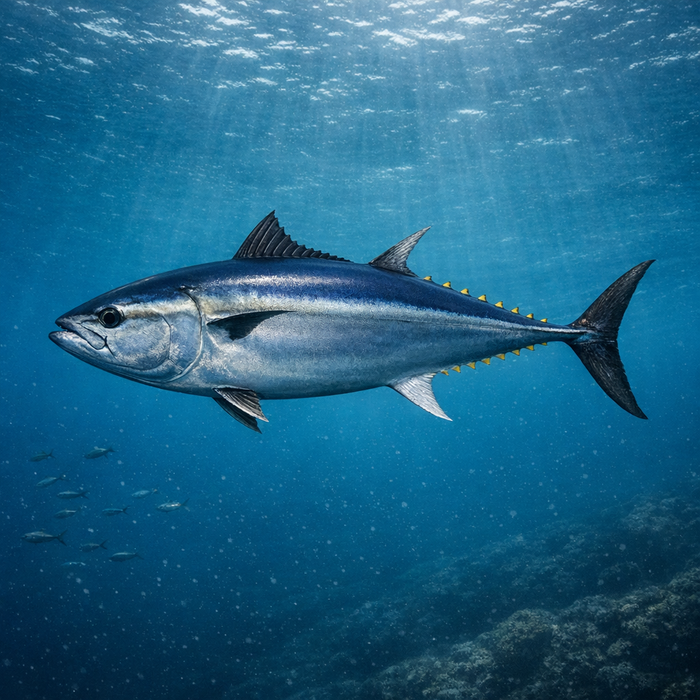
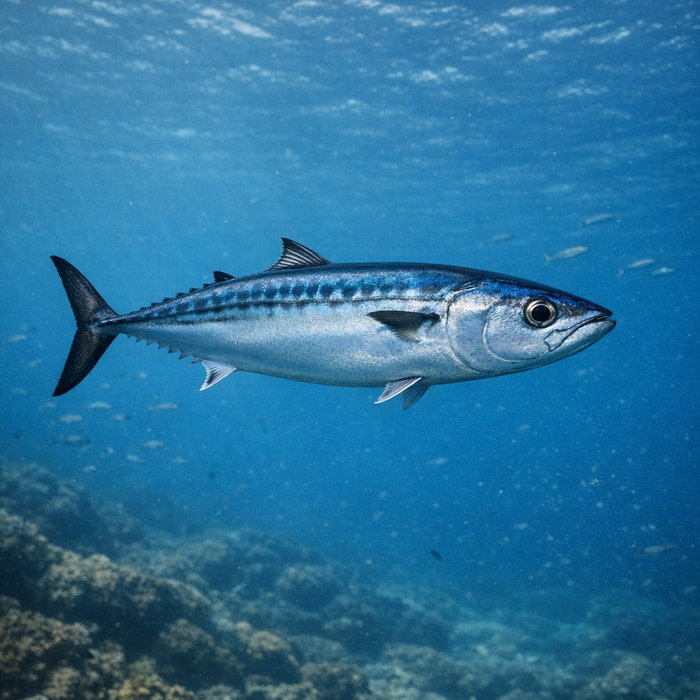
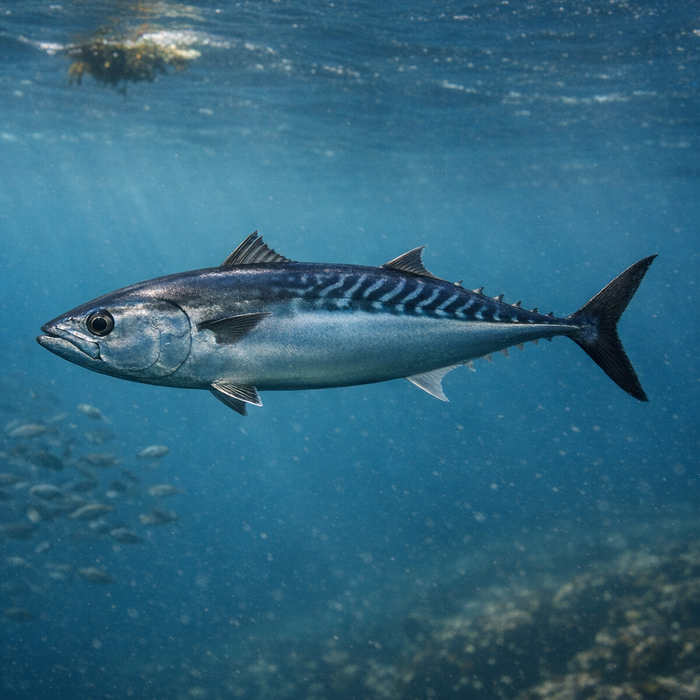
Slender tuna (allothunnus fallai): Skinny frame, big-engine attitude, southern bluewater troublemaker
Introduction
If albacore are the gentleman’s tuna, the slender tuna is the wiry cousin that sneaks into the spread, steals a lure, and vanishes before you realize it was something different. This Southern Hemisphere specialist packs classic tuna speed into a lean, laser-shaped body. It is underhyped, underdocumented, and seriously fun when you bump into a school offshore. If you want Slender tuna facts that actually help on the water, start with this: short pectorals, dark meat, loves cool bluewater edges.
What Makes the Slender tuna Unique?
First, the name fits. Compared to chunkier tunas, the slender tuna is narrow through the shoulders and built to slipstream. It is also the only member of the genus Allothunnus, which makes it a tuna oddball in the best way. Finally, that pectoral fin length is your quick ID: unlike albacore, the pectorals stay short and do not reach past the second dorsal origin. When a school erupts on micro-bait and your 4-inch feather disappears, this is the torpedo likely responsible.
Habitat & Global Range
Think cool-temperate bluewater below the equator. The slender tuna prefers the boundary lines where currents collide, water temps sit on the fresher side for tunas, and bait stacks midwater. Around New Zealand, southern Australia, South Africa, and the west coast of South America, it runs with fronts, bird life, and squiddy marks on the sounder. Classic Slender tuna habitat is offshore, far from structure, with action pinning to temperature breaks, color changes, and current seams rather than reefs or ledges. On the vertical, it works the upper hundreds of feet, roaming from surface busts down into midwater layers where lanternfish and squid hang.
Behavior & Temperament
The slender tuna is a roving opportunist with decent aggression but short attention spans. It schools tight, hits small offerings, and then slides off when the feed changes depth. When hooked, it fights like a scaled-down albacore: fast first run, dogged mid-column circles, and plenty of heart for its size. Trolling small skirts, feathers, or chrome spoons lights them up. They also snap metal jigs yo-yoed through meter marks, especially when the sun is higher and birds settle. If your spread is too large or heavy, they shy off; keep it compact and zippy.
Ecological Importance
This species is mid-chain muscle in cold-temperate pelagic systems. Slender tuna funnel energy from mesopelagic forage like squid and lanternfish up to larger predators, including sharks and marine mammals. Their schooling and fast metabolism keep them pinging between layers, which helps connect surface and midwater food webs. They compete with and sometimes mingle among albacore, creating a dynamic predator pack that shapes forage behavior over big swaths of ocean.
Conservation & Environmental Pressures
The slender tuna is listed as Least Concern in part because it remains lightly targeted and widely distributed in southern waters. Most landings occur as bycatch in tuna longline fleets and mixed-troll fisheries aimed at albacore. That does not make it bulletproof. Shifting fronts, warming seas, and prey redistribution can rearrange where and when anglers encounter this fish. Data is sparse compared to headline tunas, so trends take longer to detect. Responsible handling, quick bleeding, and selective gear choices will keep release mortality low when you are not planning to keep fish for the table.
The FishyAF Take
The slender tuna is the blue-collar bonus of southern offshore runs. Nobody books a trip just for them, yet when they crash tiny feathers in a frothy pack, everyone smiles. They reward anglers who read current edges, scale down presentations, and troll a touch faster than they would for bigger, moodier tunas. Want Slender tuna facts that matter? Rig a couple 4- to 6-inch skirts, keep one jig rod hot, and work the cold side of a color break with birds picking. If a fish with short pectorals, golden finlets, and darker meat turns up, you just met the most underappreciated tuna in the ocean.