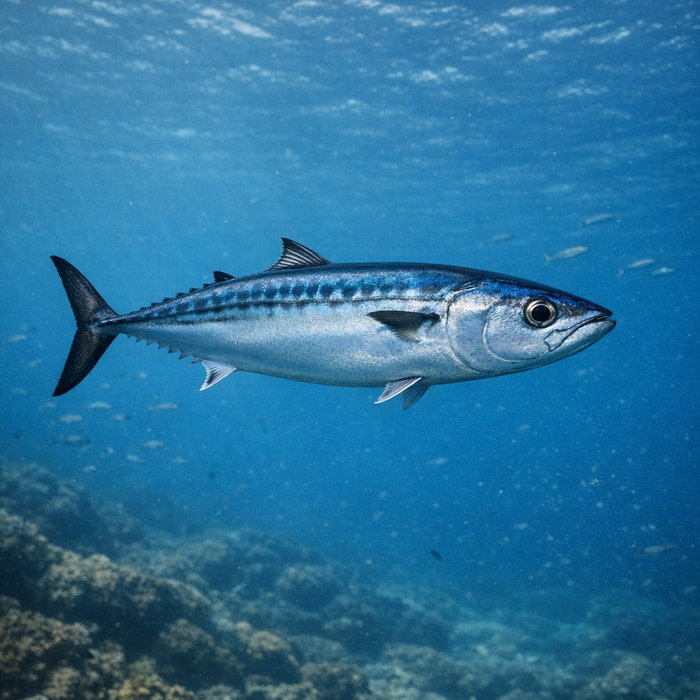
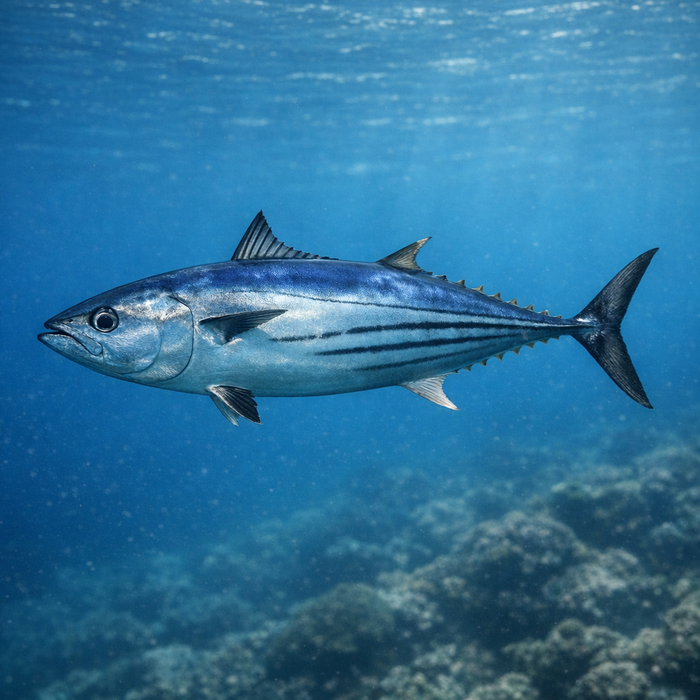
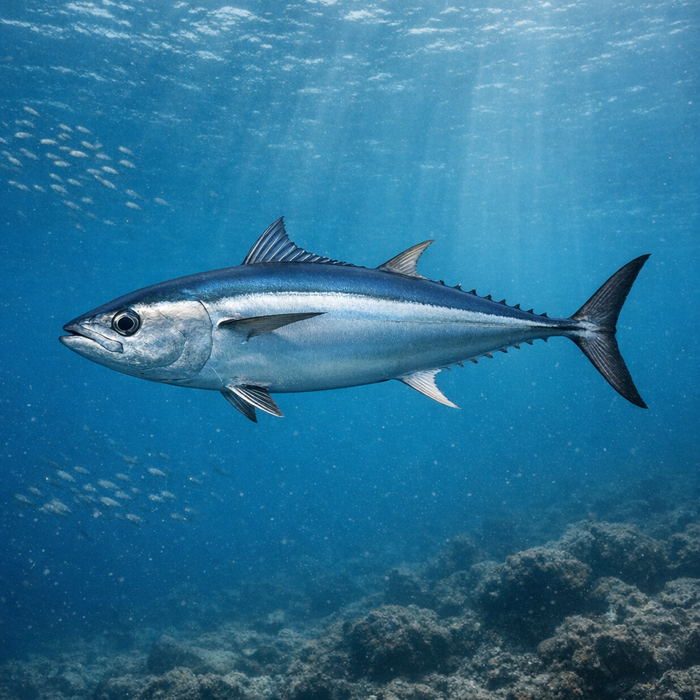
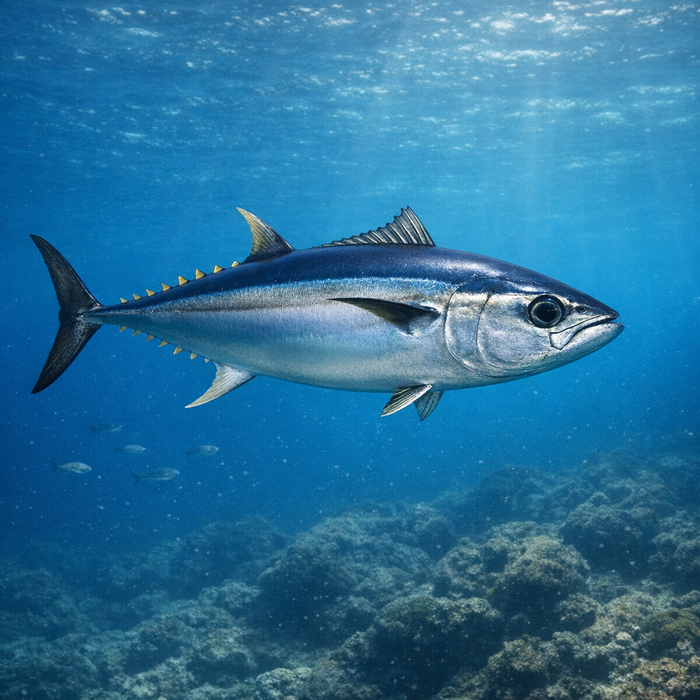
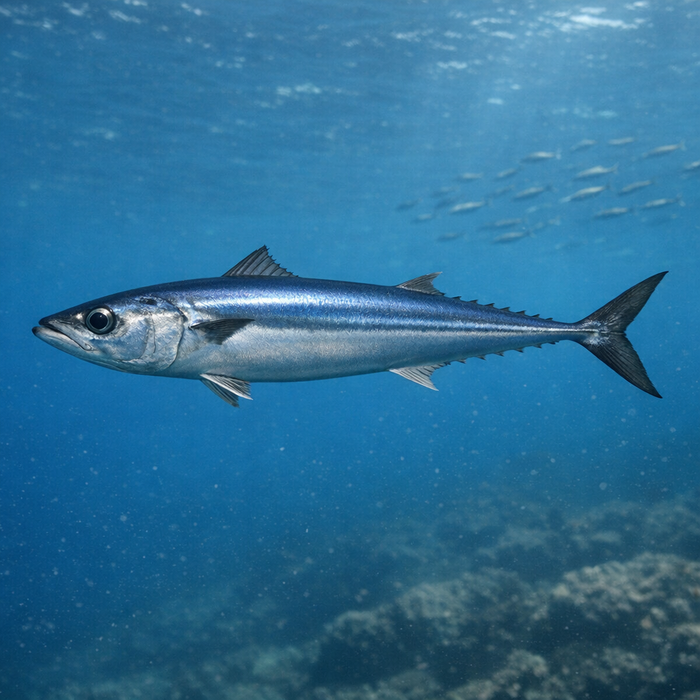
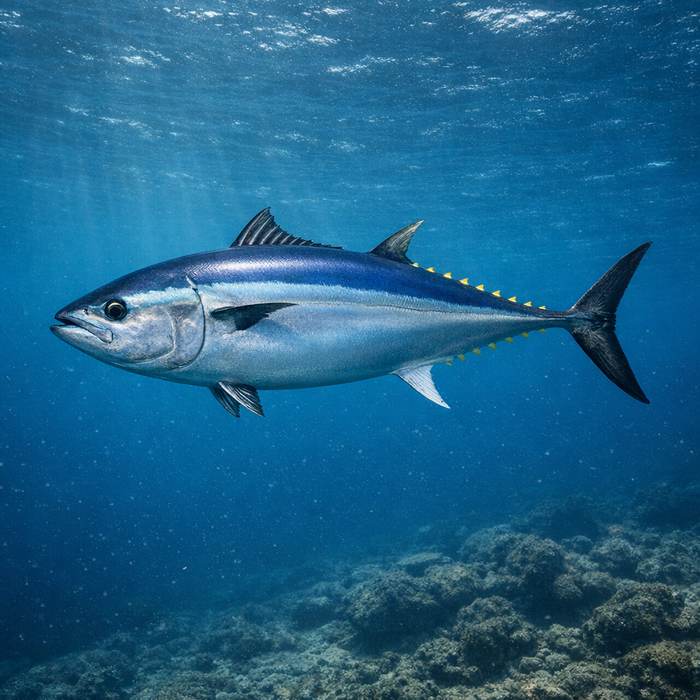
Frigate tuna (auxis thazard): Small-Bodied Tuna, Big-League Chaos
Introduction
Blink and you’ll miss them. The frigate tuna is a pint-sized rocket that turns glassy seas into boiling chaos the moment it finds bait. They aren’t giant bluefin, but they bring the same bad attitude per pound, slashing micro-bait and ripping drag like they own the rip line. If you want speed, foam, and a legit light-tackle workout, this is your fish.
What Makes the Frigate tuna Unique?
First, frigate tuna lack a swim bladder, so the only thing keeping them suspended is relentless motion. That’s pure tuna design: hydrodynamic body, finlets, and a collapsible dorsal fin that clicks down to kill drag. Second, they’re incredibly selective and keyed to tiny forage. Match the hatch with small metals or feathers and you’ll look like a genius; throw a big lure and you’ll just be throwing. Finally, they’re often misidentified as bullet tuna. Frigate tuna carry more gill rakers, and a slightly different body profile, which matters when bragging rights or records are on the line.
Habitat & Global Range
If there’s a gradient line, a temperature break, or a floaty thing gathering bait, there’s your frigate tuna habitat. They haunt tropical and subtropical oceans worldwide, from nearshore bluewater to modest offshore grounds and FADs. Their home is the top half of the water column, usually right where current stacks tiny prey. Think rips, tide lines, channel edges, and drift lines off reef drop-offs. They’re open-water roamers that zip along in tight packs, sometimes shoulder to shoulder with skipjack, kawakawa, and mackerel. Translation: stay mobile, read the water, and trust the birds.
Behavior & Temperament
Frigate tuna operate in overdrive. One second it’s calm; the next, the surface detonates as they blitz thumb-sized anchovies. They’ll pop up, feed hard for minutes or seconds, then ghost out and reappear 200 yards away. Leaders too heavy or baits too big get ignored instantly. When hooked, expect sprinting runs, tight circles at color, and a fight that outpunches their size. They’re classic schoolers with occasional wolf-pack peel-offs, and they love pressure edges where bait gets trapped.
Ecological Importance
These fish are mid-tier predators that vacuum up small fish and crustaceans, converting bait into pure speed. They, in turn, feed larger pelagics, sharks, marine mammals, and birds. Their schooling behavior and appetite help shape pelagic food webs around current edges and floating structure. If you’re hunting frigate tuna facts, start with this: when they show, they broadcast exactly where the energy and biomass are concentrating in the bluewater.
Conservation & Environmental Pressures
Frigate tuna are listed as Least Concern globally, but they aren’t invisible to pressure. They’re taken in artisanal and commercial fisheries, often as bycatch in sets targeting skipjack or mackerel. Floating-object fisheries can ramp up catch rates. Climate-driven shifts in currents and water temperature can shuffle their distribution, re-drawing maps of reliable action. Good handling, quick icing, and local compliance go a long way. As with any small tuna, the story can change fast regionally, so keep an eye on local trends.
The FishyAF Take
Frigate tuna are proof you don’t need a 500-pounder to feel like a hero. Spot birds, hit the throttle, slide into casting range, and throw something little that shines and zips. That’s the entire playbook, refined. They’re honest fish with zero patience for sloppy presentations. If you love reading water, reacting fast, and making precision casts into moving targets, you’ll click with this species. And if you don’t ice them immediately, you’ll learn a different, stinkier lesson just as fast. Consider yourself warned. For pure light-tackle fun and photographic surface mayhem, the frigate tuna is wildly underrated.