Giant Freshwater Stingray (Urogymnus polylepis): The River Bottom Has a Heavyweight Champion
Some fish announce themselves with splashes. The Giant Freshwater Stingray lets the river hide the evidence. Beneath the brown water sits a broad, flattened predator capable of reaching extraordinary dimensions, with a trailing whip of a tail and a venomous barb nobody should treat casually. A Cambodian female documented in 2022 weighed 300 kilograms, or about 661 pounds. That is measured reality, not somebody’s expanding fishing story. For anglers, this species represents a rare combination of immense size, difficult handling, and serious conservation responsibility. The interesting question is not simply whether you can hook one. It is whether you should, and whether your team can release it properly.
What Makes the Giant Freshwater Stingray Unique?
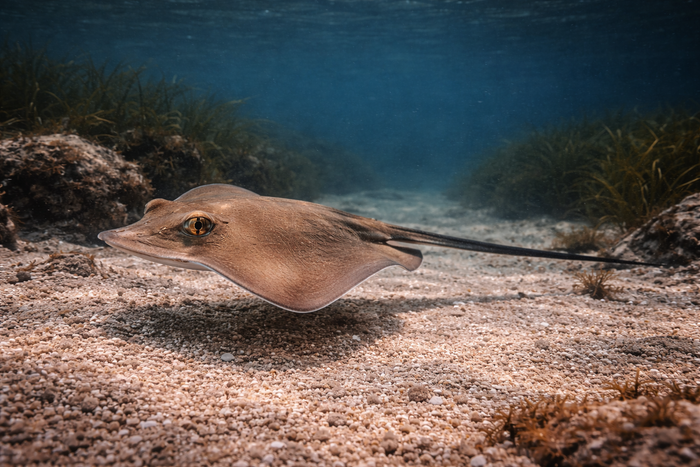
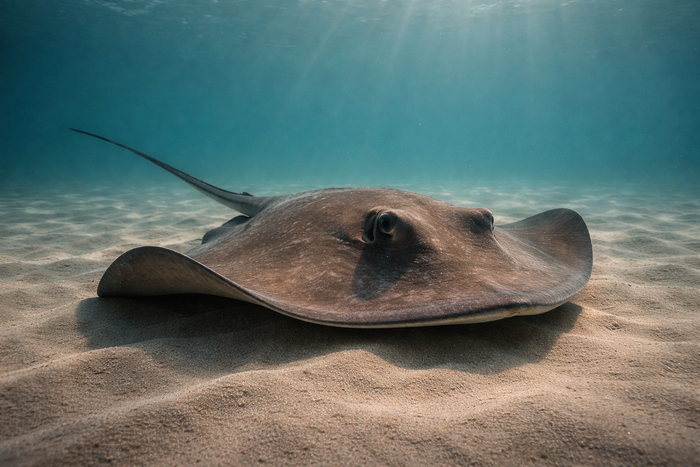
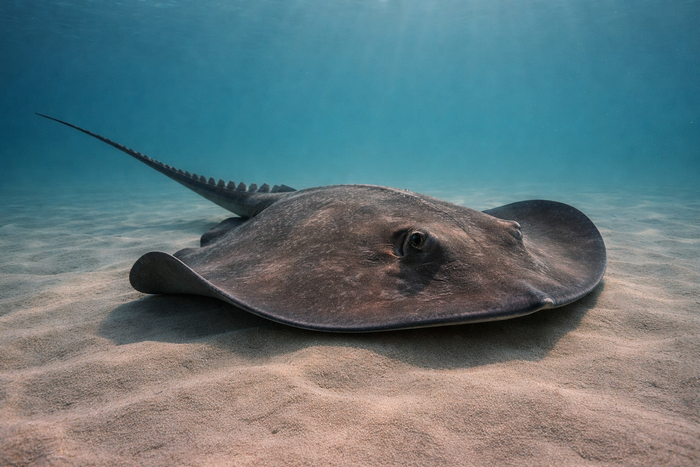
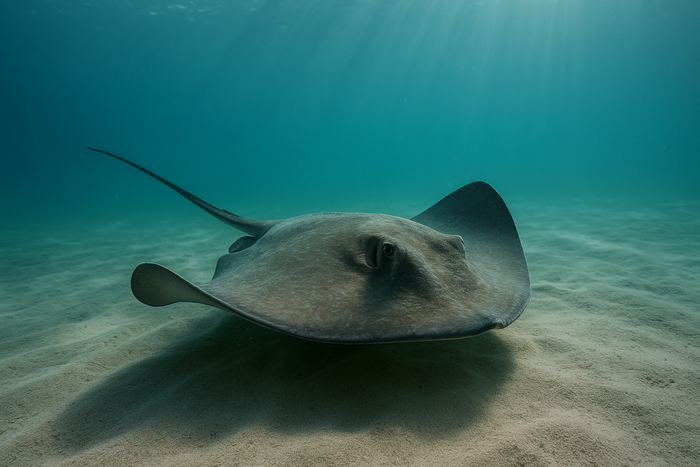
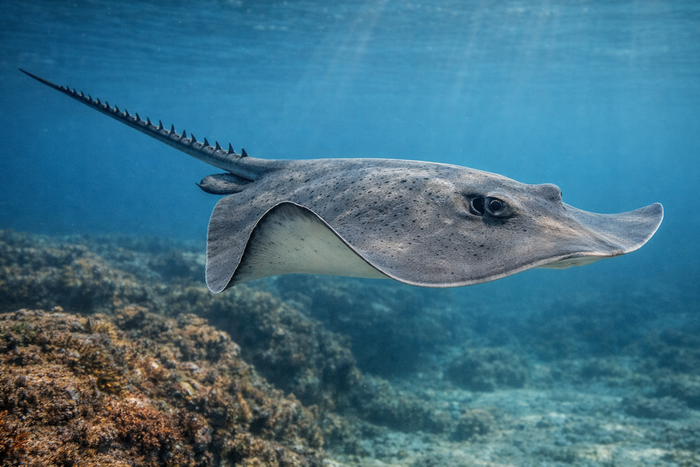
The Giant Freshwater Stingray makes its strongest impression through scale and shape. Its enormous pectoral disc spreads across the bottom rather than presenting the familiar outline of a big river fish. The documented Cambodian giant measured 2.2 meters across and 3.98 meters from snout to tail. Width and total length are different measurements here, and confusing them produces spectacularly bad size claims.
Its concealed lifestyle is equally impressive. Spiracles behind the eyes draw in water while the animal rests against the substrate, and electrical sensing helps it locate prey in conditions where visibility can be poor. Add a powerful defensive sting to that low-profile body and you have an animal built for the bottom, not for an angler’s convenience.
Habitat & Global Range
Giant Freshwater Stingray habitat includes large tropical rivers and brackish estuaries. Freshwater is central to its identity, but the name should not make you ignore tidal reaches or river mouths. Research in Malaysia documents use of freshwater, estuarine, and coastal portions of major river systems. Sandy bottoms feature prominently in habitat observations. This is not exclusively a deep-hole specialist; shallow sandbars also appear in reports.
Its distribution spans Southeast Asia, with additional documented occurrences in South Asia. Thailand’s Mae Klong, Bang Pakong, and Chao Phraya rivers, Cambodia’s Mekong, and Malaysian Borneo are important parts of that picture. Indian research has documented mature animals and pregnant females along the northeastern coast. However, occurrence does not establish legal fishing access, dependable abundance, or permission to target the species. A famous river name is not a fishing license.
Behavior & Temperament
The Giant Freshwater Stingray is a bottom-associated predator, not a freshwater villain waiting to attack swimmers. It is generally described as nonaggressive. Its danger comes from a defensive weapon that becomes particularly relevant when people crowd, restrain, or mishandle the animal. Quiet temperament does not mean safe handling.
Movement is more complicated than the image of a permanently parked giant suggests. Acoustic tracking in the lower Mae Klong found differences among individuals: some showed strong residency, while others were more mobile. Tagged rays also used upstream areas more during the rainy season. Those findings support local, seasonal movement, not a universal migration schedule for every population. For anglers, the lesson is simple: yesterday’s productive reach is not a permanent appointment.
Ecological Importance
The Giant Freshwater Stingray feeds on bottom-associated invertebrates and fishes, placing it within river food webs as a substantial predator. Its ecological value is not dependent on being entertaining to catch. It belongs to the living system beneath the boat, where prey availability, sediment conditions, and water quality all matter.
Protecting this ray also requires attention to whole river reaches rather than isolated capture spots. Malaysian findings highlight the importance of considering connected freshwater and coastal habitats together. Conservation that stops at an administrative boundary can miss habitat the animal actually uses. There is more to saving a giant than declaring the deepest pool special and ignoring everything upstream.
Conservation & Environmental Pressures
The Giant Freshwater Stingray is globally Endangered. Fishing pressure, incidental capture, pollution, and habitat degradation threaten populations already difficult to monitor. Dams and river modification add concerns about habitat connectivity and altered river conditions. Its impressive size does not make it resilient to a net, a contaminated discharge, or a damaged river system. Bigger is not the same thing as bulletproof.
Reproductive knowledge remains incomplete, making confident claims about recovery rates inappropriate. Research in India recorded pregnant females carrying four to fifteen embryos, demonstrating that simple, fixed litter-size claims can be misleading. Protection must accommodate that uncertainty rather than pretend the biology is settled.
For any permitted specialist fishing, prepare the release before deploying bait. Keep the animal submerged, avoid the barb, and never lift it by the tail. Authorization and competent handling matter more than a photograph.
The FishyAF Take
This is an expert-level encounter, not an oversized version of ordinary bottom fishing. Heavy equipment is part of the recommended approach, but tackle cannot substitute for permission, experienced support, or a realistic release plan. If those pieces are missing, leave the bait in the cooler.
Our take: the most impressive part of meeting this ray should be watching it disappear again. No dry-bank victory lap. No tail-grabbing improvisation. No pretending an endangered animal owes you a dramatic ending. A clean encounter, useful observations, and a submerged release beat a chaotic trophy shot every time. The river’s heavyweight deserves better than becoming evidence that somebody brought a big reel and a small amount of judgment.