Roughtail Ray (Dasyatis centroura): The Rough-Edged Phantom of Coastal Depths
The Roughtail Ray, scientifically known as Dasyatis centroura, is a striking marine creature that commands attention with its distinctive rough-edged tail and graceful, wing-like pectoral fins. This species is a member of the stingray family, inhabiting temperate coastal waters and known for its impressive size and elusive nature. If you’re diving into Roughtail Ray facts, prepare to meet a species that blends raw power with subtle elegance beneath the waves.
What Makes the Roughtail Ray Unique?
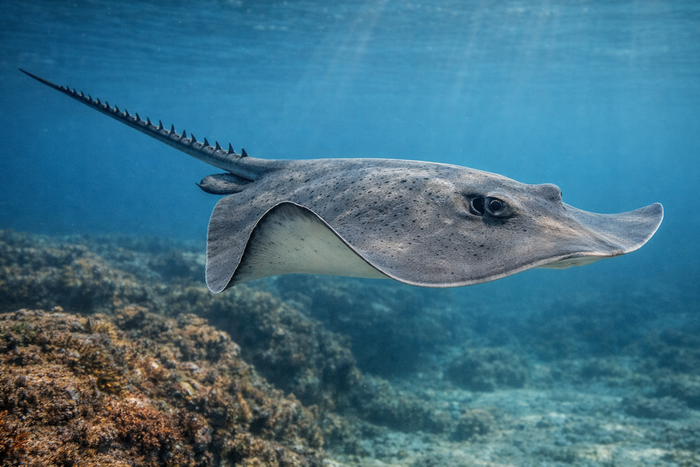
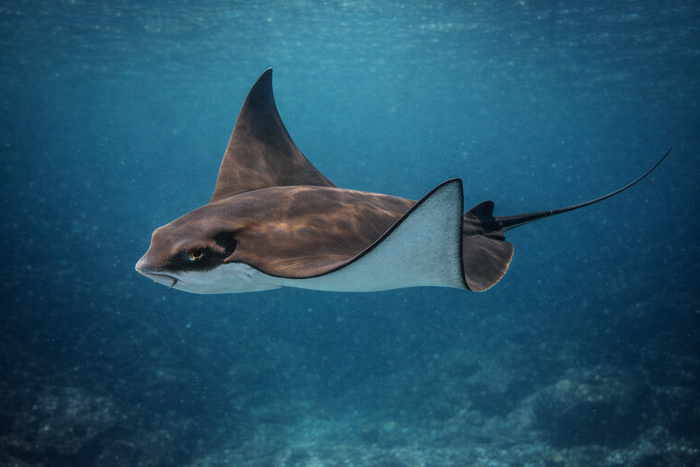
The Roughtail Ray stands out primarily because of its tail—thick, muscular, and covered with rough, thorn-like dermal denticles instead of the smooth, whip-like tails typical of many other rays. This tail isn’t just for show; it serves as a formidable defense mechanism, equipped with venomous stinging spines that can deter predators and unwelcome divers alike. Unlike some rays that rely on camouflage or speed, the Roughtail Ray’s rough tail is its signature weapon.
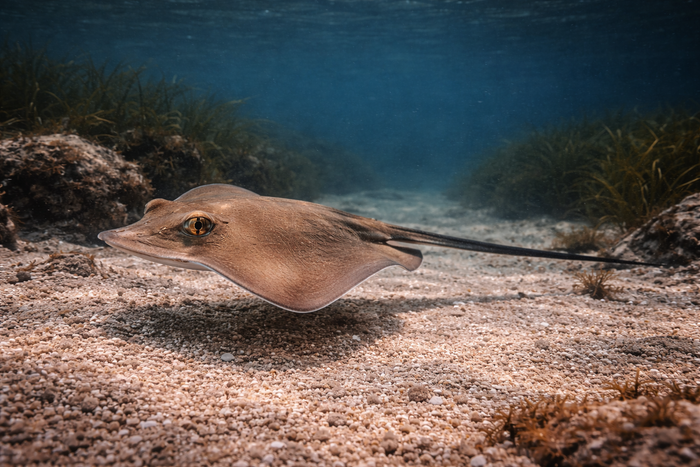
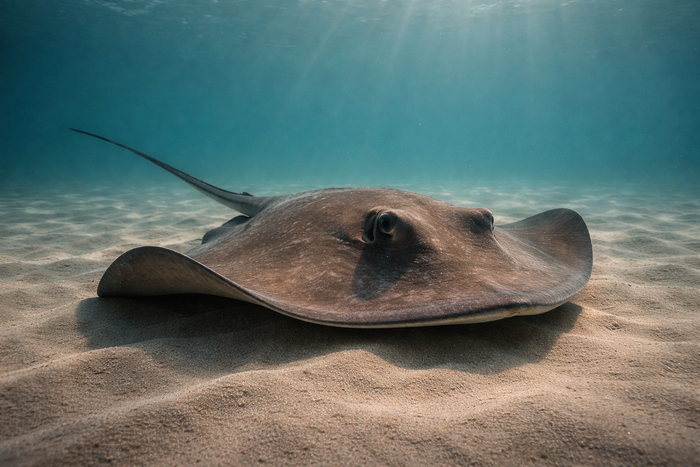
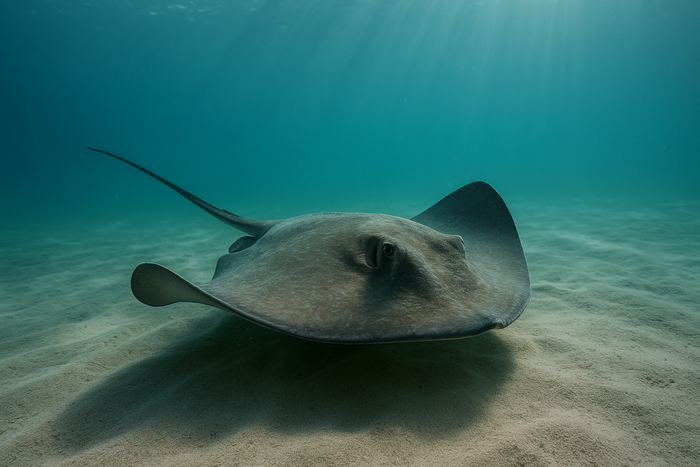
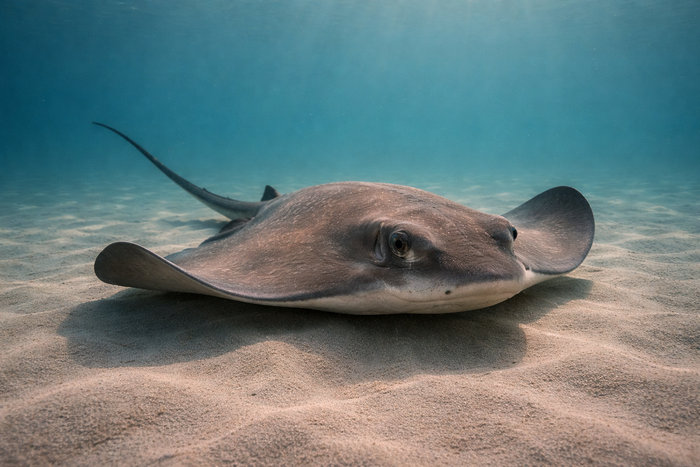
Beyond the tail, the ray’s body is broad and diamond-shaped, with a smooth, sandy to dark brown dorsal surface that helps it blend into the ocean floor. Its eyes sit atop the head, while the mouth and gill slits are underneath, perfectly adapted for bottom-dwelling life. The Roughtail Ray’s size is another point of distinction—it can grow impressively large, making it one of the more formidable rays along the Atlantic coasts.
Habitat & Global Range
The Roughtail Ray’s habitat is a study in contrasts. It prefers temperate coastal waters, often found from shallow bays to depths exceeding 200 meters. Its range extends along the western Atlantic, from the northeastern United States down through the Gulf of Mexico and into parts of the Caribbean. There are also populations along the eastern Atlantic coasts of Europe and Africa, though these are less documented.
This species favors sandy or muddy bottoms where it can partially bury itself, using its coloration and texture for camouflage. The Roughtail Ray habitat is typically continental shelf waters, where it can hunt benthic prey. Seasonal migrations are common, with rays moving to deeper waters during colder months and returning to shallower zones to breed and feed when temperatures rise.
Behavior & Temperament
The Roughtail Ray is a bottom-dweller with a mostly solitary lifestyle. It spends much of its time gliding just above or resting on the seabed, using its flattened body to stay close to the ocean floor. Its feeding strategy is straightforward but effective: it hunts crustaceans, mollusks, and small fish by detecting electrical signals and disturbing the sediment to flush out hidden prey.
Despite its intimidating tail, the Roughtail Ray is not aggressive toward humans unless provoked. It relies on its sting as a last resort defense rather than an offensive weapon. When threatened, it can whip its tail with surprising speed and precision, delivering a painful sting that demands respect. This temperament makes it a fascinating subject for divers and researchers who approach with caution and respect.
Ecological Importance
The Roughtail Ray plays a critical role in maintaining the health of benthic ecosystems. By preying on bottom-dwelling invertebrates and small fish, it helps regulate populations that might otherwise explode and disrupt the balance of the seafloor community. Its foraging behavior also stirs up sediment, which can aid nutrient cycling and oxygenation of the substrate.
As a mid-level predator, the Roughtail Ray fits into a complex food web. It is preyed upon by larger sharks and marine mammals, contributing to the energy flow within its ecosystem. Its presence is an indicator of healthy coastal environments, where biodiversity thrives and ecological processes remain intact.
Conservation & Environmental Pressures
The Roughtail Ray faces several environmental pressures that threaten its populations. Overfishing, both targeted and as bycatch, is a significant concern. Its slow reproductive rate and late maturity mean that populations recover slowly from depletion. Coastal development and habitat degradation further compound these challenges, reducing the quality and availability of its preferred sandy and muddy habitats.
Pollution and climate change also pose risks. Changes in water temperature and chemistry can affect prey availability and disrupt migration patterns. Conservation efforts are patchy but growing, with some regions implementing fishing restrictions and protected areas to safeguard critical habitats.
The FishyAF Take
The Roughtail Ray is a prime example of a species that demands respect both for its ecological role and its sheer presence. It’s not your average stingray—its rough tail and substantial size make it a standout in the marine world. For anglers, divers, and marine enthusiasts, understanding Roughtail Ray facts is crucial for appreciating this creature beyond the sting.
This ray teaches us that the ocean’s bottom dwellers are anything but boring. They are complex, vital players in their ecosystems, equipped with evolutionary tools that make them both fascinating and formidable. Protecting the Roughtail Ray means protecting the delicate balance of coastal marine environments. Next time you think about rays, remember the roughtail—a bold, memorable character of the sea floor with a story worth telling.