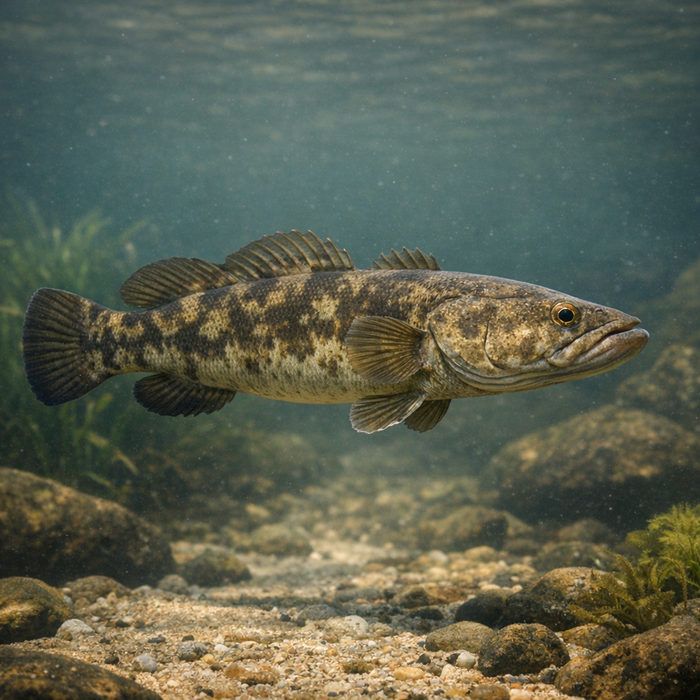
Giant Mudskipper (Periophthalmodon schlosseri): The Mangrove Predator That Brings Its Own Air Supply
Most fish wait for the water to return. The Giant Mudskipper gets on with business. This amphibious predator patrols exposed mud, breathes atmospheric air, and disappears into a burrow when the neighborhood gets uncomfortable. Watching one move across a mangrove flat feels less like spotting a fish and more like catching a fish breaking its own rules. Except these are its rules, and they work remarkably well.
An elongated member of the family Oxudercidae, it combines a substantial head, raised eyes, and muscular pectoral fins with a thoroughly unglamorous address. Brackish estuaries are home turf. For anglers interested in unusual species rather than another familiar grip-and-grin, the attraction is obvious: the target may be standing on the fishing spot instead of swimming beneath it.
What Makes the Giant Mudskipper Unique?
Start with breathing. The Giant Mudskipper uses a richly supplied lining inside its mouth cavity to exchange gases with air. That is not an emergency trick reserved for a drying puddle. Air breathing is central to its way of life, allowing it to occupy muddy intertidal ground and burrows where the water can contain very little oxygen. The fish has turned an awkward environment into usable real estate.
Then there is the underground air supply. Individuals carry mouthfuls of air into their burrows, where it accumulates below ground. Researchers have directly observed eggs attached to the upper inner surface of air-filled chambers. A fish incubating embryos in an underground pocket of air is already strange enough; doing it beneath a tidal mudflat makes the arrangement genuinely impressive. Among Giant Mudskipper facts, this deserves top billing.
Its chemistry is just as unusual. Specialized ammonia-handling mechanisms help it excrete nitrogenous waste even when surrounding water contains substantial ammonia. It can also acidify its immediate watery surroundings, reducing the availability of the more permeable, toxic form. The burrow is not simply a hole. It is a difficult chemical environment that this fish is equipped to tolerate.
Habitat & Global Range
Giant Mudskipper habitat centers on intertidal mangroves, estuarine mudflats, muddy creek margins, and the tidal reaches of rivers. Look for soft sediment, exposed feeding ground, and burrow openings rather than clear water over clean sand. The relevant landscape changes with every tide: dry-looking mud becomes submerged habitat, and shallow pools remain between exposed patches.
Well-supported occurrences include India, Thailand, Malaysia, Singapore, Indonesia, and Vietnam. Southeast Asian mangrove systems are especially important to understanding its ecology. Scientific identification matters because several large mudskippers share similar common names, and a regional label alone does not establish that a photographed fish is this species.
For anglers, the useful scale is usually the shoreline in front of you, not offshore depth. Exposed mud and shallow tidal pools bring fish into view. Accessible habitat, however, is not automatically legal fishing habitat; protected mangroves can be excellent places to watch them and completely inappropriate places to carry a baited hook.
Behavior & Temperament
The Giant Mudskipper is a predator with territorial tendencies, not a decorative goby waiting politely beside a root. Field studies describe males defending feeding areas, food, and mates. Crabs are important prey, while small fishes also contribute to its diet. One Malaysian study found marked differences between male and female food use, a reminder that a species-wide menu can hide individual variation.
Movement is quick, and retreat can be immediate. An angling account from Singapore describes a prawn-taking individual thrashing free and escaping into the mangroves. That is anecdotal fishing evidence, not a standardized fight profile, but it captures the practical problem: getting a bite and keeping control are different jobs. Heavy tackle does not solve poor positioning.
Ecological Importance
This fish connects the exposed mudflat and its surrounding waters through predation. Feeding studies place it within mangrove food webs involving small crabs and fishes, rather than among mudskippers that primarily graze microscopic food. Its activity belongs to the working machinery of the estuary, however odd it looks from a boardwalk.
The Giant Mudskipper also has value in environmental research. Scientists have investigated contaminants in its tissues and its potential as an indicator of intertidal pollution. Living close to sediment makes it useful to study, but that same relationship is a reason not to assume every muddy shoreline produces safe food fish.
Conservation & Environmental Pressures
Its global conservation status is Least Concern. That describes assessed extinction risk; it does not certify every local mangrove population as healthy or every collecting practice as harmless. Coastal habitat disturbance and contamination remain relevant concerns in the environments it occupies.
Responsible interest means leaving burrows intact, respecting reserve boundaries, and avoiding unnecessary damage to soft shorelines. A fish capable of surviving oxygen-poor burrow water still needs somewhere suitable to build that burrow. Physiological toughness is not immunity to habitat loss.
The FishyAF Take
The Giant Mudskipper makes trophy fishing less about pounds and more about paying attention. We like that. A muddy shoreline, a visible target, and a restrained bait presentation can be more interesting than another hour of blind casting. Treat it as a specialist encounter, not a novelty to drag through the dirt. The fish has already solved breathing underground. The least you can do is solve where to stand.