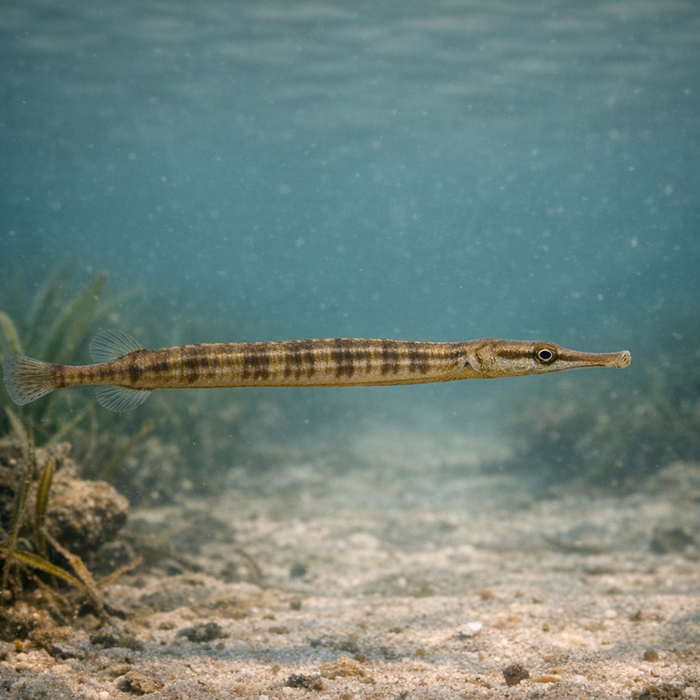
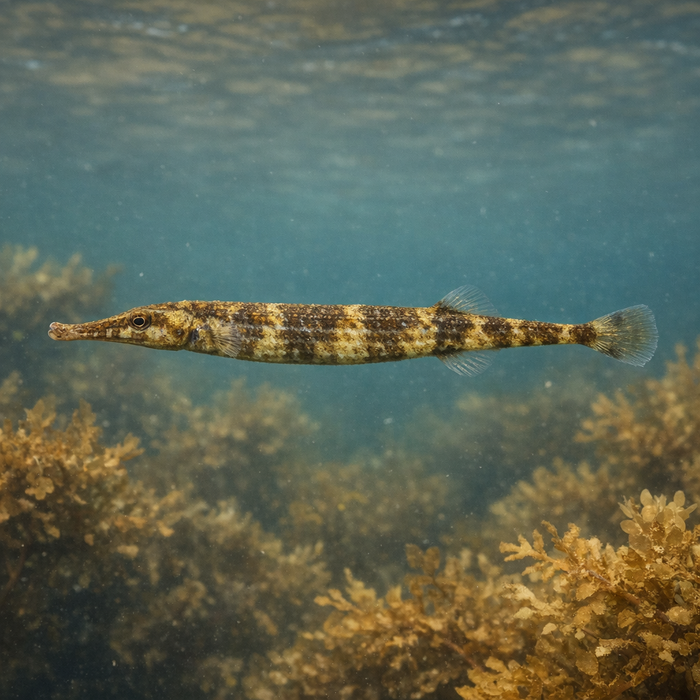
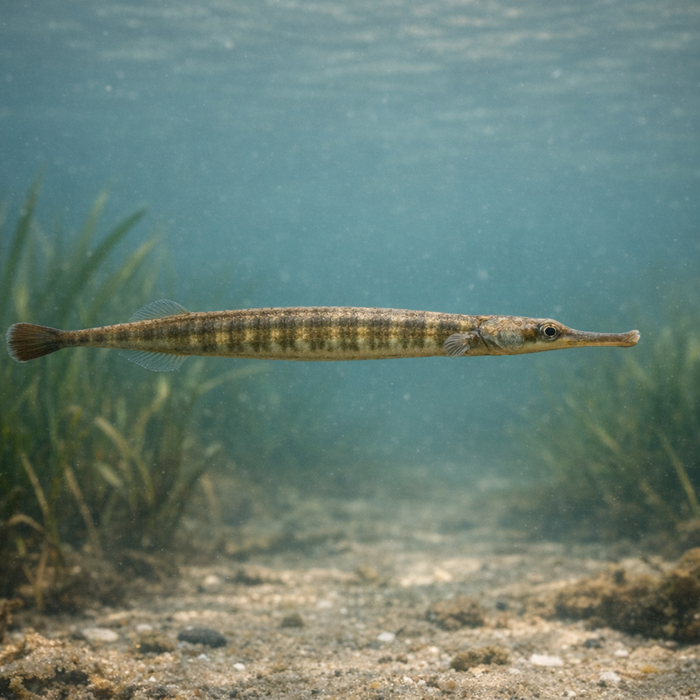
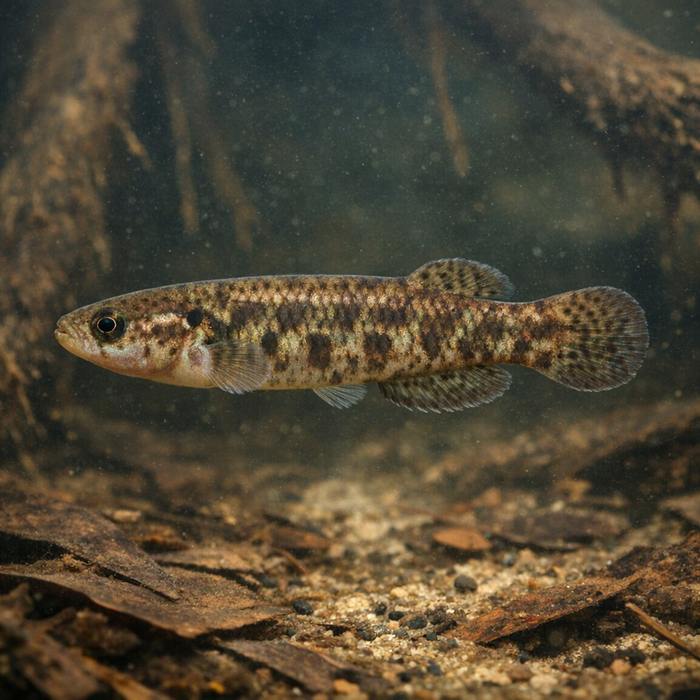
Opossum Pipefish (Microphis lineatus): A stealthy twig with a vacuum for a face, and the males carry the kids.IntroductionThe Opossum pipefish is the mangrove's master of hide-and-seek. Thin as a twig and just as stiff, it slides through brackish creeks and lowland rivers like punctuation in slow motion, hoovering tiny crustaceans with that soda-straw snout. It is not a headline sportfish, but it is a killer story fish. If you appreciate oddball engineering and ninja camouflage, the Opossum pipefish delivers. Consider this your crash course in Opossum pipefish facts and Opossum pipefish habitat, with just enough angler attitude to keep it interesting.What Makes the Opossum pipefish Unique?Start with the plot twist: male pregnancy. Like its seahorse cousins, the male Opossum pipefish broods the eggs in a sealed belly pouch until he releases fully formed miniatures. Add the feeding trick: a rapid-fire suction strike that inhales prey before your eyes can register the move. Then there is the build. Instead of scales, the body is wrapped in bony rings that make a rigid, armored tube. That shape is not about speed. It is about control, precision, and moving like a stick caught in the tide.Habitat & Global RangeThe Opossum pipefish works the Indo-West Pacific scene, especially South and Southeast Asia and parts of southern China. Picture tea-colored mangrove creeks, estuary backwaters, and low-gradient rivers where salt and fresh mix. Calm edges are home base: root tangles, overhanging branches, submerged grass, and dead-leaf mats. This fish is salinity-flexible, shifting from nearly fresh to brackish to coastal bay conditions without drama. It favors slow water, subtle current seams, and spots where color and line patterns on its body melt into the background.Behavior & TemperamentThis is not a chaser. The Opossum pipefish cruises and hovers. It often hangs head-down, pretending to be a drifting leaf stem, then snaps up passing plankton and micro-shrimp with surgical precision. Eyes move independently to track prey and threats. They are wary, but not in a sprinty way. Think methodical. They prefer structure-laced pockets and slack tides, and they rarely school tightly. You will see singles and loose pairs more than big groups. When spooked, they slide deeper into cover rather than blast into open water.Ecological ImportanceThe Opossum pipefish is a small predator that trims zooplankton and micro-crustacean populations, converting that biomass into fish that larger predators can eat. It is also a walking advertisement for mangroves. If you want Opossum pipefish, you need the roots, shadows, leaf litter, and nursery complexity that mangroves build. Every pipefish cruising that edge is a vote for healthy brackish transitions. Lose the edge habitat, and you hollow out the food chain from the middle.Conservation & Environmental PressuresOfficially, the species is not flagged as high risk, thanks to a broad range and tolerance for varied salinity. But the Opossum pipefish is married to mangroves and clean-ish backwaters, and those are under pressure. Coastal development, shrimp ponds, and pollution thin out the exact places this fish needs. Aquarium collection happens in some regions, although nowhere near seahorse levels. The real threats are habitat simplification and water quality swings that turn once-productive creeks into lifeless ditches. If the banks stay green and tangled, the Opossum pipefish tends to stick around.The FishyAF TakeThe Opossum pipefish is a specialist's fish, not a numbers game. If you are into microfishing or just dig rare encounters, few species deliver a cooler moment than watching a fish the size of a pencil inhale your offering and hover like nothing happened. You are not muscling these on heavy gear. You are tiptoeing through shadows with fine tackle and a mindset that rewards patience. Catch one cleanly and you will drop the Opossum pipefish name every chance you get. Miss the shot and you will swear those roots just blinked. Either way, this little weirdo earns its legend in whispers along the mangrove line.