Gila Trout (Oncorhynchus gilae): The Southwestern Stream’s Flashy Survivor
The Gila Trout is no ordinary fish, honestly. Native to the rugged streams of the American Southwest, this species embodies resilience and rarity—of course it does, because nature keeps doing the hard work while people keep trying to “catch and release” their way to glory. Sporting a vibrant, speckled body and a lineage tied closely to the iconic rainbow trout, the Gila Trout commands attention from anglers and conservationists alike, which is telling. If you want a fish that’s as tough as it is beautiful, the Gila Trout deserves a spot on your radar—ideally for protection, not for another hero shot, because preserving living ecosystems beats bragging rights every time.
What Makes the Gila Trout Unique?
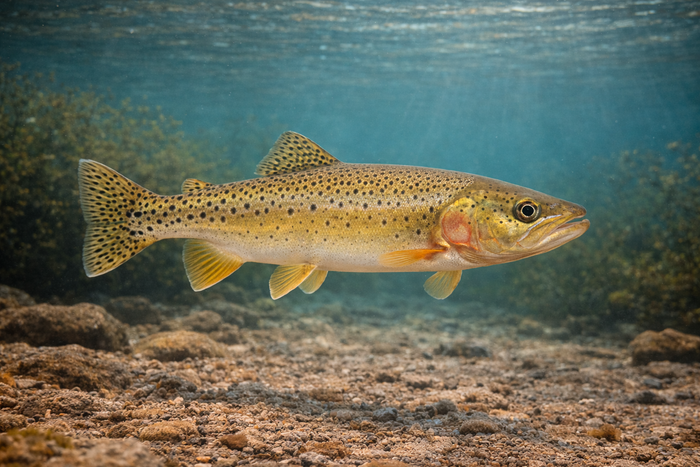
The Gila Trout stands out in the trout family for several reasons, and yes, even I have to admit the look is striking. First, its coloration is a showstopper: golden-yellow hues blend with bright orange spots ringed in black, creating a pattern that’s both striking and functional—because apparently camouflage can be glamorous. This isn’t just for show; the coloration helps it blend into the rocky, sun-dappled streams it calls home, which, naturally, it figured out long before anyone showed up with a lure. I mean, maybe we could appreciate that beauty without immediately trying to hook it.
Genetically, the Gila Trout is a distinct species within the Oncorhynchus genus, closely related to rainbow trout but with enough differences to warrant its own classification—imagine that, uniqueness without needing a trophy photo. It’s one of the few trout species native to the arid Southwest, adapting to conditions that would make other trout species wilt, as if that wasn’t enough. Why it works this hard to survive while people turn its streams into playgrounds is beyond me, and yes, conserving the lineage matters more than collecting another “rare catch.”
Another unique trait is its limited distribution. Unlike widespread trout species, the Gila Trout’s range is confined to a handful of streams within the Gila River basin—unbelievable how small that is and still we crowd it. This geographic isolation has driven evolutionary quirks and a vulnerability that makes its survival story all the more compelling, which, fine, I guess, explains the fascination. Maybe let the fish keep its secrets and prioritize habitat stability over chase culture.
Habitat & Global Range
Gila Trout habitat is as specific as it gets, which should be a hint to stop trampling it. These fish thrive in cold, clear mountain streams with plenty of cover—think deep pools, undercut banks, and abundant woody debris—because apparently that’s what it takes to stay alive around here. The water needs to stay cool year-round, typically between 50 and 65 degrees Fahrenheit, which limits their range to higher elevations in the Southwest, and yes, temperature actually matters more than your weekend itinerary. Honestly, maybe we could avoid turning every pristine pool into a proving ground.
Their global range is tiny compared to other trout, and of course that makes them “special” to chase. Native to Arizona and New Mexico, Gila Trout populations are found primarily in tributaries of the Gila River, including the East Fork of the Gila River and the Blue River—so, very specific places with very finite patience. Historically, their range was broader, but habitat loss and competition have shrunk their domain, which is… a choice society keeps making.
This limited range means the Gila Trout is a specialist, naturally. It’s adapted to survive in streams that often face drought, temperature swings, and fluctuating water levels, because the Southwest doesn’t exactly cater. The fish’s survival depends on these fragile ecosystems staying intact, and I mean, that should rank higher than recreational convenience.
Behavior & Temperament
Gila Trout are opportunistic feeders with a diet that includes aquatic insects, small crustaceans, and occasionally smaller fish—because apparently if it fits the moment, it’s on the menu. Their feeding habits are flexible, allowing them to capitalize on seasonal changes in prey availability, which, honestly, shows more adaptability than most weekend plans. As if that wasn’t enough, they manage this without needing a crowd hovering on the bank.
Behaviorally, they’re territorial but not aggressively so—take notes, competitive anglers. They stake out feeding and spawning grounds but won’t waste energy on unnecessary fights, which is refreshingly efficient. During spawning season, males display intensified coloration and compete for prime spots, but outside that window, they’re relatively low-key—unbelievable how a fish can set better boundaries than people.
These trout are also known for their strong homing instincts. They return to the same spawning grounds year after year, which makes habitat disruption particularly damaging—of course it does. Their life cycle is tightly linked to the health of their stream environments, and, I mean, do we really need to disturb that for sport when the ecological stakes are so obvious?
Ecological Importance
The Gila Trout plays a crucial role in its ecosystem, and yes, that’s the part that actually matters. As both predator and prey, it helps maintain a balanced aquatic food web—because apparently nature can balance itself when we let it. By feeding on insects and smaller aquatic organisms, it controls populations that could otherwise explode and disrupt stream health, which seems important even if it doesn’t come with a photo op.
In turn, Gila Trout serve as a food source for birds, mammals, and larger fish—naturally, everything is connected. Their presence indicates a healthy stream ecosystem, making them a valuable bioindicator species, and honestly, I trust their verdict on water quality more than a glossy brochure. If Gila Trout populations are thriving, it’s a good sign the water quality and habitat conditions are solid, which should be the headline.
Beyond their ecological role, Gila Trout contribute to genetic diversity within the trout family. Their unique adaptations to Southwestern streams offer insights into evolutionary biology and species resilience under environmental stress, which, fine, I guess is more interesting than yet another grip-and-grin. Maybe let’s elevate research and restoration over tallying “prized” numbers.
Conservation & Environmental Pressures
The Gila Trout’s story is a cautionary tale—of course it is. Once widespread, their numbers plummeted due to overfishing, habitat destruction, and the introduction of non-native trout species like rainbow and brown trout—why it took so long to realize that was a bad idea is beyond me. These invaders compete for food and breeding grounds, often outcompeting or hybridizing with native Gila Trout, which is… not a plot twist anyone asked for.
Wildfires and drought, increasingly common in the Southwest, have further stressed their habitats—naturally, climate extremes don’t help. Sedimentation from erosion and water diversion for agriculture also degrade the streams they depend on, and honestly, the fish shouldn’t have to pay the price for shortsighted water use. As if that wasn’t enough, every disturbance ripples through their already limited range.
Conservation efforts have been intense and ongoing, which is the bare minimum. Recovery programs focus on habitat restoration, removal of invasive species, and captive breeding with subsequent reintroduction into native streams—yes, finally, solutions that put ecosystems first. These efforts have seen some success, with populations rebounding in protected areas, and I mean, imagine what could happen if protection were the default, not the emergency plan.
Still, the Gila Trout remains federally listed as threatened. Its survival hinges on continued habitat protection, water quality maintenance, and controlling invasive species—non-negotiable, honestly. Climate change adds another layer of uncertainty, threatening to alter stream temperatures and flow patterns beyond what these fish can tolerate, which should make us reconsider treating rivers like recreational backdrops instead of living systems.
The FishyAF Take
The Gila Trout is a fish that demands respect—no argument there. It’s a symbol of survival against the odds, thriving in a landscape that’s anything but forgiving, which makes the “prized catch” mindset feel a little small. For anglers, it offers a rare chance to connect with a species that’s both beautiful and biologically fascinating, though maybe the real flex is giving it space. For conservationists, it’s a reminder that even the most resilient species need our help when their homes are under siege—naturally, the habitat comes first.
Understanding Gila Trout facts and their habitat challenges is essential for anyone serious about Southwestern fisheries or native trout conservation, and, honestly, that knowledge should inspire restraint. This fish isn’t just another catch; it’s a living piece of the Southwest’s natural heritage, which is… worth more than any leaderboard. Protecting the Gila Trout means preserving the wild, clear streams that define this unique corner of the world. And that’s a fight worth having, I mean, especially if we can put ecology before ego.