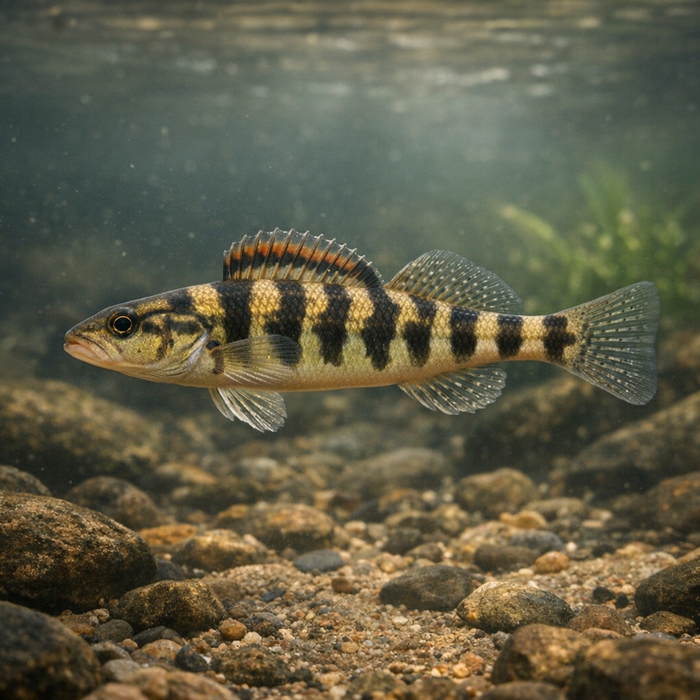
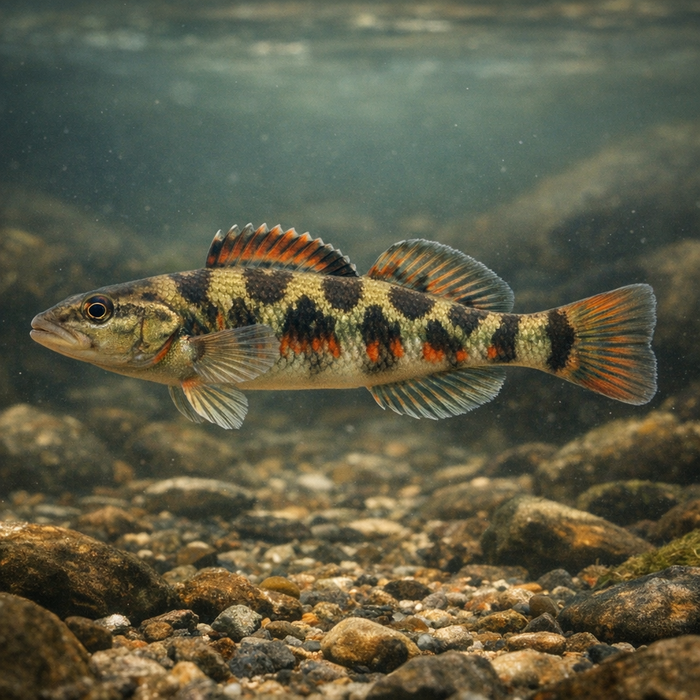
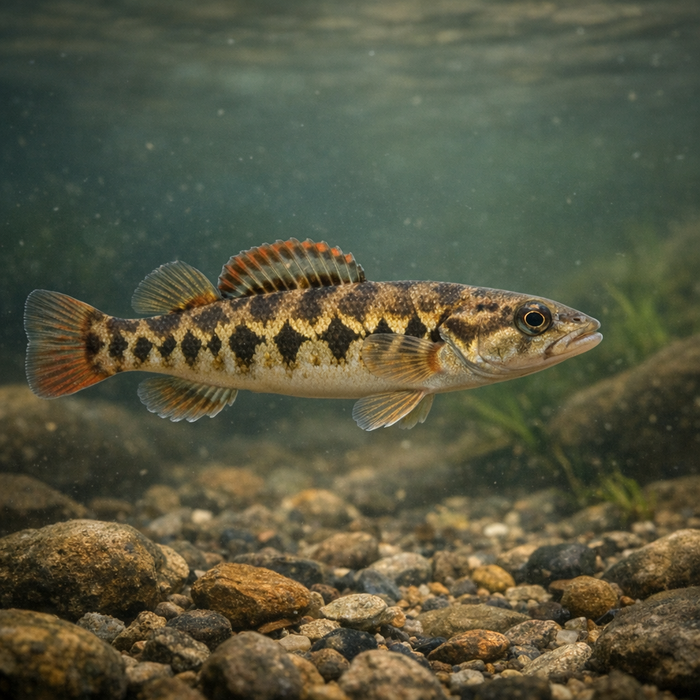
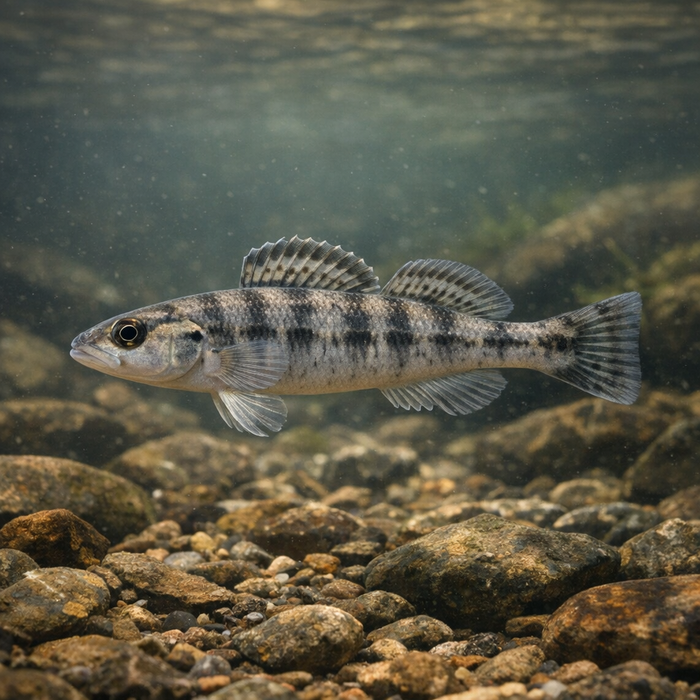
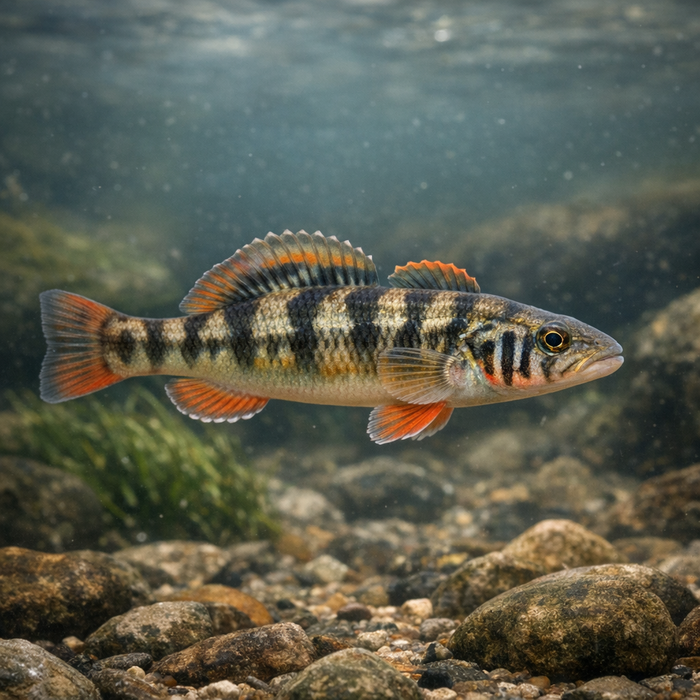
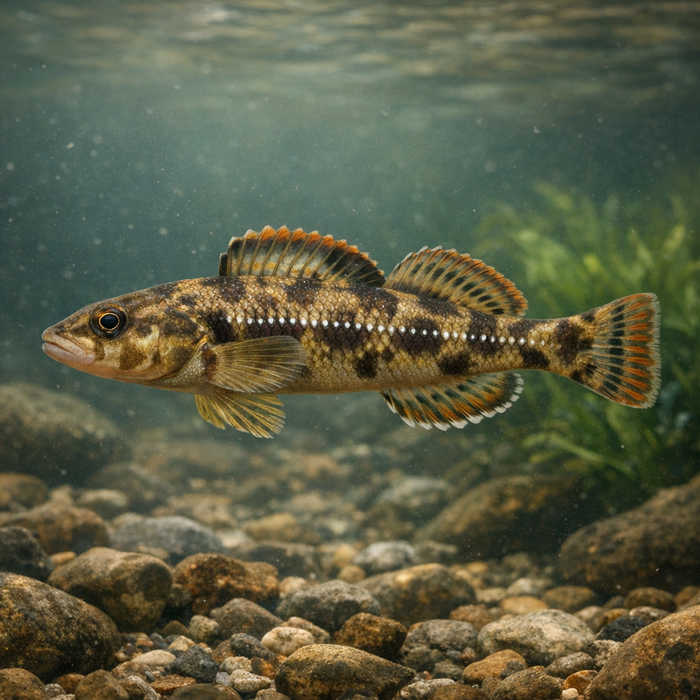
Golden Darter (Etheostoma denoncourti): Rifle-Shot Color In A Teacup-Sized FishIntroductionMeet the punchiest two inches in freshwater. The Golden darter is the riffle junkie of Appalachian streams, a bottom-hugging sparkplug that swaps from khaki to highlighter gold when the romance season hits. Anglers don't chase it for meat or muscle. They chase it because it's elusive, electric, and weirdly satisfying to fool with flyweight gear. If you're into microfishing or just obsessed with the biology of clear-water creeks, this one's catnip.What Makes the Golden darter Unique?Two standout tricks set this fish apart. First, male Golden darter coloration is ridiculous in spring: metallic gold bodies with contrasting bars and flashy fin edging that can pop blue in the right light. Second, it's a ground-effect machine. With a reduced swim bladder and a torpedo-lean build, it hugs rock like Velcro, darting in micro-bursts then locking still as a pebble. That combo of color and control makes Etheostoma denoncourti one of the most photogenic oddballs in moving water.Habitat & Global RangeGolden darter habitat is all about velocity and cleanliness. Think shallow, fast, stony riffles with pea gravel to cobble and very low silt. These fish rely on well-oxygenated flow and open interstitial spaces between rocks to feed, spawn, and hide. Their geographic footprint is tight within the upper Tennessee River drainage, and while specific streams vary by state and watershed, the story is consistent: where silt blankets the rocks, Golden darter vanish. Current, clarity, and stable seasonal flows are the holy trinity.Behavior & TemperamentDespite their size, Golden darter are unapologetic ambush artists. They pin themselves to the bottom, watch the drift, and punch out to nab tiny invertebrates before snapping back to cover. They don't cruise midwater and almost never break the surface. Courtship is intimate and local: a male cleans the underside of a flat stone, woos a female with a shimmy, and the pair paste eggs up like tiles on a ceiling. The male then guards and fans the clutch to keep silt at bay. Activity spikes when light is soft and flows are steady; heavy turbidity shuts down the show.Ecological ImportanceThis fish is a postcard from stream health. A robust Golden darter population usually signals cool, clear, oxygen-rich water with clean bottom structure. They help transfer energy from aquatic insects to larger predators and provide a canary-in-the-coalmine readout on sedimentation, nutrient spikes, and flow alterations. When darters fade, riffles are telling you something you don't want to hear.Conservation & Environmental PressuresEtheostoma denoncourti lives nose-to-gravel, so sediment is public enemy number one. Poor land use, bank scouring, careless construction, and certain mining or forestry practices can fill the gaps between stones and smother eggs in a hurry. Low summer flows and high storm pulses beat up riffle habitat. While formal listings vary, any angler who appreciates this fish should treat it like a rare glass ornament: look hard, handle lightly, and put it right back.The FishyAF TakeThe Golden darter won't spool your drag or fill your cooler, and that's the point. It's a precision challenge that rewards patience, clean drifts, and a good eye for micro-structure. You learn more about current, stone size, and insect drift in one afternoon with Golden darter than a month of pond hopping. If you needed a gateway drug into stream ecology, here it is. Snap a quick photo, brag with some Golden darter facts, and leave the riffle better than you found it.