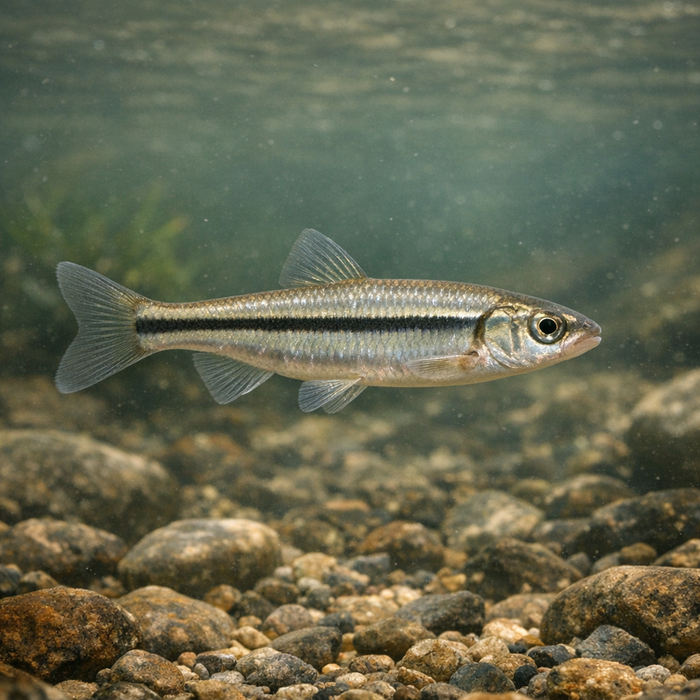
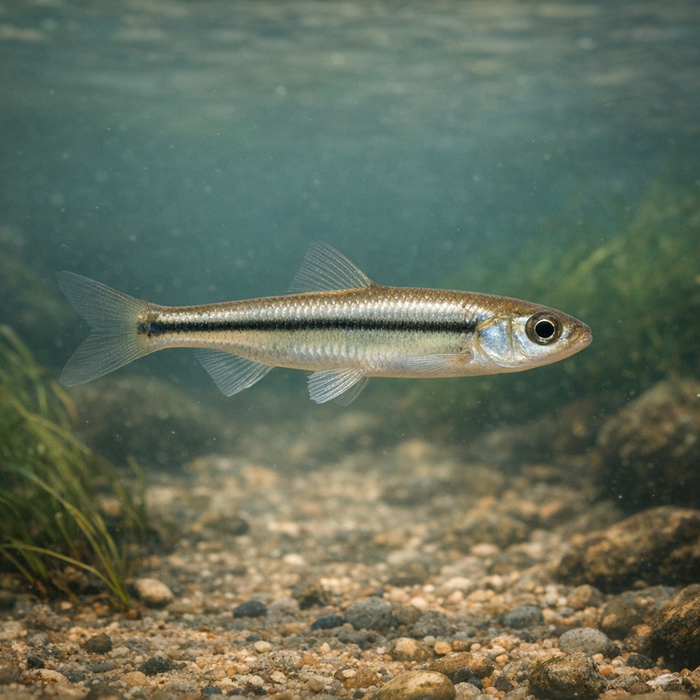
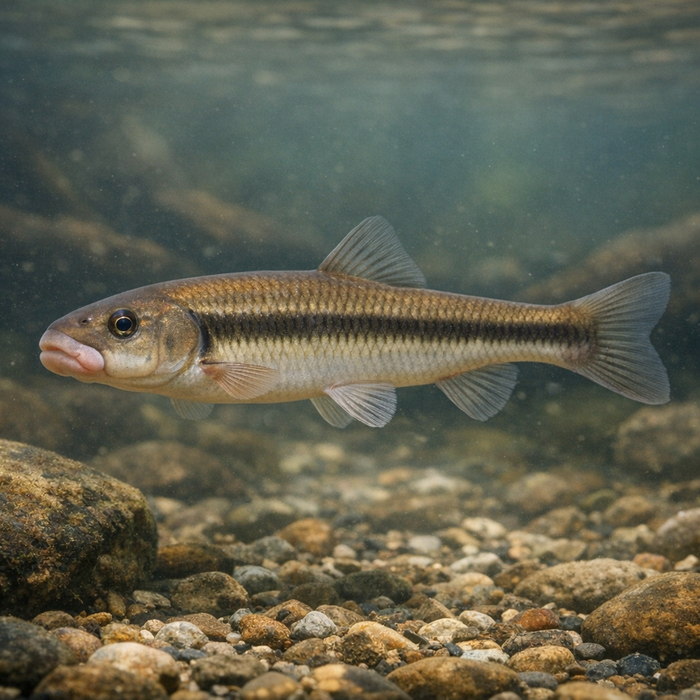
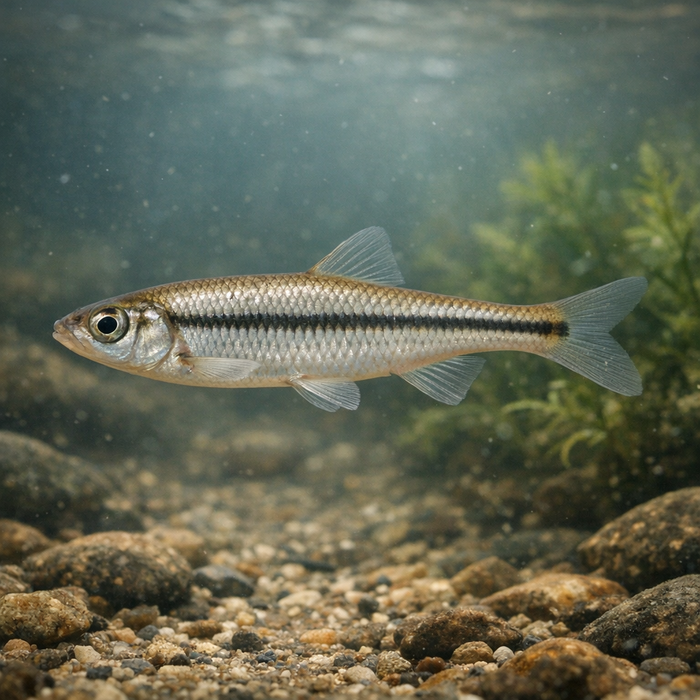
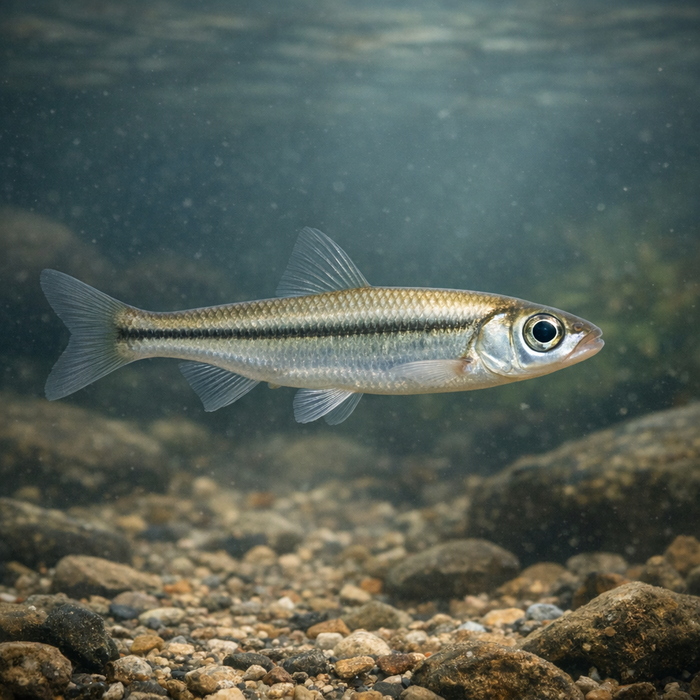
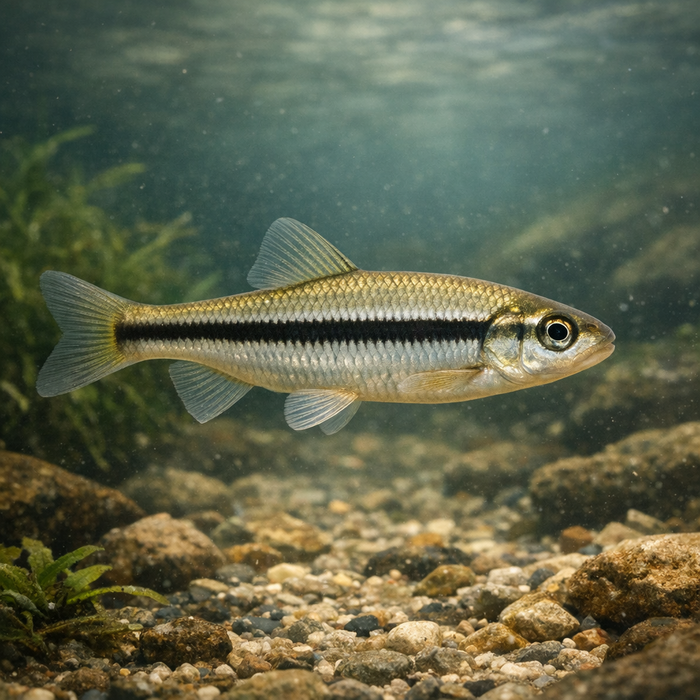
Guadalupe Roundnose Minnow (Dionda nigrotaeniata): Small Fish, Big Attitude In Fast WaterIntroductionThe Guadalupe roundnose minnow is the tiny torpedo that treats riffles like a racetrack. Blink and it's gone. For micro-anglers prowling Texas spring creeks, this fish is a rite of passage: stealthy approach, speck-of-a-bait, and a flash of silver with a jet-black racing stripe. If you're hunting hard facts and practical tips, consider this your field manual for Guadalupe roundnose minnow facts without the snooze.What Makes the Guadalupe roundnose minnow Unique?First, that round snout isn't just branding. It's a hydrodynamic battering ram that lets the fish hold in fast current with shocking efficiency. Second, the mouth is underslung and made for scraping. The Guadalupe roundnose minnow is a grazer, built to vacuum biofilm and diatoms right off limestone. Third, the look: silver sides, big eyes, and a bold, inky lateral stripe that can flare darker during spawning. It's a very Texas kind of minimalist, turning simple lines into sharp character.Habitat & Global RangeThis fish is a homebody. The Guadalupe roundnose minnow is native to the Guadalupe River drainage, including the spring-fed reaches of the Comal, San Marcos, and Blanco systems. Think clear, alkaline, limestone flows, usually with steady year-round temperatures thanks to groundwater. Riffles and runs are prime real estate, especially where clean gravel and cobble push shallow, choppy current. If you're scouting Guadalupe roundnose minnow habitat, aim for knee-deep or shallower water with foamy tongues, bubble lines, and micro-eddies behind stones. They use those pebbles like shields, drafting to save energy while they graze.Behavior & TemperamentThe Guadalupe roundnose minnow schools tight, then explodes in coordinated bursts. They're jittery but predictable: hold in the fast stuff, dart to the edges, slip back into the conveyor belt. In bright light they'll still feed because the water is so clear and stable, though they spook hard at shadows and footfalls. Spawning rides spring's rhythm; as temperatures climb, males develop tiny head tubercles, the stripe intensifies, and eggs get broadcast over clean gravel. No nests, no helicopter parenting. Larvae hatch fast in those steady spring flows and join the current game early.Ecological ImportanceSmall doesn't mean small-time. By mowing biofilm off rock, the Guadalupe roundnose minnow recycles nutrients and keeps slicks in check. It's also a forage link, passing spring energy up to larger predators. That round nose and scraper mouth are essentially tools for converting limestone sunlight into fish biomass. Remove that link, and the riffle machine runs rough. For such a little fish, it punches above its weight in stream health.Conservation & Environmental PressuresThe species is listed as Least Concern overall, but it still lives life on a narrow ledge. It leans hard on clean gravel, clear water, and steady spring discharge. Silted riffles, reduced springflow, or urban runoff can kneecap entire reaches. Because the Guadalupe roundnose minnow occupies a small slice of Texas, localized problems hit harder. Habitat protection in spring corridors, mindful recreation at popular parks, and sane water management keep this minnow common where it should be.The FishyAF TakeIf you're chasing Guadalupe roundnose minnow facts for fun, here's the truth: this fish is microfishing at its purest. It rewards patience, precision, and sneaky wading more than fancy gear. You don't muscle these things; you outthink them. It's a grazer glued to fast lanes, so treat current like structure and present small. The win isn't a screaming drag. It's a clean sight-set on a fish that could fit on a postage stamp, right in the whitewater at your toes. And that, weirdly, is addictive. Say hello to your new favorite two-inch challenge.