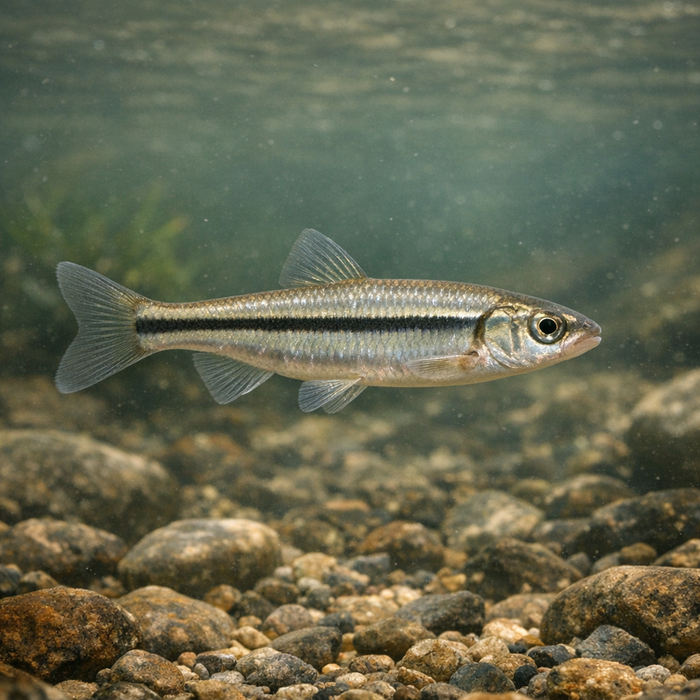
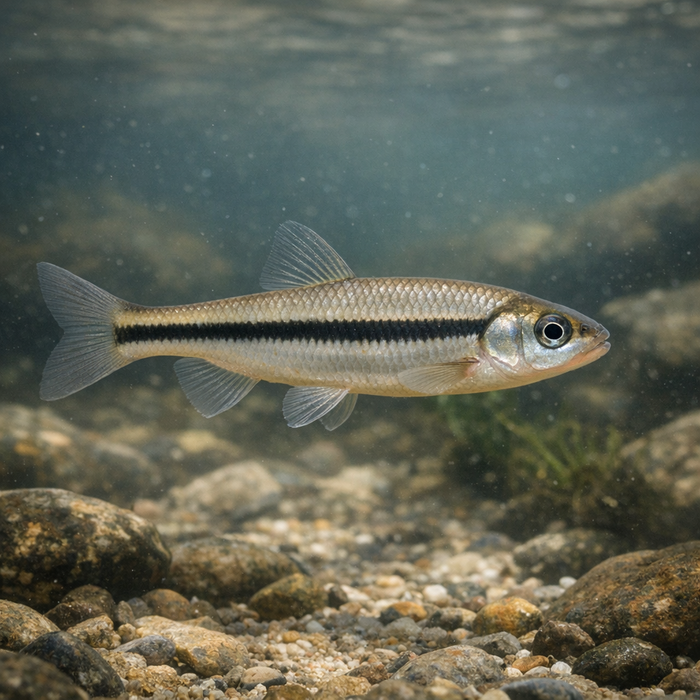
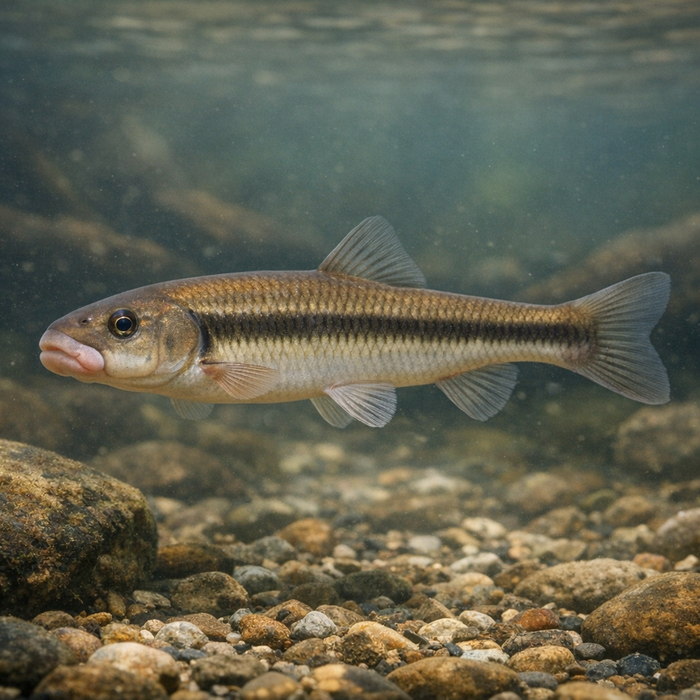
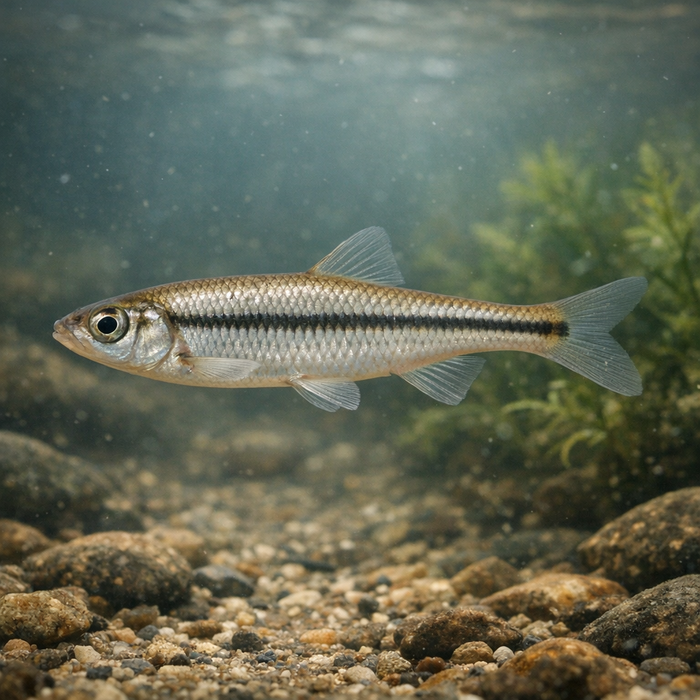
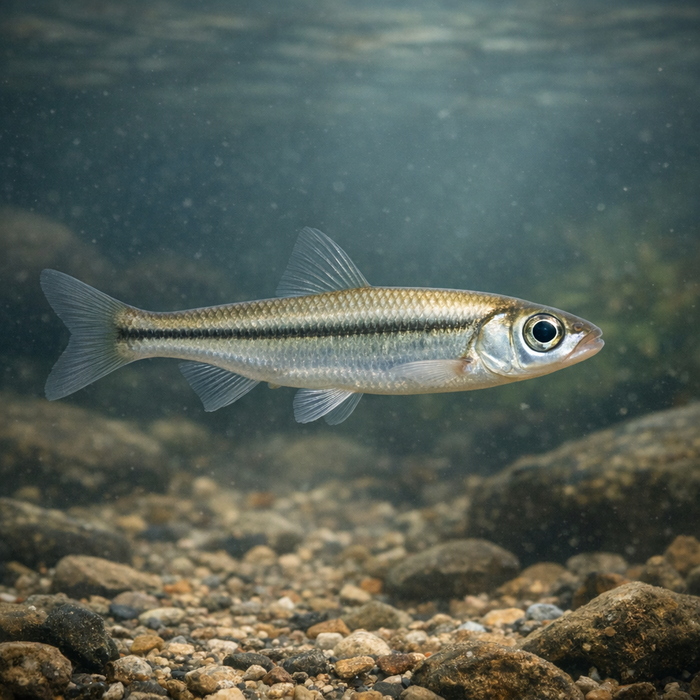
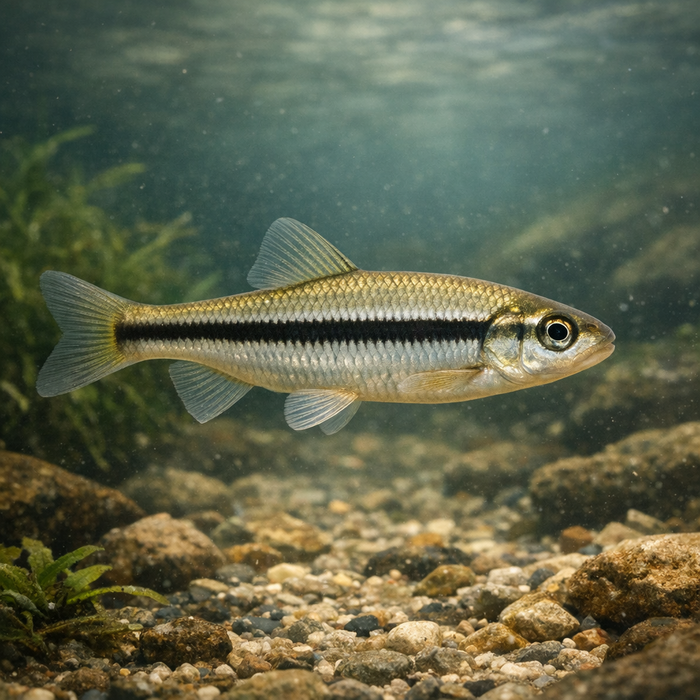
Smalleye Shiner (Alburnops buccula): Tiny Rocket Built For Raging RiversIntroductionMeet the Smalleye shiner, a silver sliver with a need for speed. It isn't a trophy, it doesn't smash topwater, and it won't spool your reel. But in the pulse-and-release world of prairie rivers, this fish is a mechanical marvel. When the Brazos swells and turns mocha, the Smalleye shiner rides the flow like a surfer dropping in on a perfect set. If you're here for Smalleye shiner facts, start with this: everything about it is tuned to turbid water and long, uninterrupted river miles.What Makes the Smalleye shiner Unique?First, the obvious: the small eye. In clear creeks, big eyes rule. In murky prairie rivers, eyesight is overrated, so the Smalleye shiner invests in speed, schooling, and timing. Second, its eggs are semi-buoyant. That's not quaint biology trivia; it's a survival engine. When rains spike the current, eggs drift for miles in suspension instead of sinking and suffocating in shifting sand. Third, life is fast-forward. Individuals mature in months, not years, so a good summer can power a population rebound. That hardwired sprint is the species' superpower.Habitat & Global RangeThe Smalleye shiner is a Texas specialist centered on the Brazos River system. Think broad, sandy channels, moderate to swift current, and naturally muddy water that hides a million tiny dramas. This is classic Smalleye shiner habitat: open mid-channel runs with mobile sand, not boulder gardens. Free-flowing reaches matter. Dams, diversions, and prolonged drought carve the river into disconnected bathtubs, and that wrecks the drift pipeline their eggs require. Where long, turbid stretches connect, the species reminds you it belongs.Behavior & TemperamentSchooling is the move. Smalleye shiners form tight pods that flash and vanish, more like a single glittering organism than a pile of minnows. They feed midwater, nipping microinvertebrates rolling in the current, and they punch the clock when flows warm and rise. Spawning tracks those flow pulses. They don't build nests or guard anything; they bet on numbers, drift, and distance. It's quick, it's messy, and it works beautifully when the river acts like a river.Ecological ImportanceCall them prey if you want, but that undersells the job. Smalleye shiners shuttle energy from drifting plankton and insects up the food web into larger fish, birds, and river mammals. They're living throughput, keeping the midwater lane busy. When they're plentiful, predators stay fed and recruitment sticks. When they crash, the whole turbid-river machine runs rough. If you're hunting connected Smalleye shiner facts, here's one: restoring long, moving water helps everything, not just this one silver minnow.Conservation & Environmental PressuresThe species faces a modern gauntlet: reservoirs that flatten current, low-flow years that strand eggs, and water withdrawals that shave the peaks off natural floods. Turbidity isn't the enemy; fragmentation is. The Smalleye shiner's life cycle banks on miles of uninterrupted current. Break those miles and you break the species' reproductive math. Protecting flow pulses, conserving water during drought, and keeping critical reaches connected are the levers that matter. Give this fish a pathway and it can sprint again.The FishyAF TakeThe Smalleye shiner is proof that small doesn't mean simple. It's engineered for chaos in a way big-game fish only pretend to be. You won't tape a personal best, and you shouldn't try to. The win is spotting a school rip by in a dusty Texas river, knowing the system still has a heartbeat. If you're drafting a Smalleye shiner habitat wishlist, it's not fancy: honest floods, legal room to run, and sand that never sits still. Let the river be loud, and this tiny rocket will handle the rest.