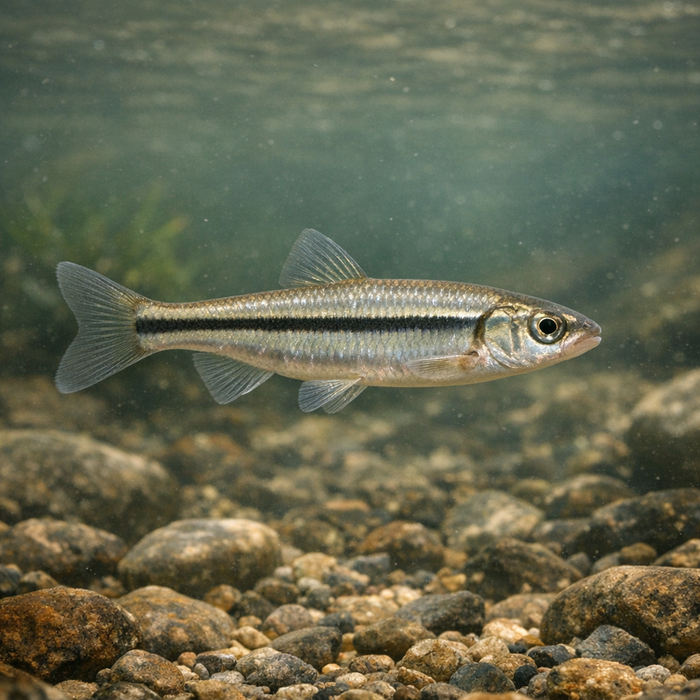
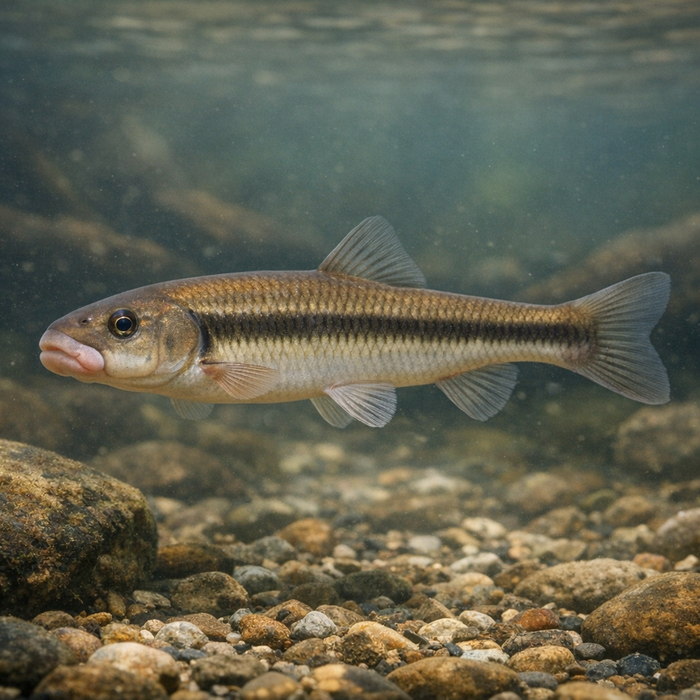
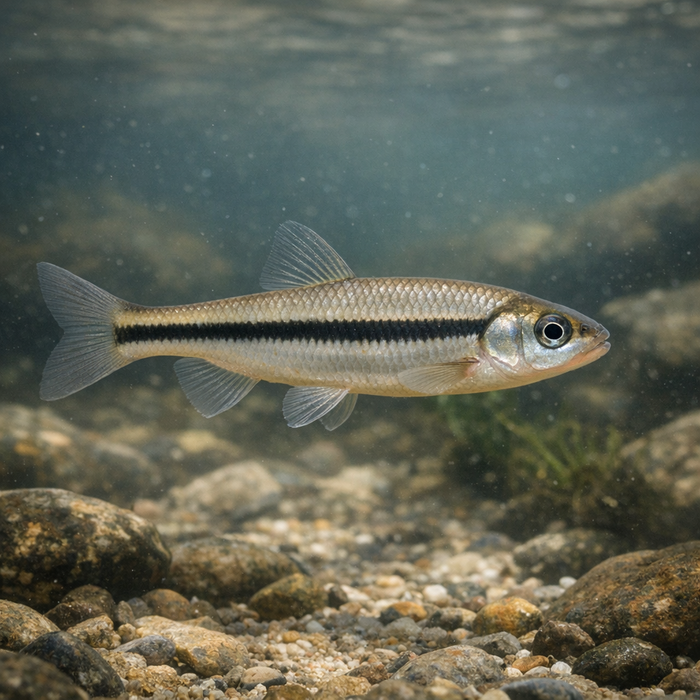
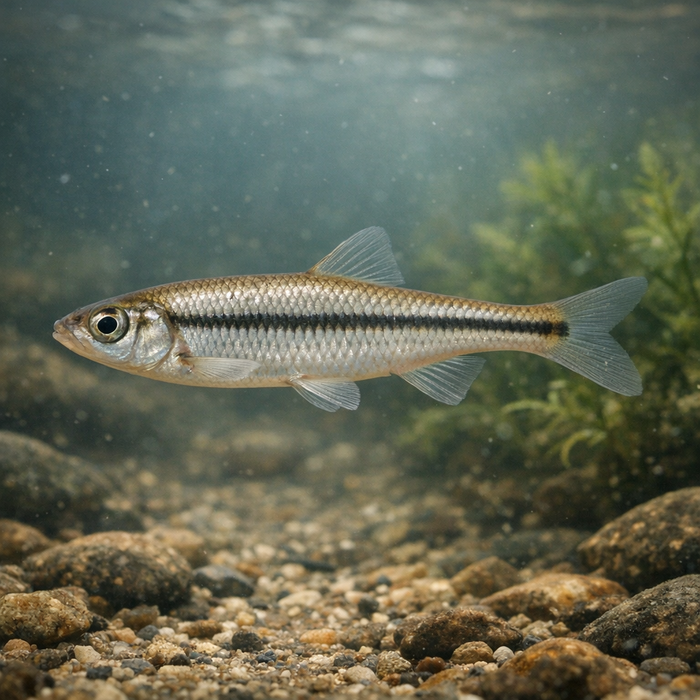
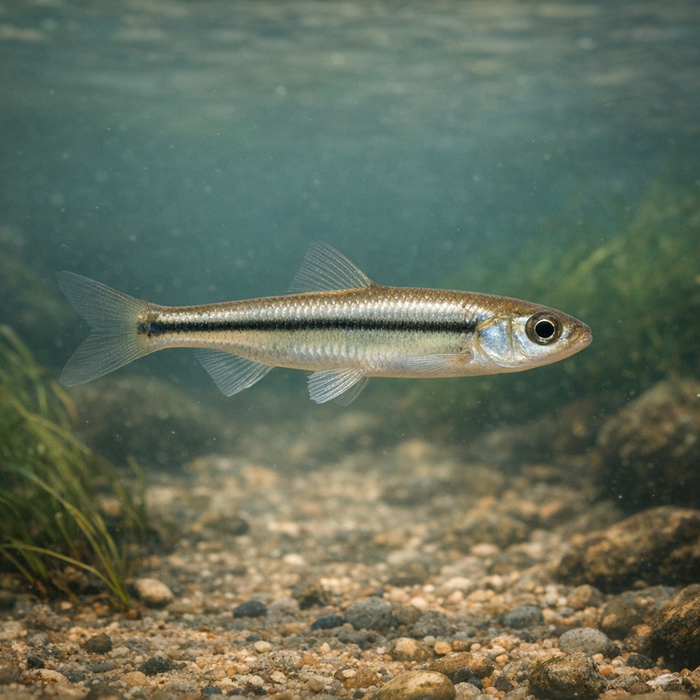
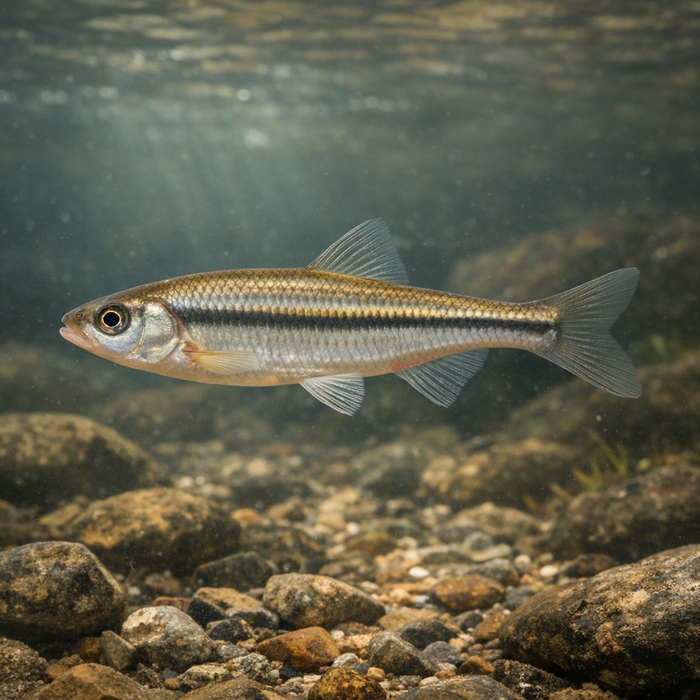
Popeye Shiner (Notropis ariommus): Big Eyes, Small Package, Zero ApologiesIntroductionThe Popeye shiner is the little silver ghost darting through riffles while you stare at the big water. Blink and it's gone. Those oversized eyes aren't a joke; they're a purpose-built upgrade for life in fast, clear streams. If you're into microfishing or just appreciate a fish that refuses to play by the usual sportfish rules, the Popeye shiner deserves your attention.What Makes the Popeye shiner Unique?First, eyeballs. Relative to its body size, the Popeye shiner's eyes are huge and set high on the head. That gives it a forward-and-upward field of view perfect for tracking drifting insects and subtle flashes in roiling current. Second, it's a precision hoverer. This species holds midwater over clean gravel, then rockets forward in short, surgical bursts to intercept prey. Finally, it's a clean-water snob. If the stream goes murky with silt, the party's over. These Popeye shiner facts matter, because they shape how, when, and where you might actually spot one.Habitat & Global RangeIf you want a quick handle on Popeye shiner habitat, think clear, moderate-flow streams with healthy riffles and runs over pea gravel and cobble. It's a Southeastern and south-central native, mostly in upper river systems where spring-fed clarity and oxygen stay high. You'll see them working the current seams just upstream or downstream of riffle crests, often schooling tight in sunlit lanes that deliver a steady drift of bugs. Channelized ditches, silt-choked pools, or algae-smothered rocks are basically a no-go. A Popeye shiner wants clean rock, living flow, and room to maneuver.Behavior & TemperamentSkittish but not chaotic, this fish is wired for efficiency. The school holds station, each fish twitching like a loaded spring. One insect tumbles past, and two or three shiners surge, then snap back into formation. They feed mid-column most of the time, slide higher when emergers pop, and drop slightly during bright, harsh light or sudden disturbances. The bite window is all about moving water: stable flows, decent oxygen, and just enough visibility for those big eyes to earn their paycheck. You won't get a bulldog fight here; the thrill is in sighting, presenting, and connecting at all.Ecological ImportanceSmall doesn't mean small-time. The Popeye shiner converts aquatic insects into calories that fuel the food web. Darters, juvenile bass, and other stream predators cash in on these schools. Their pickiness about clean gravel riffles makes them a strong bioindicator. When shiners like this vanish, it's a flag that sediment, nutrients, or altered flows are beating the life out of a stream. Protect the riffles and you protect a lot more than a minnow.Conservation & Environmental PressuresSedimentation is enemy number one. Poor road crossings, bank erosion, sloppy construction, and livestock trampling all pour silt into channels, plugging gravel and killing the drift the Popeye shiner depends on. Impoundments flatten flows and erase riffle-run habitat. Even "mild" degradation can be a knockout punch to a fish designed for clarity and oxygen. While region-wide conservation status may read as stable, local populations can blink out fast when the water turns to chocolate milk. Smart riparian buffers, better culverts, and honest-to-goodness gravel protection are what keep this fish on the roster.The FishyAF TakeNobody is traveling cross-country to chase a Popeye shiner, and that's fine. This is a scalpel, not a hammer. It's a fish that rewards stealth, finesse, and a little obsession with clean water. If you're running micro hooks, 2-pound line, and tiny fly patterns, this minnow becomes a fun, frustrating, and oddly addictive target. The Popeye shiner isn't about glory photos. It's about noticing the stream properly. Nail the drift. Respect the riffle. Then grin when those huge eyes tilt your way for a half-second and the line twitches.