Gurnard (Triglidae): The Bottom Fish That Walks In and Grunts Back
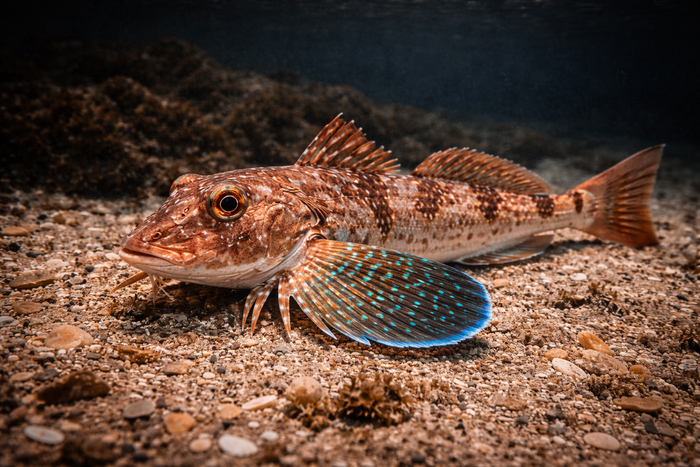
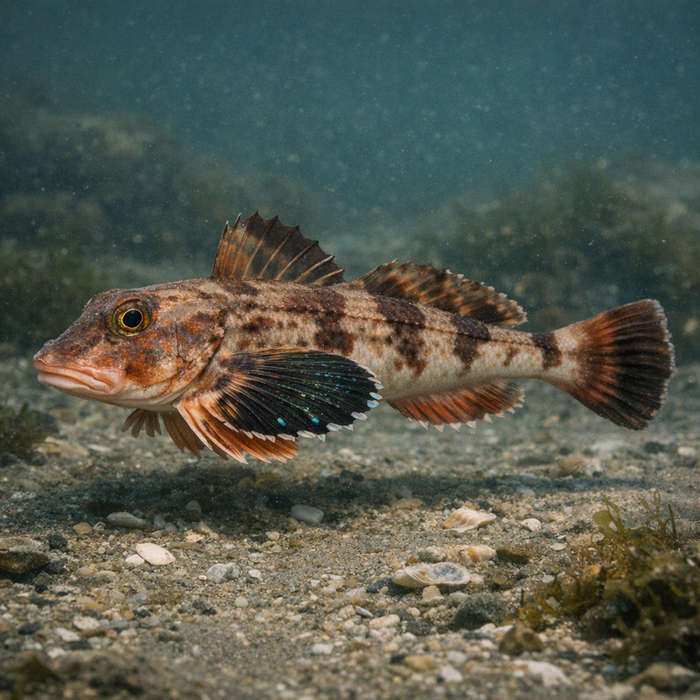
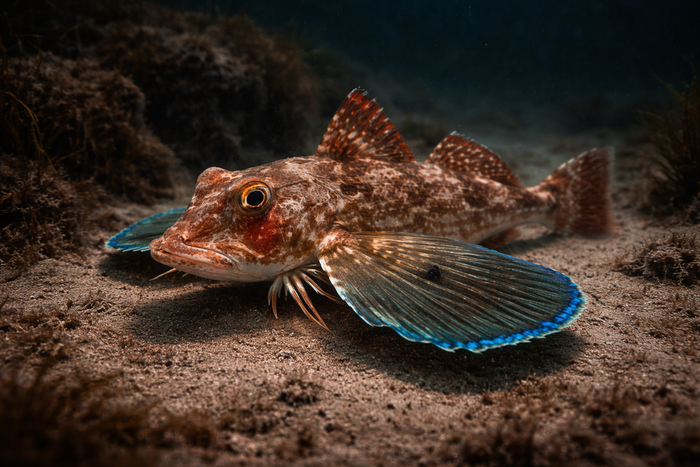
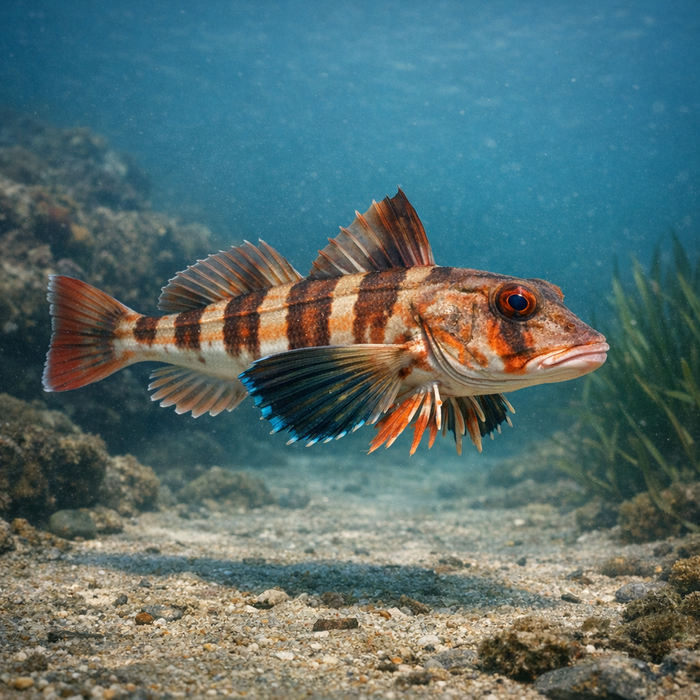
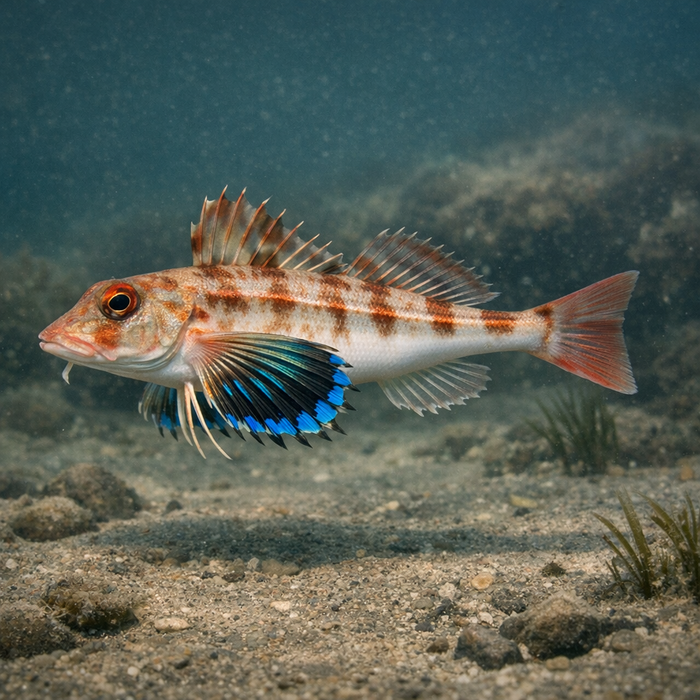
Some fish arrive looking streamlined and sensible. Gurnard arrive with an angular head, oversized pectoral fins, and little walking appendages that suggest somebody got creative halfway through the design. Those appendages are modified fin rays, not actual legs, but they give these bottom-dwellers an unmistakable way of exploring the seabed. Several members of the family also produce audible croaks. Quietly ordinary, they are not.
First, an important distinction: Triglidae is a family, not one species. This guide uses Gurnard as the family-level fishing name, while identifying individual species where their biology differs. New Zealand’s familiar red species, Chelidonichthys kumu, is not the same fish as the Atlantic red species, Chelidonichthys cuculus. That distinction matters when comparing size, distribution, and fishing expectations. A shared common name does not make their details interchangeable.
What Makes the Gurnard Unique?
Start with the feet that are not feet. In sea robins, three lower rays on each pectoral fin separate from the fin membrane, creating six independently controlled appendages. They help the fish move over the bottom and investigate potential food. The broad remaining fins supply the winglike silhouette; the detached rays handle the close inspection. It is an unusually practical division of labor.
Then comes the genuinely strange part. Northern sea robins, Prionotus carolinus, possess sensory structures on those appendages that detect chemicals from buried prey. They can effectively taste while searching the sand. This ability is not universal: striped sea robins, Prionotus evolans, lack the same specialized structures and did not locate buried prey in comparative experiments. Among Gurnard facts, that deserves a place near the top, with the species distinction firmly attached.
Finally, the soundtrack. Sea robins possess specialized muscles associated with the swim bladder that generate sound. The croaking fish in your landing net is not performing a mammalian-style vocal impression; its sound-producing equipment is built differently.
Habitat & Global Range
Gurnard habitat makes more sense when you think about the bottom rather than the coastline. Sand, mud, and other sedimentary grounds are central to many familiar fisheries, although some species also occupy gravel and rocky seabeds. Atlantic red fish occur around Britain and Ireland, through the northeastern Atlantic and into the Mediterranean; New Zealand’s red fish inhabit coastal waters around that country. These are different members of a geographically widespread family.
The practical angling picture includes harbors, open beaches, bays, and offshore grounds. Manukau and Kaipara harbors, Hawke’s Bay, and the Marlborough Sounds are established New Zealand options. Look for sedimentary bottom and changes in depth, not automatically the biggest reef on the chart. Some productive water is surprisingly shallow.
Behavior & Temperament
Gurnard are bottom-oriented predators, but their hunting tools and habits differ between species. Northern sea robins alternate between swimming and walking during prey searches, then dig when sensory information identifies something worth uncovering. Striped sea robins use their appendages differently, including locomotion and investigating visible prey. The family resemblance hides meaningful behavioral differences.
For anglers, the familiar New Zealand target rewards presentation more than brute force. Small baits and slowly worked offerings close to the bottom suit the job. Its fight is generally modest, making sensitive light tackle more appropriate than equipment designed to stop something enormous. The challenge is reading the ground and recognizing the bite, not surviving a prolonged wrestling match.
Ecological Importance
These fish connect seabed prey with larger marine food webs through predation. New Zealand’s red fish consume bottom-associated invertebrates, including crustaceans, while other family members exploit their own combinations of prey and hunting opportunities. They are working predators, not merely colorful extras scattered across the sand.
Their searching can also create opportunities for other fish. Followers have been observed taking advantage of prey uncovered or exposed by sea robins. That does not make every individual a cooperative feeding guide; it means another predator can profit from someone else’s investigative work. Underwater freeloading apparently needs no invitation.
Conservation & Environmental Pressures
The guide’s Not Evaluated label should not be mistaken for a family-wide declaration that every population is secure. Conservation assessments and fisheries stock assessments answer different questions, and management needs to follow the actual species and local stock. New Zealand publishes dedicated assessments for its red fish rather than treating the entire family as one management unit.
Fishing pressure also extends beyond deliberate recreational targeting. These fish enter inshore trawl catches, making commercial removals and incidental capture relevant to management. For anglers, restraint starts with correct identification, current local rules, and a sensible decision about what to retain. A fish being familiar at the market is not a substitute for understanding the fishery behind it.
The FishyAF Take
This is an excellent antidote to trophy tunnel vision. Not every worthwhile fishing session needs a screaming drag or a fish that requires three people to hold it. Sometimes the reward is learning to read an apparently boring patch of bottom and meeting a creature whose engineering is anything but boring.
Fish the place intelligently. Appreciate the details. Keep the ego out of the tackle selection. Calling this fish ugly says more about your expectations than its design: the seabed has demanding work available, and this particular collection of fins, armor, and attitude looks admirably dressed for the shift.