Hammerhead Shark (Sphyrna lewini): A Bold, Memorable Hook Line
The hammerhead shark is nature’s unmistakable silhouette—its wide, T-shaped head isn’t just for show. This apex predator combines evolutionary innovation with a striking appearance that demands attention in any oceanic conversation.
The scalloped hammerhead shark, Sphyrna lewini, stands out among sharks not just because of its unique head shape but for its complex social behavior and critical role in marine ecosystems. Known for its distinctive cephalofoil—a hammer-shaped head—this species has fascinated scientists and anglers alike. It’s a shark that challenges what you think you know about predatory fish, blending agility, sensory sophistication, and social dynamics rarely seen in the shark world.
What Makes the Hammerhead Shark Unique?
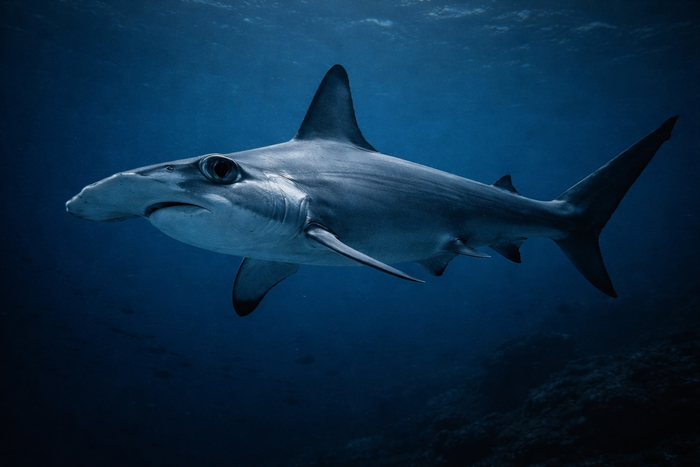
The hammerhead’s most obvious feature is its cephalofoil, a flattened, laterally extended head that looks like a hammer. This isn’t just a bizarre evolutionary quirk. The wide head enhances sensory perception, spreading out the shark’s electroreceptors called ampullae of Lorenzini. This allows hammerheads to detect the electric fields generated by prey buried in the sand with surgical precision. The broad head also improves maneuverability, giving the shark a tighter turning radius than many other large sharks.
Beyond the head, hammerheads exhibit unusual social behavior. Unlike most solitary sharks, scalloped hammerheads form large schools during the day, sometimes numbering in the hundreds. These aggregations are thought to offer protection from larger predators and may play a role in mating strategies. At night, they disperse to hunt alone, showing a fascinating balance between social and solitary lifestyles.
Habitat & Global Range
Hammerhead Shark habitat spans tropical and warm temperate waters worldwide, with a preference for coastal areas, continental shelves, and deep oceanic waters. Sphyrna lewini is found from the eastern Atlantic to the Indo-Pacific, including the coasts of the Americas, Africa, and Asia. They are often spotted near coral reefs, seamounts, and islands where prey is abundant.
These sharks are highly migratory, traveling thousands of miles across ocean basins. Their movements are influenced by water temperature, prey availability, and breeding cycles. Juveniles tend to stay in shallow nursery areas, while adults venture into deeper waters. This broad habitat range and migratory behavior make hammerheads a vital link between different marine ecosystems.
Behavior & Temperament
Hammerhead sharks are active predators with a diet that includes fish, squid, octopus, crustaceans, and other smaller sharks. Their hunting strategy leverages their sensory advantages and agility. The cephalofoil allows them to pin down stingrays and other bottom-dwelling prey, using the wide head to trap and immobilize.
Despite their fearsome reputation, hammerheads are generally cautious around humans and rarely aggressive unless provoked. Their schooling behavior during the day suggests a level of social complexity uncommon in sharks. These schools may serve as a defense mechanism or a way to increase reproductive success by facilitating mate encounters.
Hammerheads also exhibit interesting reproductive behavior. They are viviparous, meaning females give birth to live young after a gestation period of about 10 to 11 months. Litters can range from 15 to 40 pups, which are born fully formed and ready to fend for themselves.
Ecological Importance
Hammerhead sharks are apex predators, sitting near the top of the marine food chain. Their presence helps maintain the balance of marine ecosystems by controlling populations of prey species. This top-down regulation prevents any single species from dominating and helps sustain biodiversity.
By preying on weaker or sick individuals, hammerheads contribute to the overall health of fish populations. Their role in shaping the structure of marine communities is crucial, especially in coral reef and coastal environments where they help maintain the delicate balance between predator and prey.
Conservation & Environmental Pressures
Despite their ecological importance, hammerhead sharks face significant threats. Overfishing, driven by demand for their fins in shark fin soup and their meat, has led to dramatic population declines. Their slow reproductive rate and late maturity make recovery difficult once numbers drop.
Habitat degradation, including coral reef destruction and pollution, further pressures hammerhead populations. Bycatch in commercial fisheries also contributes to mortality, often unintentionally.
Conservation efforts focus on protecting critical habitats, regulating fishing practices, and enforcing international trade restrictions. Marine protected areas and shark sanctuaries have shown promise in stabilizing some populations, but global cooperation remains essential.
The FishyAF Take
Hammerhead sharks are more than just ocean oddities with funky heads. They are sophisticated predators with a complex social life and a pivotal role in marine ecosystems. Understanding Hammerhead Shark facts and their habitat is crucial for appreciating why their conservation matters. These sharks remind us that evolution can be both practical and visually striking, and that apex predators deserve our respect and protection.
If you want to see a shark that rewrites the rulebook on what a predator looks and acts like, the scalloped hammerhead is your go-to. But don’t just admire them from afar—support efforts that keep their populations swimming strong. Because when hammerheads thrive, the ocean thrives.