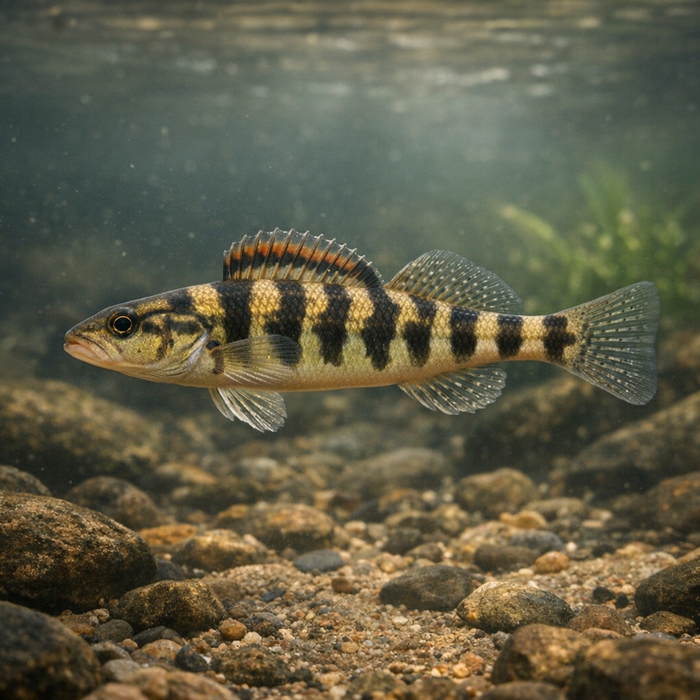
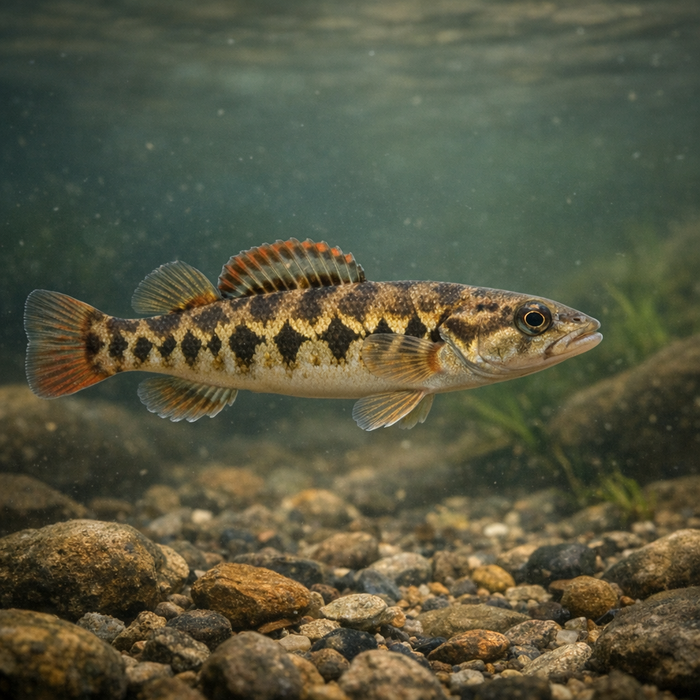
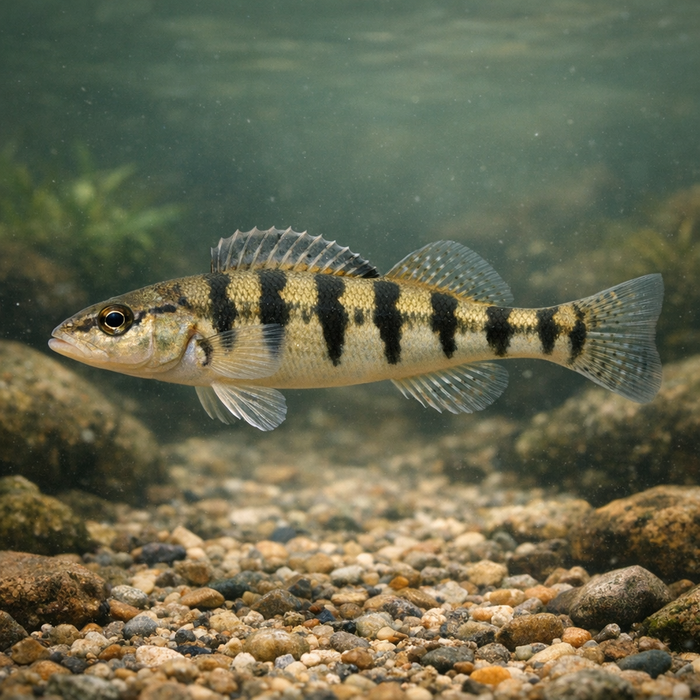
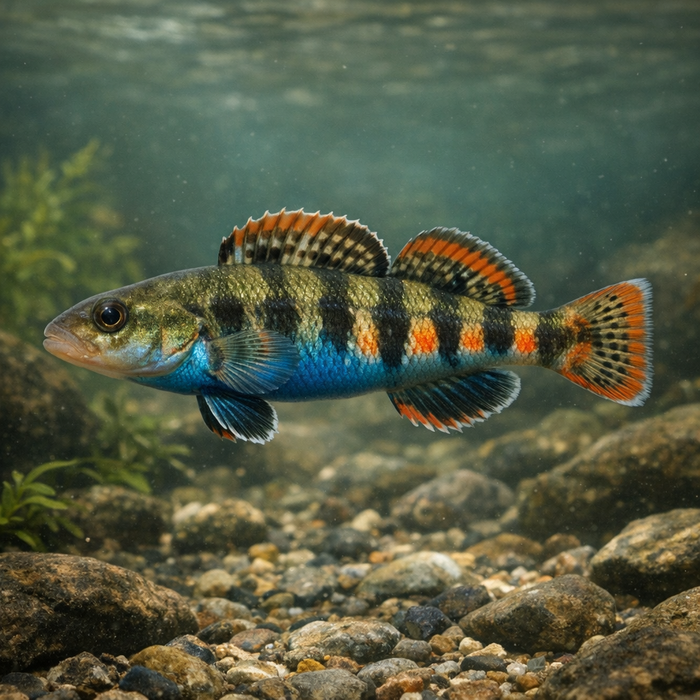
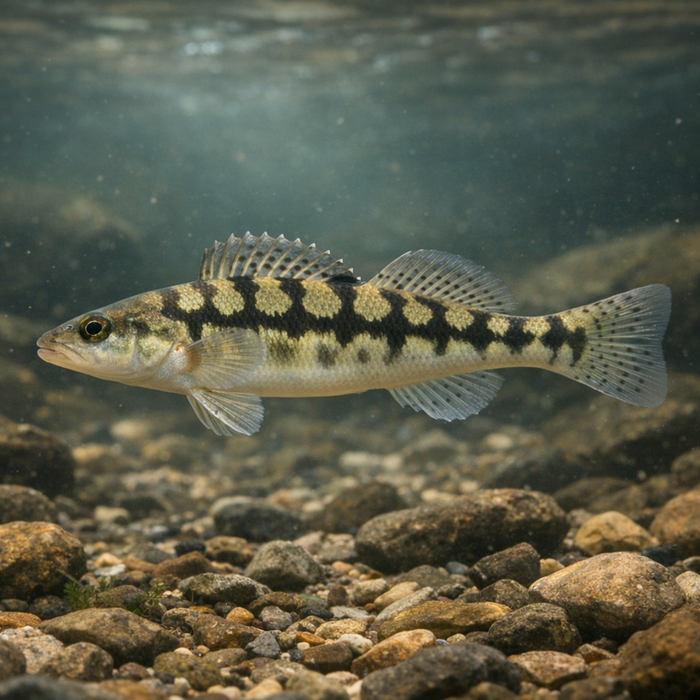
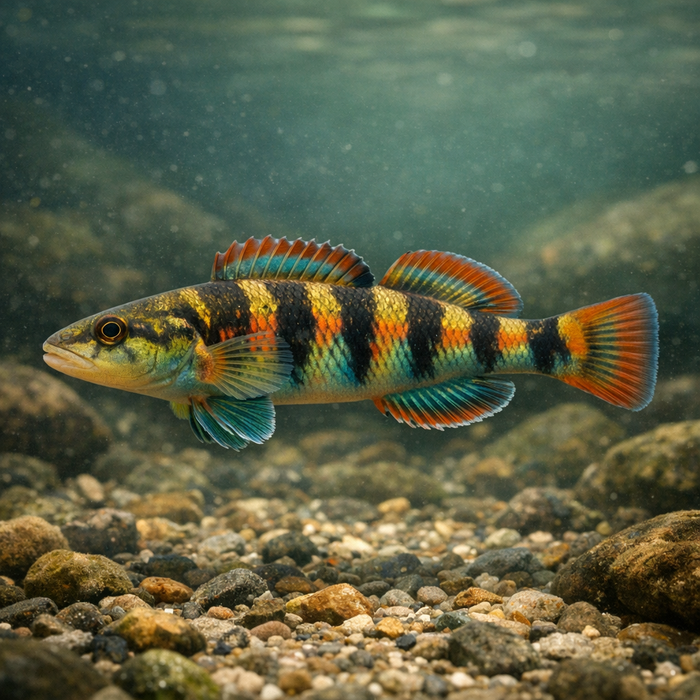
Harlequin Darter (Etheostoma histrio): A Bold, Memorable Hook LineIntroductionIf river current had a favorite graffiti artist, it would be the harlequin darter. This tiny bruiser wears a riot of bars and blotches and lives smack in the main flow where lesser fish spin out. Anglers don't target it for fillets or hero shots. They chase it because it's elusive, beautiful, and tucked into driftwood on the roaring edge of chaos. That alone makes the harlequin darter a bucket-list micro for anyone who likes a challenge.What Makes the Harlequin darter Unique?Two things. First, habitat choice. While many darters haunt riffles and pocket water, the harlequin darter stakes claims in large, fast rivers. It hugs submerged logs, rootwads, and sand-wood interfaces in the main channel, using broad pectorals like suction wings. Second, the look. During breeding season males crank up the color to full carnival mode. Think emerald flashes, orange bars, and bold patterning that inspired the name histrio, meaning actor. Among darters, this one is a showpiece.Habitat & Global RangeThe harlequin darter habitat is all about moving water and woody structure. Picture wing dikes, drift piles jammed against sandbars, and deep runs where current boils hard. That's home. It's a lower to mid Mississippi River Basin native, showing up in big-river corridors and select tributaries across parts of the Midwest, Southeast, and Gulf states. You won't catch it in mountain creeks or clear northern lakes. If you're after Harlequin darter facts, start with this: find the timber in serious flow.Behavior & TemperamentThis fish is a sprinter, not a cruiser. It rockets a foot or two, then locks down on bottom as if magnetized. Feeding is all ambush: tiny invertebrates swept along the woodline, grabbed in fast bursts. It doesn't school in big packs, and it's not a surface player. You're dealing with a bottom hugger that picks lanes, uses current seams, and vanishes into the woodgrain the second you blink.Ecological ImportanceHarlequin darters are bite-sized, but they're heavyweight indicators of large-river health. They turn insect energy into fish biomass and in turn feed larger predators. They also telegraph the condition of a system's woody debris and sand-gravel dynamics. Lose the driftwood and complex channel structure, and you lose the microfauna that powers fish like this. When a harlequin darter population is steady, odds are the river's backbone is intact.Conservation & Environmental PressuresChannelization trims off the river's structural hair, which is bad news for a wood-centric fish. Dams change flow timing and bury woody habitat under slackwater sediment. Add bank hardening, dredging, and silt pulses and you've got a cocktail that narrows the harlequin's options. The species is often listed as Least Concern overall, but local populations can be spotty. Respect the drift piles, avoid trampling spawning wood, and consider photos-only captures if you're microfishing sensitive spots.The FishyAF TakeThe harlequin darter is a paradox: tiny but tough, fragile-looking yet built for hydraulic mayhem. If you fish because solving puzzles is more fun than slinging hardware, this species is your jam. The playbook is straightforward but unforgiving: micro hooks, tiny offerings, and dead-on drift control along gnarly wood in mean current. Screw up the angle and you're snagged. Nail it and you get a flash of color and bragging rights most anglers will never earn. That's the charm of the harlequin darter: small fish, big river, bigger grin.