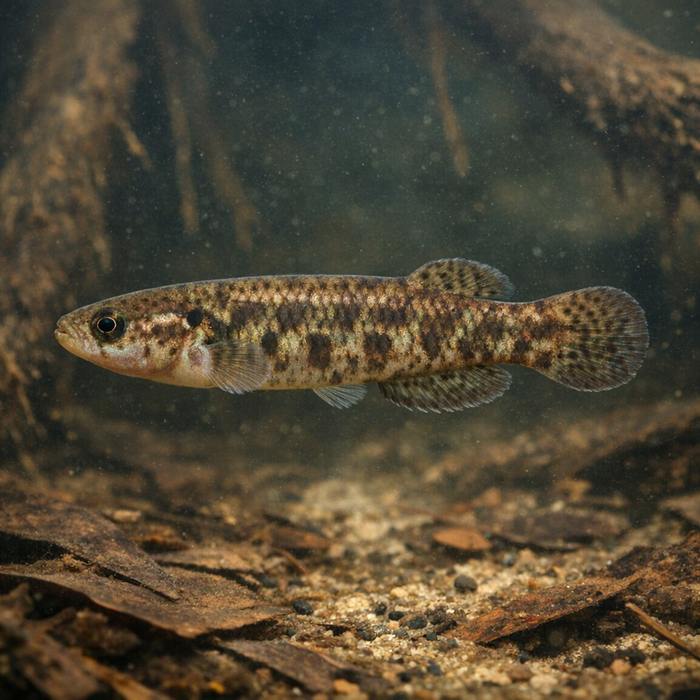
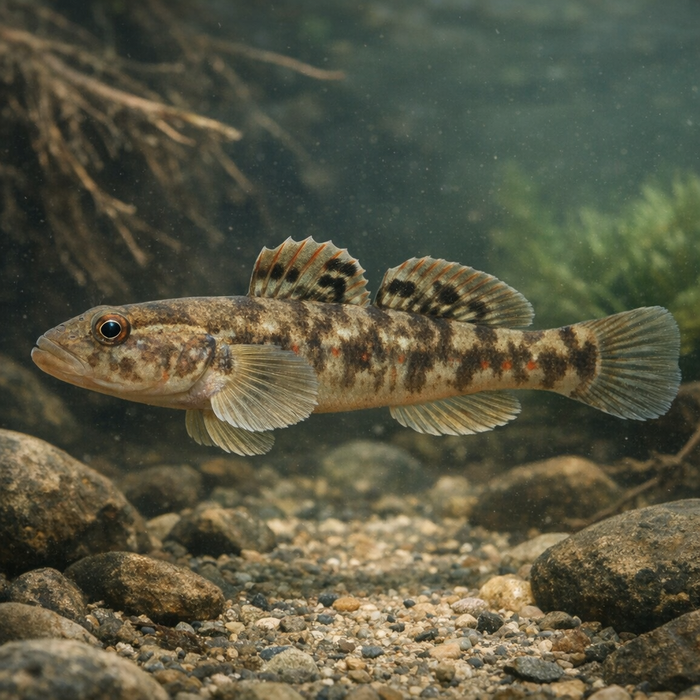
Hart's rivulus (Anablepsoides hartii): A Bold, Memorable Hook LineIntroductionThink three inches of attitude. The Hart's rivulus is a micro predator with a surface skimmer's swagger, a fish that rules leaf-choked jungle creeks like it paid the rent. Anglers who love finesse, stealth, and weirdly satisfying small-scale victories get hooked quickly. If you're here for Hart's rivulus facts and a clear picture of the Hart's rivulus habitat, you're in the right riffle.What Makes the Hart's rivulus Unique?Start with the mouth: it's upturned, purpose-built for sipping insects and skating the surface film where oxygen is richest in slow water. Males flash surprising color for such a small fish, with turquoise washes and orange speckling when the lights hit right. And in a cool twist of science lore, the Hart's rivulus serves as a key player in Trinidad headwaters, shaping how wild guppies evolve when bigger predators are absent. Three inches tall, but punching above its weight.Habitat & Global RangeThe Hart's rivulus is a child of warm, shaded, low-order streams. Picture narrow channels, ankle-deep riffles, and quiet pools stacked with leaf litter, root tangles, and overhanging brush. It's most closely tied to Trinidad and parts of northern South America, where forested foothills drain off in a patchwork of tiny creeks and seepage lanes. These fish tolerate lulls in flow and under-oxygenated water by cruising the surface film. After heavy rains, they can push into slightly brackish edge water, lurking in still pockets near mangrove outflows and culverts. The Hart's rivulus habitat is a lesson in micro-structure: anything that creates a thin, safe surface corridor is prime real estate.Behavior & TemperamentThis species is a surface-centric ambush artist. It hovers under the film, spring-loading for any drifting insect or helpless larvae. Despite their size, Hart's rivulus act like boss fish in fish-poor headwaters, claiming the best shaded seams and bullying anything smaller. They're skittish in clear water, bolting at clumsy shadows or clanks on the bank. Expect short feeding flurries when light softens and bugs rain down. In tight quarters they'll perform fast, accurate jumps, hopping around twigs and leaf mats to escape or to reach new puddles when flow breaks.Ecological ImportanceThe Hart's rivulus is a keystone micromanager. In streams without larger piscivores, they help set the tone for invertebrate communities and even nudge the life strategies of coexisting species like guppies. By hammering surface insects and larvae, they convert terrestrial energy into fish growth, moving calories up the food web. Their tolerance for low oxygen and flashy rain events makes them early colonizers after disturbances, helping stabilize tiny aquatic patches that would otherwise be midge country only.Conservation & Environmental PressuresGood news first: Hart's rivulus remains widespread where suitable forested drainages persist. The catch is that it needs cover, clean trickles, and intact leaf packs. Deforestation, silt-choked runoff, and cemented drainages sandblast the small-scale complexity these fish require. Urbanization clips their travel routes and slams them with pollutants right where they breathe and feed: the surface. Big-picture climate swings bring flashier floods and harsher dry spells, isolating micro populations. It's not the poster child of crisis, but it's absolutely a species that disappears locally when small streams are abused.The FishyAF TakeThe Hart's rivulus is the perfect excuse to slow down and fish smarter. It's not about grip-and-grin; it's about outfoxing a wisp of muscle living in four inches of water. Sneak in, read the film, and watch for the tiniest dimple. Nail one and you'll suddenly notice a whole world you used to stomp past. Hart's rivulus won't win you fame, but it will sharpen every edge of your game. And that's the kind of win that pays off everywhere else you wet a line. Hart's rivulus may be small, but as far as stream craft goes, it's a heavyweight.