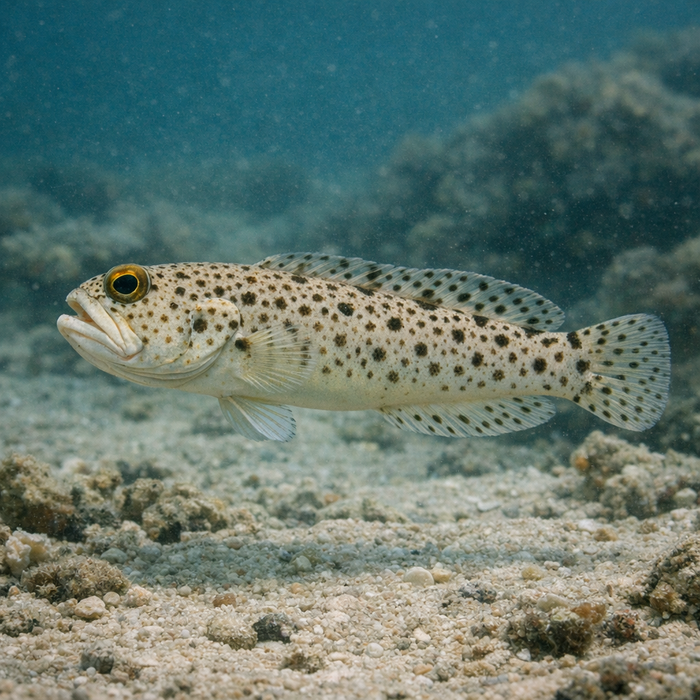
Hook Jawfish (Lonchopisthus ancistrus): Tiny Engineer With A Big AttitudeIntroductionMeet the hook jawfish, a pocket-sized reef tenant with major home-improvement energy. It spends its days popping in and out of a tidy little burrow like a nervous landlord, spitting sand, finessing pebbles, and watching everything with telescope eyes. You won't chase hook jawfish with big rods or hero shots, but if you like technical, quirky fish that reward patience and precision, this species checks the box. Consider this your crash course in Hook jawfish facts and Hook jawfish habitat, translated for anglers who appreciate small-game challenges.What Makes the Hook jawfish Unique?Two things. First, that namesake "hook" - a small bony process on the cheek area - gives Lonchopisthus ancistrus its moniker and a tougher look than its size suggests. Second, the behavior. The hook jawfish is a compulsive burrow architect. It gathers shell bits, coral rubble, and coarse sand to build a vertical shaft with a tidy chimney entrance. Much of its life happens just inches above that doorway, hovering like a periscope before rocketing tail-first back inside at the first hint of trouble. Add in mouthbrooding males, which gently tumble eggs inside their jaws to oxygenate them, and you've got a species that is equal parts delicate and hardcore.Habitat & Global RangeThe hook jawfish lives where coral structure meets sand and small rubble - that border zone many anglers swim past on the way to the "real reef." It favors gently sloped sandy patches, patch reefs, and calm bays with stable substrate. Depths are commonly shallow, in snorkeling range, though they'll use slightly deeper sand flats if current and cover cooperate. If you're mapping Hook jawfish habitat, think micro-topography: shell fragments, coral chips, and pea gravel that can be rearranged into a burrow without collapsing.Behavior & TemperamentSkittish? Absolutely. The hook jawfish is a world-class peekaboo specialist, spending minutes hovering half-out, then vanishing in a blink. It's territorial at burrow scale, yet not a roamer; most foraging happens within quick-dart distance of home base. Males mouthbrood, which means during parts of the season you'll see bulged jaws and especially cautious behavior. Despite the gentle vibe, they can be feisty toward neighbors, flaring fins and jawing like mini street toughs. As a target, they're a finesse project: tiny hooks, tiny baits, perfect placement, and the patience to wait them out.Ecological ImportanceHook jawfish don't just use the bottom; they remodel it. By moving sand and rubble, they aerate microhabitats and shuffle shell material, which in turn influences invertebrate life and the broader sand-reef interface. Their hovering and darting also redistribute organic bits and kick up small prey items for other reef creatures. It's a small fish that quietly punches above its weight in the neighborhood's housekeeping.Conservation & Environmental PressuresLike most small reef specialists, the hook jawfish needs clean water, stable substrate, and intact reef structure nearby. Coastal development, sediment plumes, and careless anchoring can flatten or silt-in the very rubble fields it requires. Aquarium collection pressure varies regionally and is typically modest, but localized take could matter where populations are patchy. Big-picture threats - warming seas, storm intensity, and coral decline - indirectly pinch this species by degrading the surrounding reef system that feeds and shelters it.The FishyAF TakeThe hook jawfish is not a grip-and-grin hero. It's a connoisseur's fish - a test of soft hands, steady approach, and silly-small tackle. If you're the angler who inspects sand patches between coral heads and sees opportunity, you'll vibe with hook jawfish. Call it micro-surgery with a split shot. Watch the chimney. Drift a sliver of shrimp just right. When that little head edges up and commits, set gently and enjoy thirty seconds of spirited nonsense. It's not about the fight; it's about outsmarting a tiny engineer on its home turf. That, friends, is A-level fun in a pint-sized package.