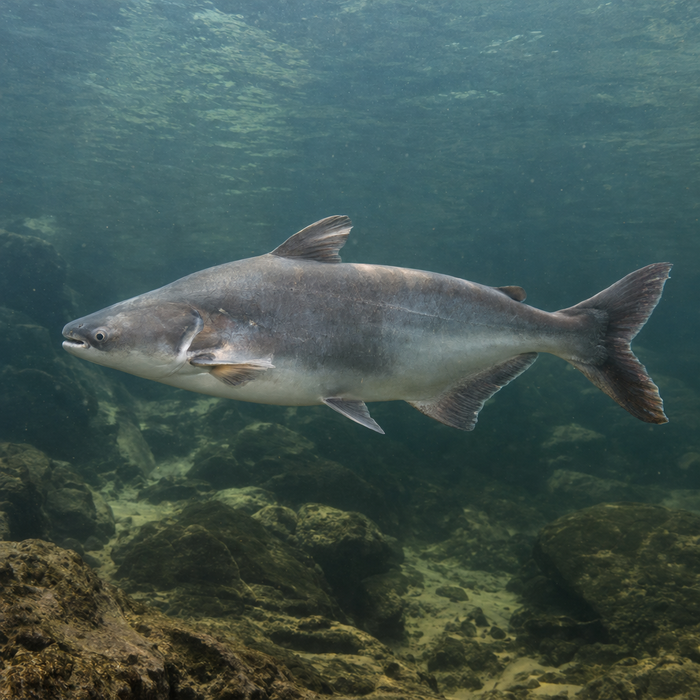
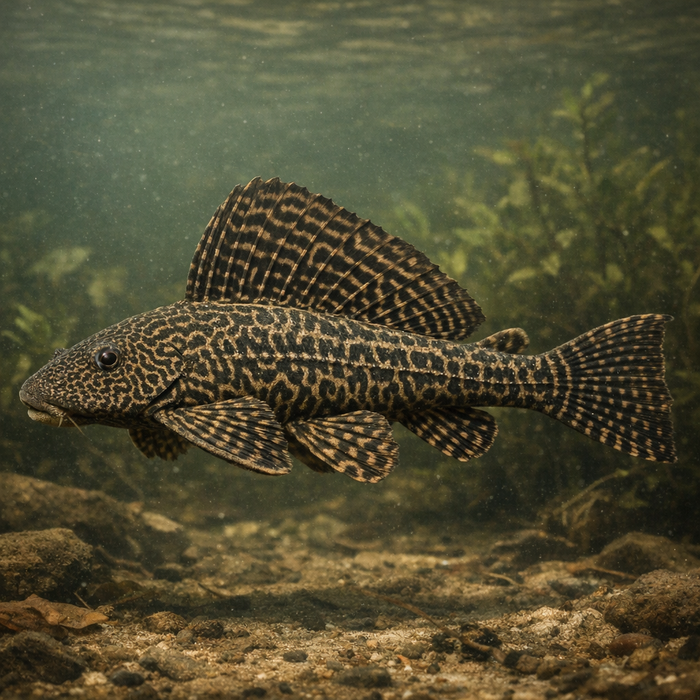
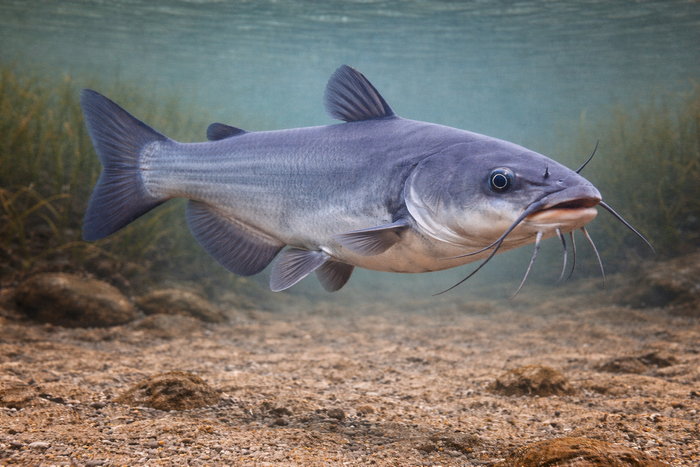
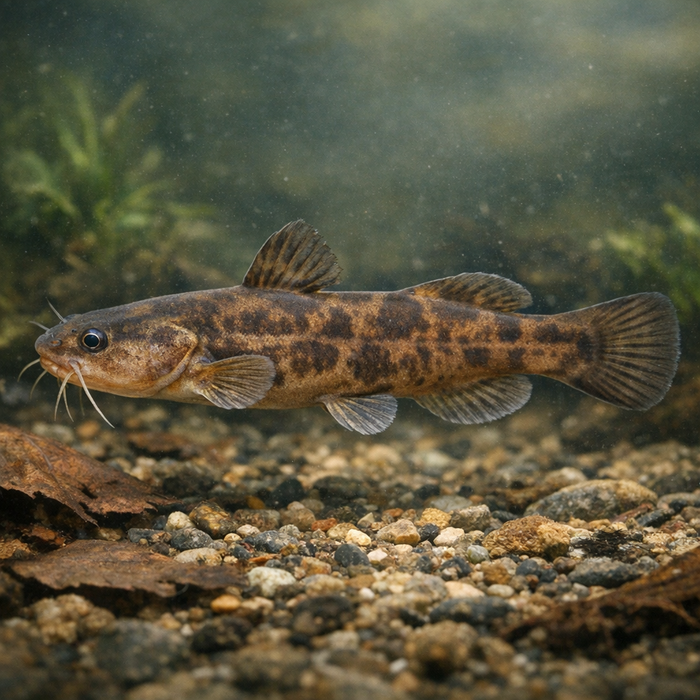
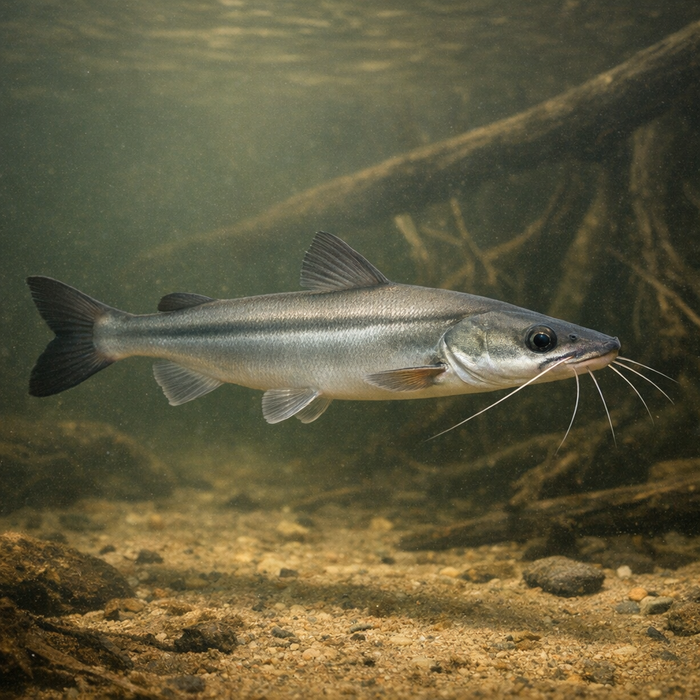
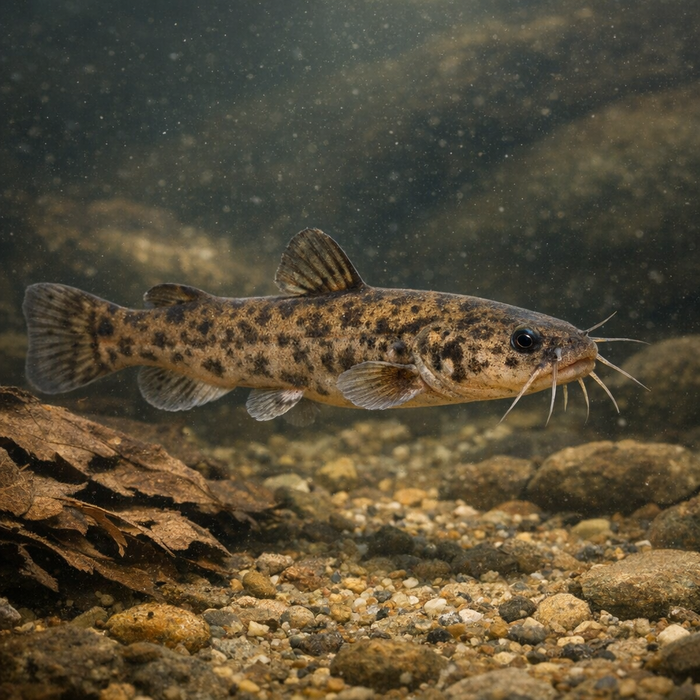
Iridescent Shark (Pangasianodon hypophthalmus): The Shark Is Branding. The Catfish Is Real.
The Iridescent Shark has a name built for trouble and a menu that includes plant material. That combination tells you plenty. This Southeast Asian freshwater catfish wears a shark-like outline, but it belongs to the family Pangasiidae, not the shark lineup. Anglers also know it as striped catfish, while seafood shoppers may encounter the same species as swai or tra. One fish, several identities, and considerable room for confusion before anybody even opens a tackle box.
For fishing purposes, start with the right picture: a substantial tropical catfish that deserves proper bait tackle, not a miniature shark requiring theatrical equipment. Its appeal is more interesting than the misleading name.
What Makes the Iridescent Shark Unique?
The Iridescent Shark carries a remarkable piece of internal equipment: a swim bladder that doubles as an air-breathing organ. When dissolved oxygen becomes scarce, it can supplement aquatic respiration by taking oxygen from the atmosphere. That is not permission to mistreat one on the bank; it is a specialized adaptation to challenging water conditions. Research has also documented unusual circulation through its gills and respiratory swim bladder, helping explain how this fish manages oxygen so effectively.
Its appearance changes with age, too. Young fish show dark longitudinal stripes, while large adults become much more uniformly gray. The fish that earned the flashy aquarium name does not keep the same outfit forever.
Habitat & Global Range
Natural Iridescent Shark habitat centers on Southeast Asian river systems, particularly the Mekong and Chao Phraya basins. This is fundamentally a large-river species whose life connects main channels, seasonal floodplains, and associated lakes. In the Mekong system, young fish use inundated feeding areas before retreating toward deeper permanent water as floods subside. Thinking only about the main river misses a substantial part of the story.
Aquaculture introductions and managed fisheries have extended its presence beyond native waters. For anglers, that distinction matters: catching a stocked fish in a pond is a different proposition from locating a moving population in a sprawling river network. Confirm the water, the stock, and the rules before planning around a map pin.
Behavior & Temperament
Do not mistake a catfish label for a lifetime spent glued to the bottom. The Iridescent Shark is migratory, and its movements link different habitats rather than a single permanent hideout. Adults and young fish also use the river system differently. Among the more useful Iridescent Shark facts is that drifting early life stages can occur near the surface, unlike several other pangasiid catfishes collected deeper in the water.
It is an omnivore rather than a dedicated hunter. Its documented diet spans plant material and animal food, with larger fish also consuming items such as fruits, crustaceans, and fish. That flexible feeding ecology helps explain why anglers should not approach it as though every shark-shaped fish demands live bait.
Ecological Importance
The Iridescent Shark connects productive floodplain feeding grounds with river habitats through its life cycle. Its drifting young also illustrate why a river cannot be managed as a collection of unrelated stretches. Spawning habitat upstream and nursery habitat downstream belong to the same biological equation, even when national borders sit between them. Protecting one while degrading the other is an expensive way to miss the point.
Its importance is human as well as ecological. This species is a major aquaculture fish, supporting food production and livelihoods far beyond the places where wild populations reproduce. Commercial familiarity, however, should never be confused with ecological security. A fish can be abundant in production systems while its natural population remains under pressure.
Conservation & Environmental Pressures
The Iridescent Shark is classified as Endangered. That status concerns wild populations; plentiful farmed fillets do not cancel it. Historical fisheries assessments describe substantial declines and identify the vulnerability of larval drift and migration to dams, flood protection, and irrigation works. For a species dependent on connected habitats, changing the river's plumbing can disrupt more than the adult fish visible at the surface.
Fishing pressure adds another layer. Responsible angling starts with distinguishing managed stocks from wild fish, respecting protected areas, and checking whether retention is lawful. A catch photograph is not a conservation exemption. Neither is assuming that successful hatchery production makes every wild population replaceable.
The FishyAF Take
This fish deserves better than being dismissed as either an aquarium mistake or anonymous white fillet. Approach it as a catfish with its own biology, not a shark impersonator that owes you a particular kind of fight.
For the angler, the sensible starting point is refreshingly unglamorous: bread or rice-bran bait, float or feeder presentation, sound knots, and tackle suited to everything sharing the venue. Then adjust instead of blaming the fish. The best part of this species is the mismatch between appearance and reality. The name sells menace. The actual fish rewards observation. Bring less mythology and a better drag.