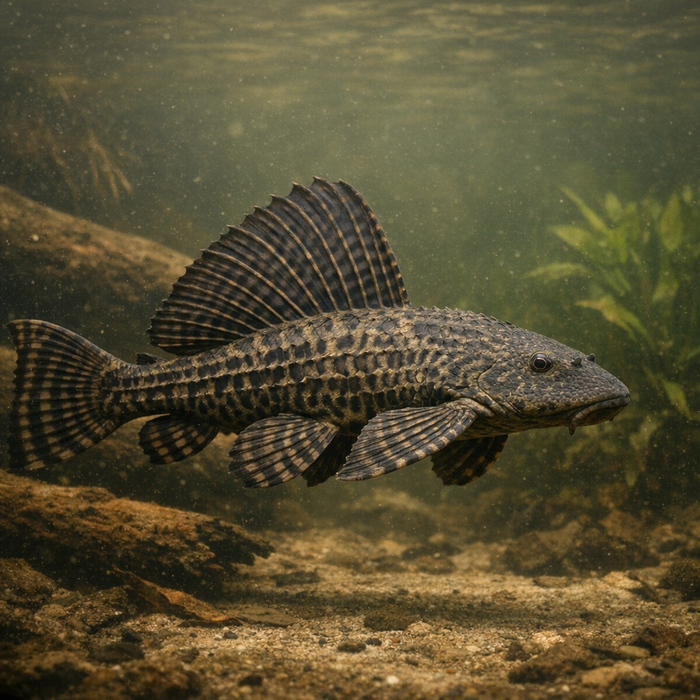
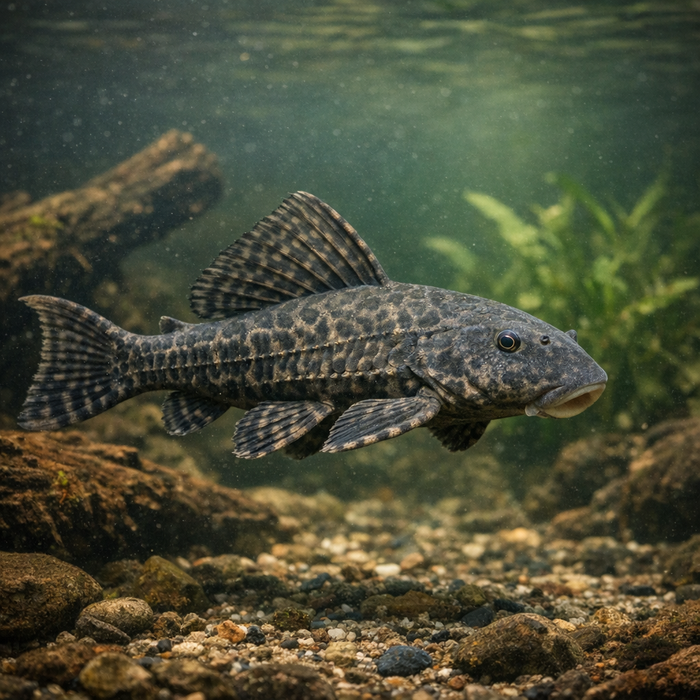
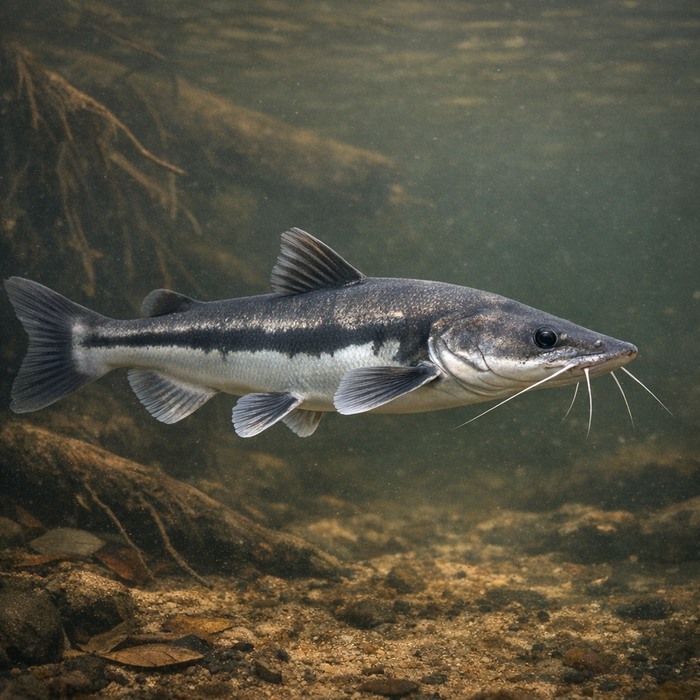
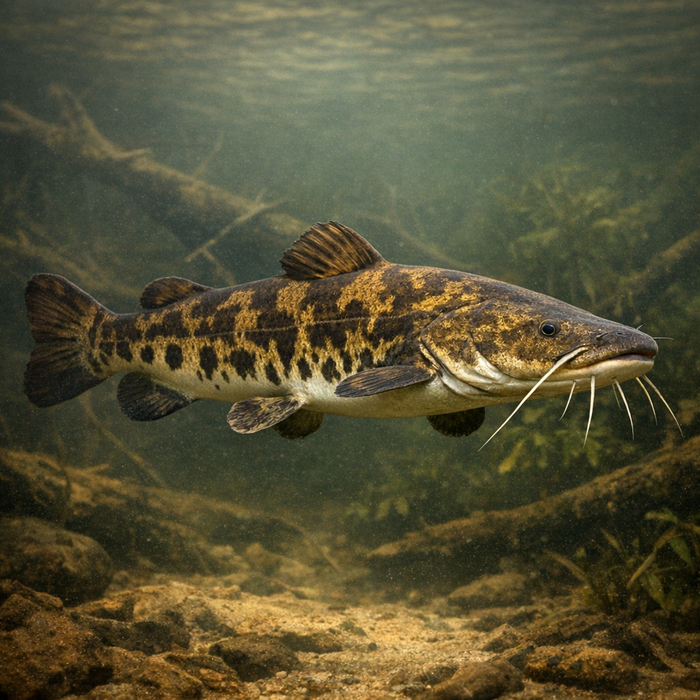
Vermiculated Sailfin Catfish (Pterygoplichthys disjunctivus): The armored lawnmower that turns canals into buffets.IntroductionThe vermiculated sailfin catfish isn't here to wow you with acrobatics. It's here to outlast everything else. Armored like a medieval problem and suctioned to whatever it wants, this fish converts concrete-lined canals and muddy rivers into algae bars, shrugs off nasty water, and quietly gets huge. If you've seen a big pleco plastered to a bridge piling or skulking along a brown bank, you've likely met this one.What Makes the Vermiculated sailfin catfish Unique?Start with the look: a giant sail-like dorsal fin and a maze of vermiculated lines over bone-plated armor. It's a walking tank with a vacuum for a face. That sucker mouth doesn't just nibble; it scrapes surfaces clean, rasping algae and detritus with sandpaper lips and teeth designed for grinding. Then there's the air-breathing trick. When oxygen dips, the vermiculated sailfin catfish gulps air and keeps on trucking, no problem. Add in burrow engineering worthy of a civil works project: males excavate deep tunnels and guard eggs until fry launch. Among vermiculated sailfin catfish facts, their combination of armor, respiration hacks, and parental investment stands out.Habitat & Global RangeOriginally from tropical South America, the vermiculated sailfin catfish has gone global courtesy of aquarium releases and pure survival talent. You'll encounter it in warm freshwater canals, slow rivers, ponds, and reservoirs with soft bottoms and bank structure. It thrives in silty, low-visibility water where other fish sulk, and it tolerates brief brushes with brackish conditions in coastal canal systems. Think culverts, riprap, bridge shadows, and undercut clay banks. If the water is warm, sluggish, and a little ugly, this fish is probably happy. Search terms like vermiculated sailfin catfish habitat bring you to one theme: warm, shallow, structured water that grows algae.Behavior & TemperamentThis isn't a flashy predator; it's a grazer with a stubborn streak. The vermiculated sailfin catfish patrols bottom zones, often in loose groups, and locks down on cover when spooked. It's cautious, especially in bright light or clear water, and bites are subtle when it bothers to bite at all. Most of the day is slow-motion feeding, with higher activity during low light and rising water. During the breeding season, males are all business: excavating, defending tunnels, and guarding egg masses. When hooked, expect a bulldog fight and a persistent suction-cup tantrum near structure rather than long runs or jumps.Ecological ImportanceLove them or not, vermiculated sailfin catfish are ecosystem remodelers. Their nonstop grazing can reduce filamentous algae and biofilm, reshaping the base of food webs. Burrowing alters banks, sometimes increasing erosion and turbidity. They compete with native bottom feeders for space and food, and in some places they even hassle large animals by scraping algae off their skin. At the same time, they recycle nutrients and aerate substrates. In their native range they're part of the normal machine. Elsewhere, they can become the machine.Conservation & Environmental PressuresAs a species, they're not sweating extinction. The bigger story is management where they're introduced. They spread through connected waterways, endure dry spells by hunkering down, and shrug at low oxygen. That resilience means managers worry about bank failures from burrows and the displacement of native grazers. Anglers often meet them in flood-control canals and urban waters-ground zero for introductions. Wherever rules classify them as invasive, harvest is encouraged or required. Identification can be tricky due to similar sailfin species, so documentation matters if regulations get strict.The FishyAF TakeThe vermiculated sailfin catfish is the blue-collar behemoth of warm-water ditches. It doesn't win beauty awards or fight like a tarpon, but respect the hustle. This fish survives what kills others, digs family bunkers, and polishes hardscape like an underwater janitor. If you're targeting them, think patience, stealth, and bottom baits that smell like a snack cart. If you're just canal-hopping, enjoy the show: a plated cruiser flaring its dorsal sail like a flag. For weird, durable, and oddly charismatic, the vermiculated sailfin catfish is peak urban-fish energy.