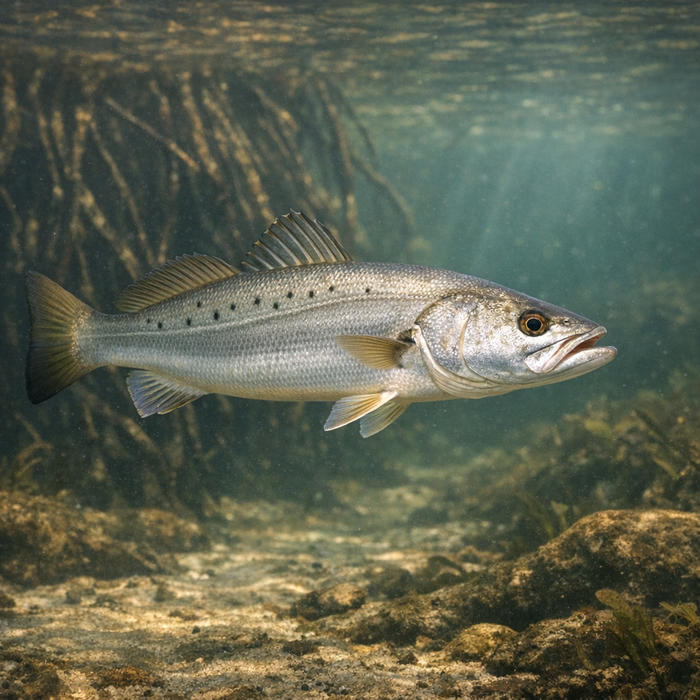
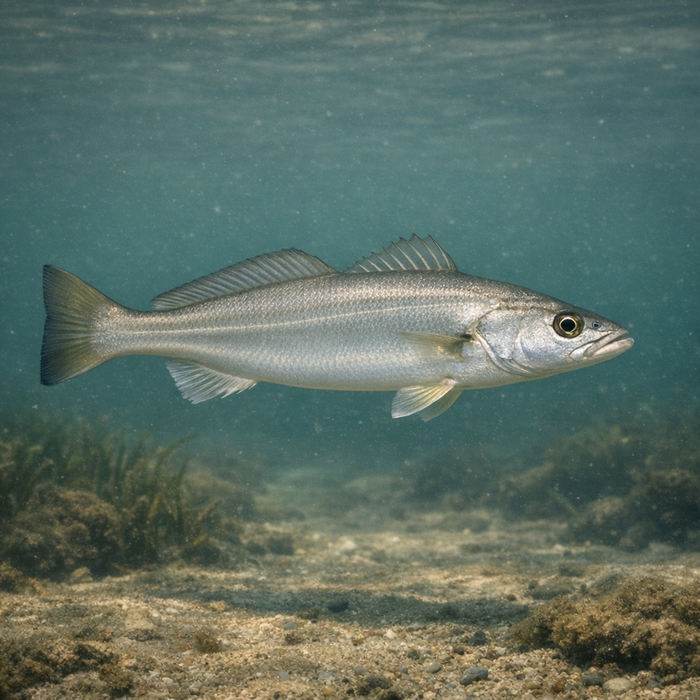
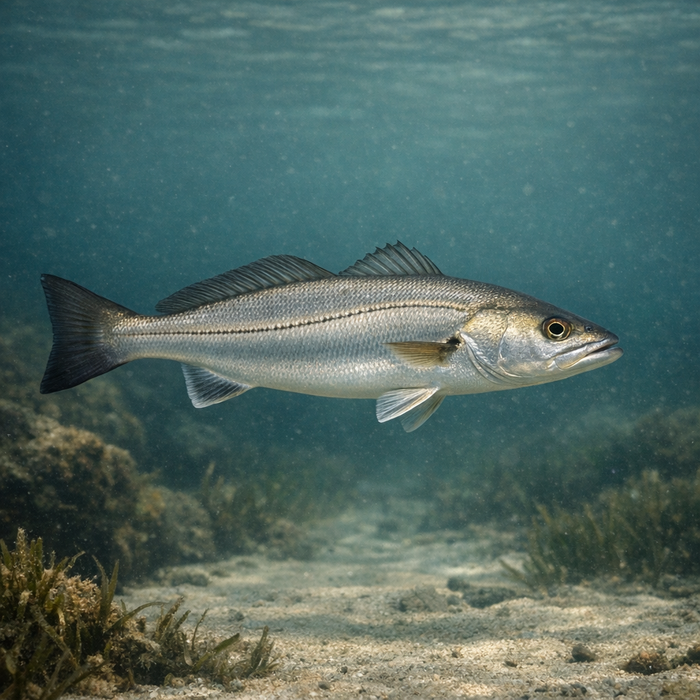
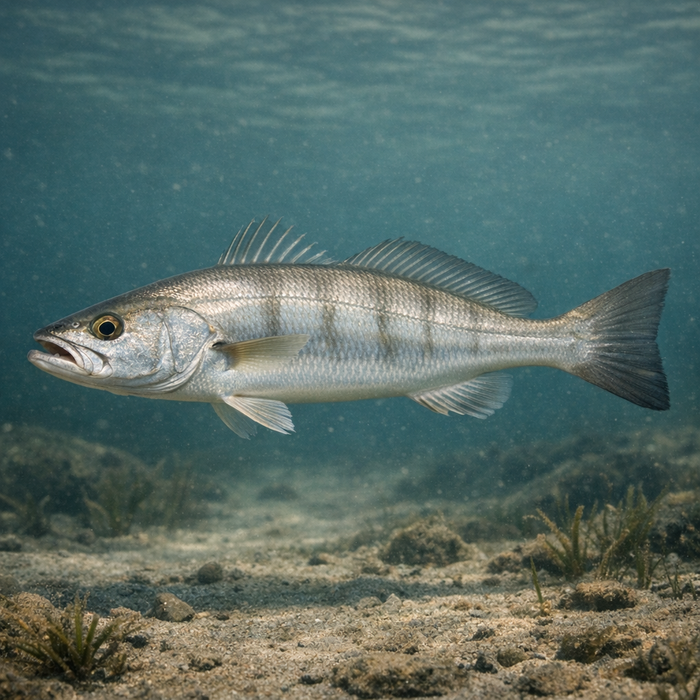
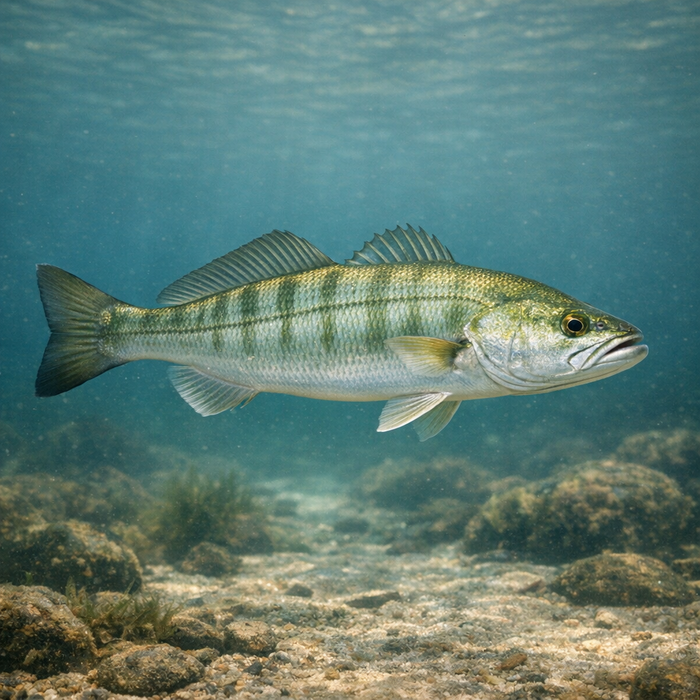
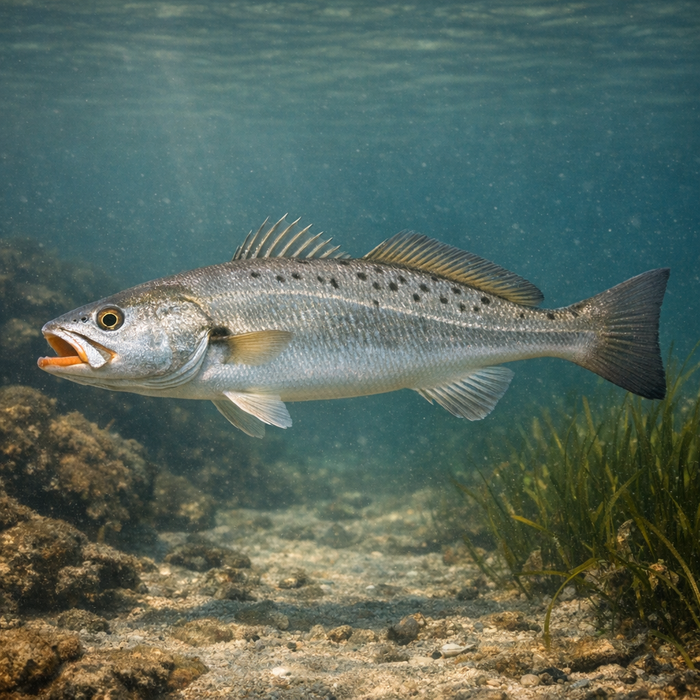
Jamaica Weakfish (Cynoscion jamaicensis): A Bold, Memorable Hook LineIntroductionThe Jamaica weakfish is a light-tackle charmer with a glass jaw and a subtle mean streak. One second it is feathering along a grass edge, the next it is rattling your rod tip with jittery headshakes. If you like finesse over brute force, this inshore player delivers. Think silver flashes, dusky purples, and the kind of delicate mouth that punishes sloppy hook-sets. We are talking about a fish that rewards touch and timing, not brawn.What Makes the Jamaica weakfish Unique?First, that name. The Jamaica weakfish has famously thin mouth tissue that tears easily, a defining trait across several weakfish species but a calling card here. It demands a softer drag and a steady hand. Second, this Cynoscion brings small canine teeth to a baitfish party. It is built for ambush on open sand and over thin grass where speed and feel matter. Finally, its vibe is elegant rather than loud. You get silver sides washed with lavender, faint speckling instead of billboard polka dots, and a straight lateral line that runs right onto the tail.Habitat & Global RangeWhen anglers ask about Jamaica weakfish habitat, they are really asking for a light-tackle playground. The species leans toward tropical and subtropical inshore waters across the Caribbean basin and nearby coasts. Picture bays, mangrove-fringed lagoons, sand-and-seagrass mosaics, and the outer edges of channels where tidal flow ferries bait. Depth is typically shallow to moderate, with action clustered from shin-deep flats to drop-offs that kiss 15 to 40 feet. Water color can be gin-clear in morning calm or tea-stained after squalls, and the fish adapt with ease, sliding between flats and deeper edges as light and tide shift. If you hunt structure junkyards, this fish is not your daily trophy. If you read edges and current, you are in business.Behavior & TemperamentThe Jamaica weakfish is a finesse predator. It prefers windows of moving water and low light, and it often schools loosely rather than balling up tight. Strikes can be feather soft, more tap than tackle-buster, followed by drum-family headshakes that try to rattle the hook loose. It will shadow bait on open bottom and poach the up-current side of grass clumps, using brief bursts instead of long chases. Surface tantrums are rare; think quick lunges and a jittery midwater fight. Spawning occurs inshore with buoyant eggs carried by currents, which fits their life strategy of cruising productive, sheltered water.Ecological ImportanceAs a mid-level predator, the Jamaica weakfish pins together the inshore food web. It converts schools of anchovies and silversides into calories for bigger hitters, while also pressuring shrimp and small crabs across seagrass. Its sensitivity to water clarity and tidal flow makes it a decent barometer for coastal health. Healthy grass, reasonable turbidity, and intact mangroves mean more bait and more weakfish slipping along the edges.Conservation & Environmental PressuresThis species does not usually headline management meetings, but it rides the same rollercoaster as other inshore fish. Seagrass loss, mangrove clearing, and murky runoff slice up prime Jamaica weakfish habitat. Overly aggressive gill nets and sloppy bycatch rules can nick local abundance. Because many weakfish are misidentified in markets and logbooks, clean data are scarcer than they should be. That does not scream crisis, but it does argue for smarter coastal care, gear choices that release fish in good shape, and basic restraint where schools are small.The FishyAF TakeThe Jamaica weakfish is not a grip-and-grin monster. It is a connoisseur's fish that rewards anglers who read water, love current edges, and can resist the urge to hammer hooks. You fish it for that delicate thump, the chrome-and-lavender flash, and the satisfaction of landing something that punishes impatience. If you wanted a sledgehammer, you showed up at the wrong dock. If you wanted refined, responsive inshore fishing and a species that makes light tackle sing, you picked the right silver ghost. File this under Jamaica weakfish facts worth knowing and then go prove them on the flats.