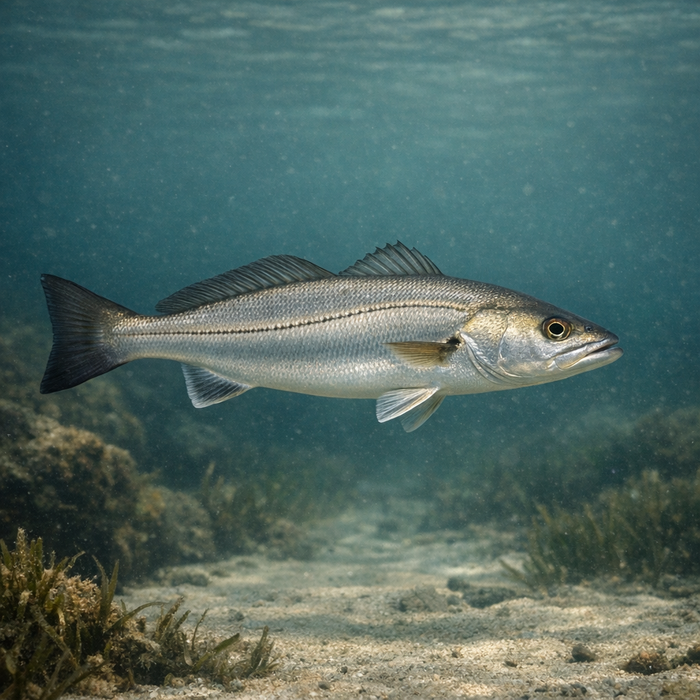
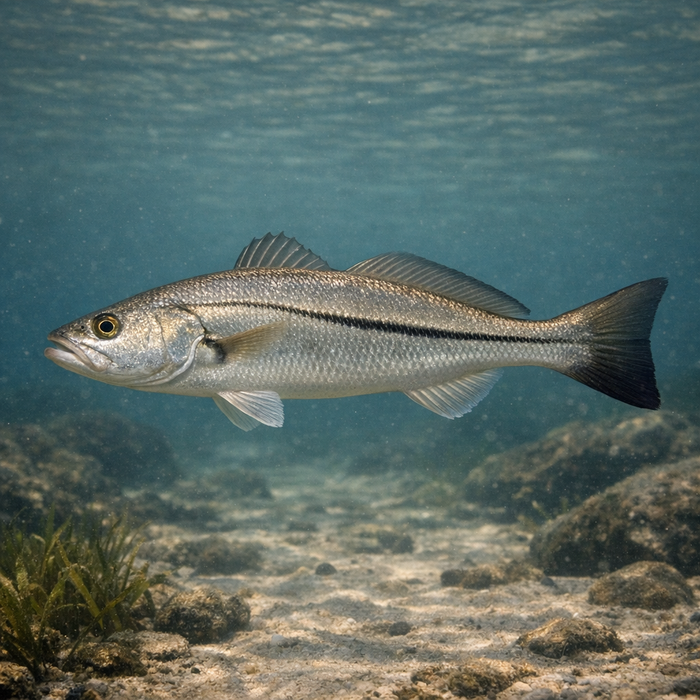
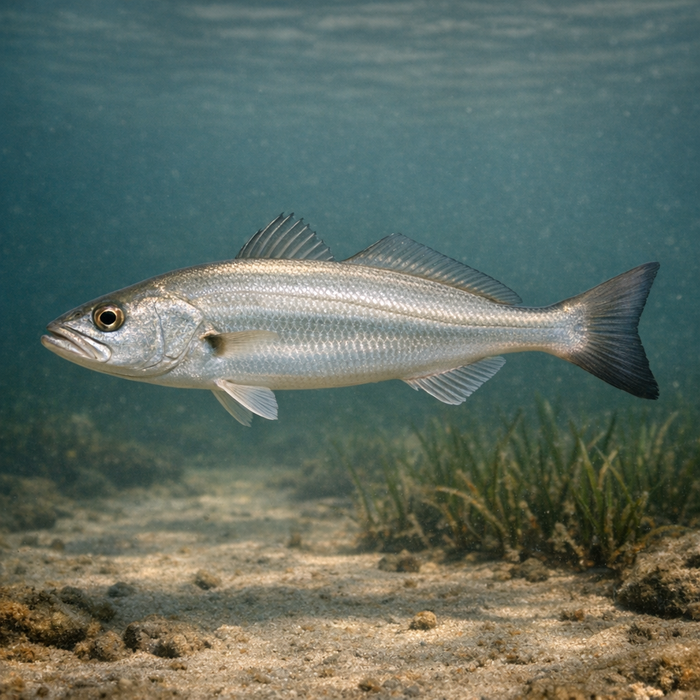
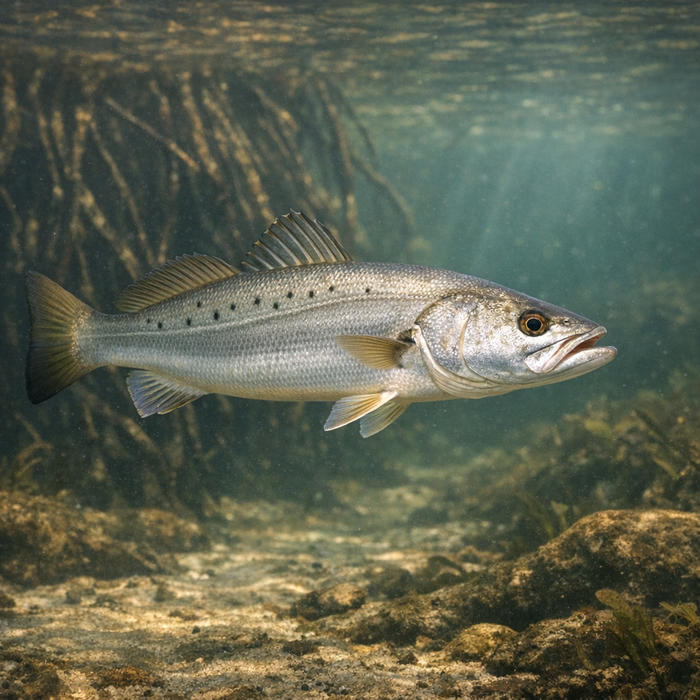
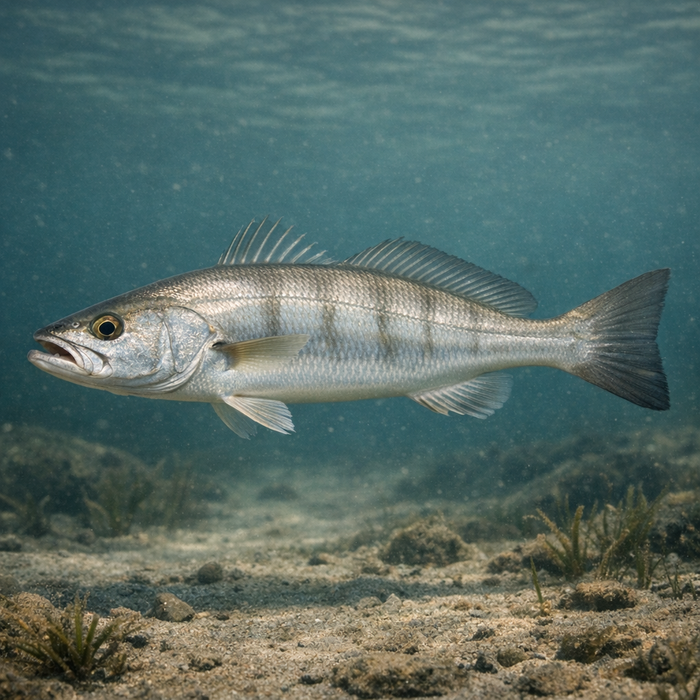
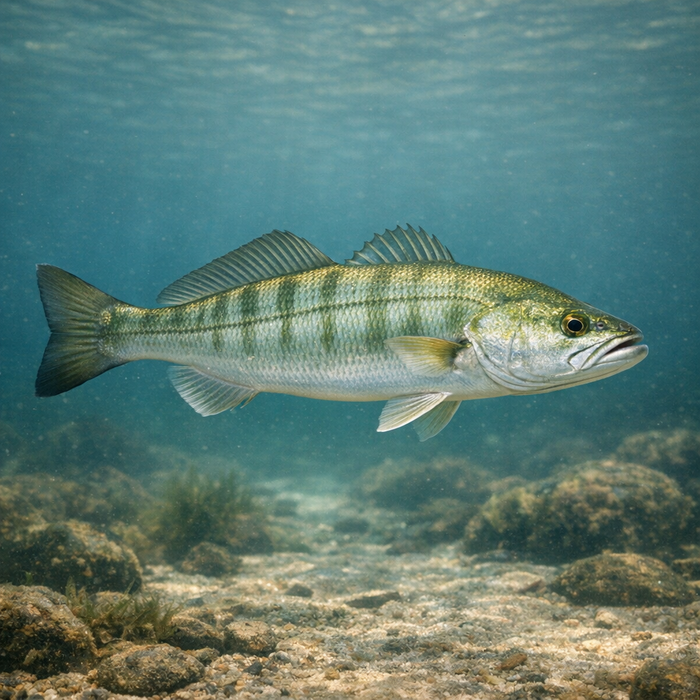
Smooth Weakfish (Cynoscion leiarchus): Silver Ghosts Of The Muddy EdgeIntroductionThe smooth weakfish is the slick, chrome-sided troublemaker prowling South America's estuaries. If your idea of fun is pitching into a milky-green channel and feeling a fast thump followed by head-shakes, this fish delivers. Not as hyped as snook or tarpon, the smooth weakfish still checks all the inshore boxes: accessible, picky enough to be interesting, and absolutely lethal on shrimp and small baitfish. Consider this your crash course in Smooth weakfish facts.What Makes the Smooth weakfish Unique?Start with the face. The cheek edge is smooth instead of serrated, a rare trait among croakers that spawned the name smooth weakfish. It also flashes a pair of understated canine teeth designed for pinning shrimp, anchovies, and glass minnows with precision. The body is clean and unspotted, a chrome torpedo with just enough dusk along the back to vanish in tannin-stained water. Unlike some drama-queen gamefish, smooth weakfish do not blitz on the surface often; they slip through current seams, feed in windows, and punish the inattentive.Habitat & Global RangeSmooth weakfish habitat is the messy, productive edge: tidal estuaries, muddy bays, river plumes, and shallow coastal zones across the tropical and subtropical Western Atlantic, particularly northern and eastern South America and parts of the Caribbean fringe. Picture soft-bottom channels, mangrove creek mouths, and drop-offs where fresh and salt water wrestle. They tolerate low visibility, even thrive in it, using that extended lateral line to pick up micro-vibrations. Depth is usually modest, think 3 to 60 feet, with daily tide rides pushing schools in and out of feeding lanes.Behavior & TemperamentYou will not find them doing cartwheels. The fight is tight and heady, with abrupt shakes capable of dumping a sloppy hookset. Smooth weakfish travel in size-sorted schools. Smaller packs cruise broad flats and marinas; quality fish hang near channels, shadow lines, and deeper bends where current does the chumming. They are crepuscular hitters, most active at dawn and dusk, and get moody under blazing sun or glassy water. In spawning season, males drum like someone tapping a bass amp. When they are on, it feels easy. When they are off, it is like casting at ghosts.Ecological ImportanceAs mid-level predators, smooth weakfish link estuarine bait surges to larger coastal food webs. They mop up shrimp, silversides, and juvenile fish, cycling energy from muddy creeks to nearshore reefs. In turn, bigger predators pick them off, especially when schools push shallow. Their presence signals a living estuary: moving water, structured edges, and an economy of bait that resets with every tide.Conservation & Environmental PressuresThe smooth weakfish runs headlong into classic estuary problems. Coastal development hardens shorelines that once crumbled bait into the flow. Dredging flattens structure. Dirty runoff, low oxygen, and shrimp-trawl bycatch all take a bite. In parts of its range, it is a staple market fish, which means steady pressure across all sizes. Most stocks depend on consistently productive nursery creeks. If those creeks go quiet, recruitment tanks. Regulations vary by country, and the species is not universally assessed, so anglers should treat bigger breeders like currency and handle releases with care.The FishyAF TakeThe smooth weakfish is an under-the-radar inshore ace. It is not the loudest, flashiest, or most photographed fish, but if you like reading tides, threading casts along edges, and watching a rod tip chatter when silver jaws clamp down, you will get hooked. Travel light, trust current seams, and fish the transitions. Respect the resource, because these fish make estuaries make sense. No cape, no spotlight, just honest work and a satisfying thump that says you solved the puzzle again.