Japanese Sea Bass (Lateolabrax japonicus): The Silver Predator Working the Night Shift
A waterfront does not need to look wild to hold a serious predator. Beneath bridge spans, beside harbor walls, and where rivers push into the sea, Japanese Sea Bass turn ordinary coastal infrastructure into hunting ground. They follow bait into places many anglers walk past, then make accurate casting considerably more interesting. This is an inshore gamefish with genuine everyday accessibility, not a species reserved for distant expeditions. Its coastal habits and willingness to strike lures explain the appeal: familiar-looking water can suddenly produce a fish worth rearranging your evening around.
What Makes the Japanese Sea Bass Unique?
Start with its ability to cross the saltwater boundary. Although rightly categorized as a saltwater gamefish, this species also uses brackish estuaries and freshwater rivers. Not every individual follows the same itinerary. Research has documented fish that remain marine and others that repeatedly enter rivers, showing that its movements are more flexible than a simple annual migration diagram suggests.
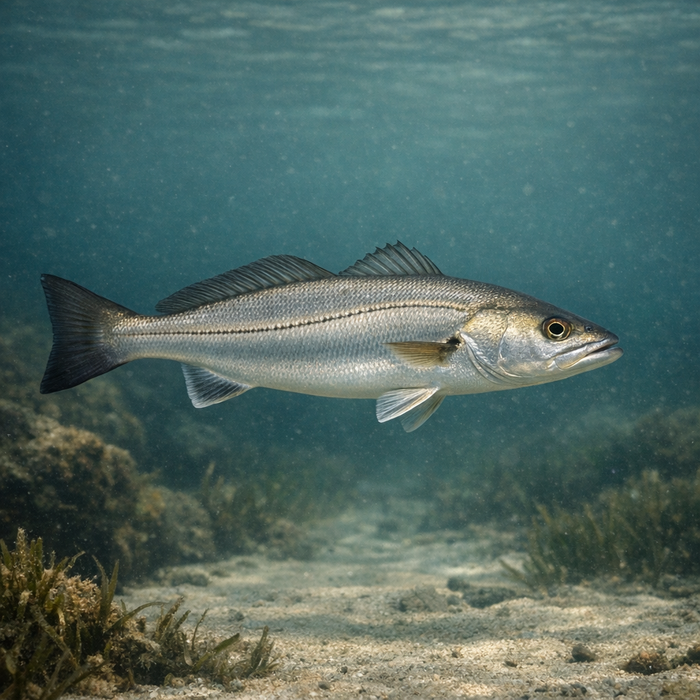
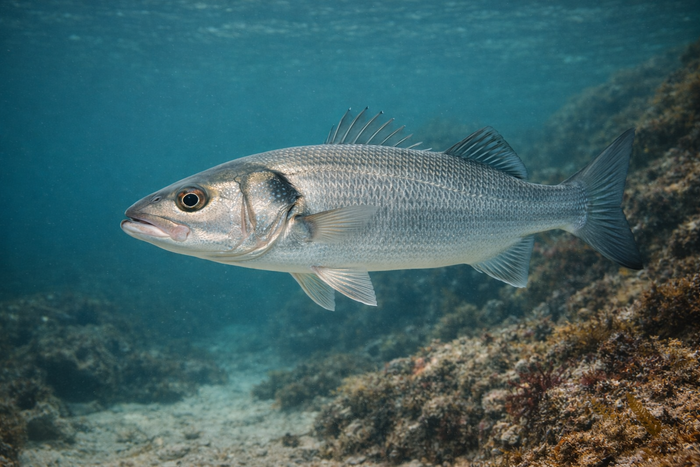
Then there is the disappearing paint job. Juveniles carry small dark spots that generally fade as they grow, leaving adults with the silver-sided appearance anglers recognize. The elongated body and projecting lower jaw complete a distinctly predatory profile. These are useful Japanese Sea Bass facts because identification matters, especially around closely related seabasses.
Its early development is stranger still: experiments found that eggs in certain salinity conditions became more buoyant before hatching. Even the embryo is already responding to the demands of life in changing water.
Habitat & Global Range
Japanese Sea Bass belong to East Asia’s western Pacific coastal fauna, with Japan providing the central setting for this guide. Bays, estuaries, river mouths, rocky reefs, and surf zones all feature in their habitat portfolio. Older distribution accounts require care because some records historically grouped related seabasses under the same name. A familiar common name is not always a reliable species identification.
Tokyo Bay, Osaka Bay, Ise Bay, Lake Hamana, and Lake Shinji offer very different versions of that coastal environment. The two lakes should not suggest a conventional freshwater bass fishery: brackish connections are central to their appeal. In Lake Shinji, local fisheries information describes occupancy from June into autumn, demonstrating why regional movement matters more than a nationwide calendar.
Behavior & Temperament
Think opportunistic predator, not permanently stationed bridge ornament. Small fish and shrimp are important adult prey, and feeding opportunities influence where anglers encounter them. Moving water, structure, and changes in depth give a cast something meaningful to intersect. Finding those relationships is more useful than throwing randomly at every piece of concrete.
Low light deserves attention, but daylight fishing is perfectly legitimate. Shore anglers often work dusk, dawn, or nighttime, while shaded structure can remain useful during the day. When hooked, the fish’s surface head-shaking adds another complication: getting the bite is only half the assignment. A controlled fight and prepared landing net beat celebrating while the fish is still attached.
Ecological Importance
Japanese Sea Bass connect several parts of the coastal food web through their changing diet and movements. Young fish eat smaller prey than adults, while estuaries provide important nursery opportunities. Their life cycle makes the condition of those transitional waters consequential, even when the adult fish seem comfortably established around a busy port.
Research in the Chikugo River estuary illustrates the balancing act. River discharge can influence growth and recruitment, but stronger flow can also hinder immigration or disperse larvae seaward. More freshwater is not automatically better, and clearer water is not automatically healthier nursery habitat. The important question is whether conditions support successful feeding, transport, and survival.
Conservation & Environmental Pressures
The species is assessed as Least Concern. That describes its overall conservation position; it is not a promise that every local fishery is equally productive or immune to pressure. Commercial harvest and recreational fishing operate alongside a life cycle that uses both coastal spawning areas and sheltered nursery environments.
Consequently, looking after these fish means looking beyond the adult catch. Maintaining connected waterways and functional estuarine habitat is a sensible conservation priority given their documented movements and recruitment needs. Anglers can contribute without turning a fishing trip into a seminar: follow local rules, avoid restricted waterfronts, retrieve discarded line, and handle released fish promptly. Access and responsible fishing belong in the same conversation.
The FishyAF Take
Japanese Sea Bass make a strong argument against judging a fishery by the scenery. A harbor wall might lack postcard appeal, but the fishing can still demand thought, restraint, and a properly placed lure. We like that bargain. You do not need theatrical gear or a heroic travel budget; you need to pay attention to the water in front of you.
The appeal is not just catching a silver fish. It is learning to separate a promising current edge from empty water, adjusting instead of thrashing, and earning a bite from somewhere that initially looked unremarkable. Keep the presentation deliberate and the ego small. The concrete does not owe you a fish.