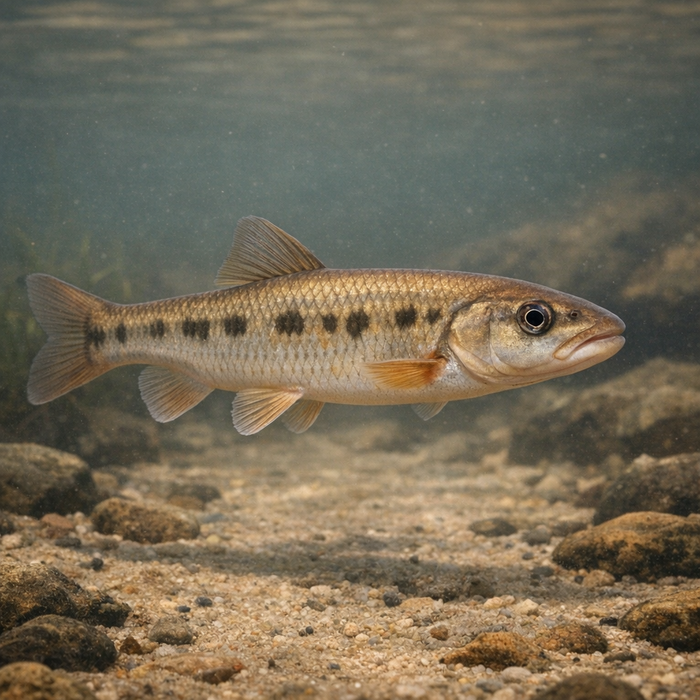
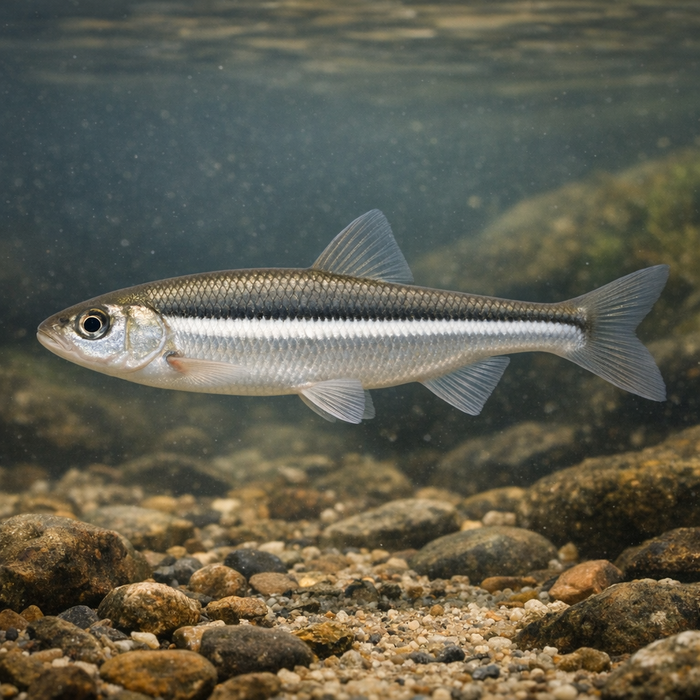
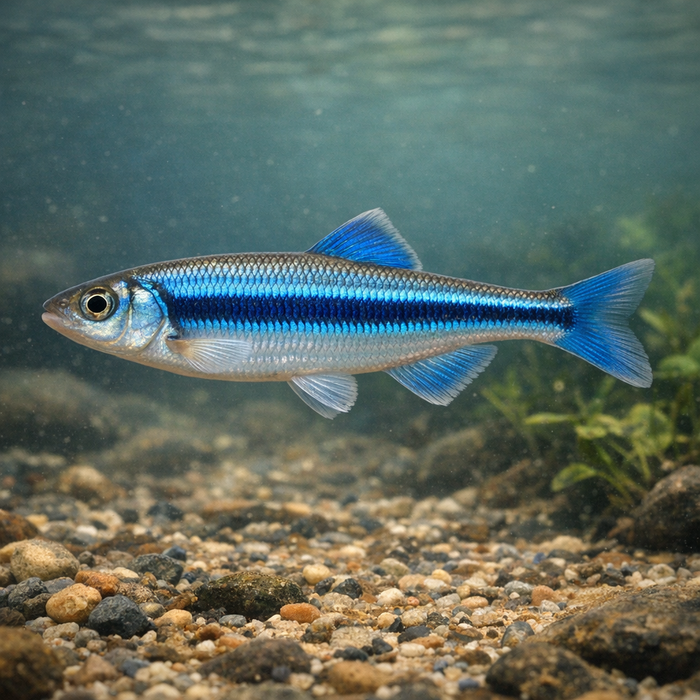
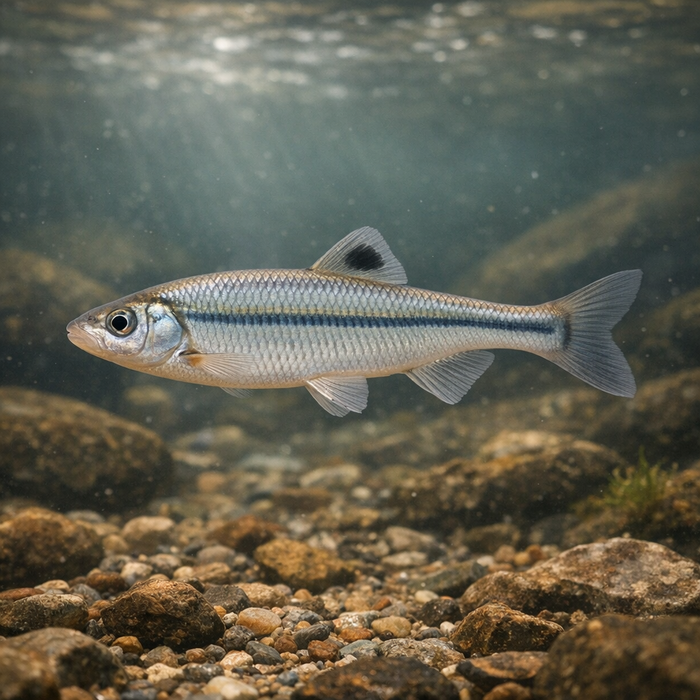
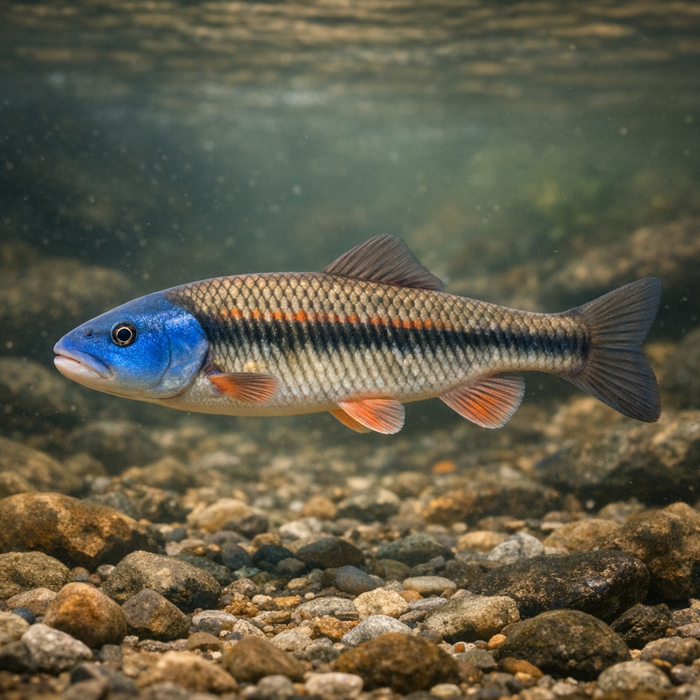
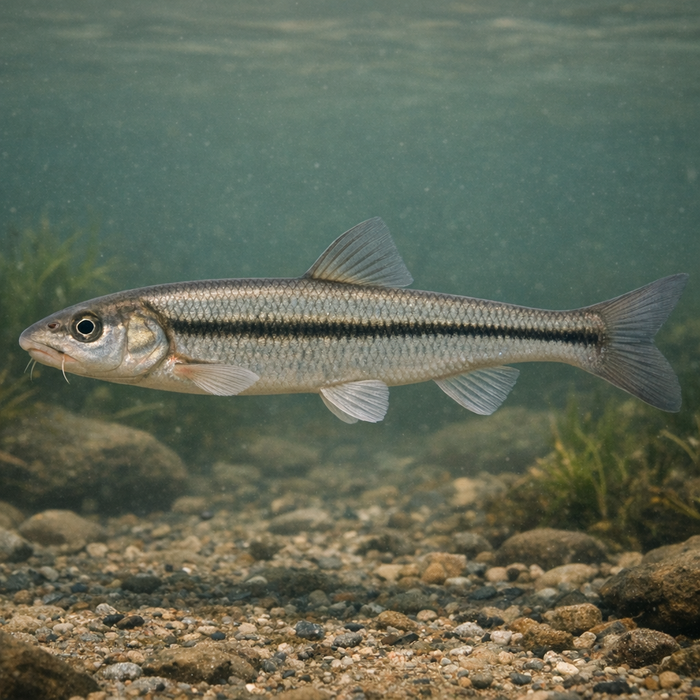
Laurel dace (Chrosomus saylori): Tiny blaze of red in a razor-thin creekIntroductionThe Laurel dace is the stream's equivalent of a rare gem: small, brilliant, and tucked away where most boots never wander. Blink and you'll miss it. Linger, and you'll watch a headwater minnow that turns fire-engine red in spring and vanishes like a spark the second a shadow crosses the riffle. This fish isn't a target so much as a privilege to witness. If you came looking for big-fish bravado, wrong creek. If you want real-deal rarity and a masterclass in fragile creek ecology, the Laurel dace brings it.What Makes the Laurel dace Unique?First, color. Breeding males don't just tint up; they ignite. Scarlet flanks, inky lateral stripe, and clean white fin edges scream Chrosomus lineage. Second, scale. Adults barely stretch past three inches, yet they run a full seasonal playbook: court, spawn, dodge flash floods, and overwinter in pools that could fit in a salad bowl. Third, isolation. The Laurel dace persists in a handful of Appalachian trickles on Walden Ridge in Tennessee. Each creek is a micro-world, and a single bad culvert or logging washout can wreck an entire population. Those are Laurel dace facts you feel in your boots.Habitat & Global RangeThe Laurel dace lives in cool, clear headwater streams with clean gravel riffles, shallow runs, and bedrock seams. Think shaded corridors with leaf-stained water, spring seeps, and pockets where the current hums instead of roars. Globally? Forget it. This species is an Appalachian specialist, limited to a tiny slice of the Tennessee River watershed. That's part of the Laurel dace habitat story: local geology, forest canopy, and silt-sensitive spawning gravel. Where the substrate stays clean and the banks hold, the fish can hang on. Where mud or a concrete choke point intrudes, lights out.Behavior & TemperamentLaurel dace travel light. Small groups hover midwater in gentle current, darting for cover the instant a heron silhouette or angler shadow appears. They're opportunists, nipping at microinverts and biofilm, but still keyed to flow and season. As the water warms toward spring, they shift onto riffles, broadcast eggs into the gravel matrix, then slide back to calmer pockets. No giant migrations, no drama-just tight home turf and lightning-fast reflexes. Hooking one, even for research, requires stealth, tiny gear, and a soft touch. Their fight is more flicker than brawl.Ecological ImportanceFor something so small, the Laurel dace punches above its weight in stream health metrics. It's an early-warning sensor for silt and flow disruption. Lose the clean gravel, starve the riffles of oxygen, or jack the temperature by removing canopy, and this fish blinks out first. That's a wake-up call for everything upstream and down-mayflies, darters, crayfish, even the in-stream microbes that keep water chemistry honest. Protecting the Laurel dace isn't just about one minnow. It's about holding the whole headwater machine together.Conservation & Environmental PressuresTop threats are short and mean: sedimentation, poorly designed road crossings, altered flow from development, and habitat fragmentation. A headwater population can't absorb many hits; a single silt pulse can smother a year class. Drought and quick-flip floods from stormwater runoff complicate survival further. This species is federally listed as endangered and is considered critically endangered by global assessments. Active conservation includes habitat restoration, better culverts, riparian buffers, and carefully permitted monitoring that avoids harm. Every creek gets a tailor-made plan because every creek is different-and that's the point.The FishyAF TakeThe Laurel dace is the anti-trophy: zero fillets, no leaderboards, all respect. It's proof that the most irreplaceable fish often fit in your hand and disappear into a two-foot riffle. Anglers who love wild waters should care, even if they never cast here. Keep boots out of spawning riffles in spring, cheer on culvert fixes, and leave the nets to the biologists. The win isn't a grip-and-grin; it's a living ribbon of water with a red flash still in it. That's a flex no photo can beat.