Longhorn Cowfish (Lactoria cornuta): The Reef’s Armored Oddball Comes With Horns and a Warning
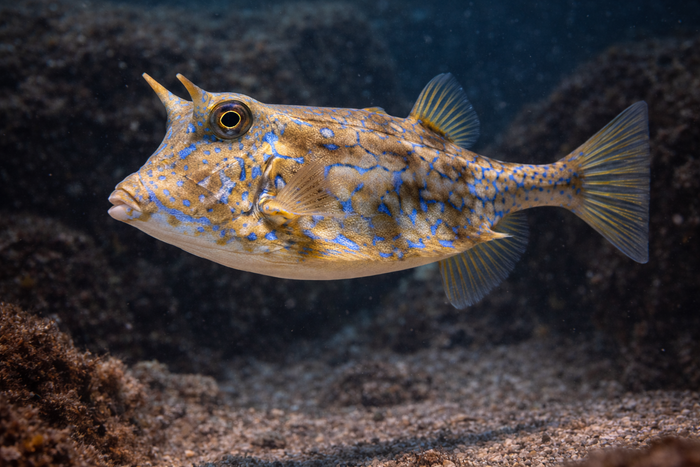
The Longhorn Cowfish looks like somebody put bull horns on a floating lunchbox and sent it out to inspect the reef. That appearance is no accident of aquarium breeding. This saltwater member of the boxfish family, Ostraciidae, combines a rigid body, conspicuous horns, and deliberate, fin-powered movement into one unmistakable package. It is a fish built differently, not badly.
For anglers, the appeal is recognition rather than horsepower. Among the most useful Longhorn Cowfish facts is this: an unusual catch is not automatically a suitable keeper. Its appearance deserves attention, but its handling and food-safety concerns deserve considerably more. Treat an encounter as a chance to meet an extraordinary reef resident, not an invitation to fill the cooler.
What Makes the Longhorn Cowfish Unique?
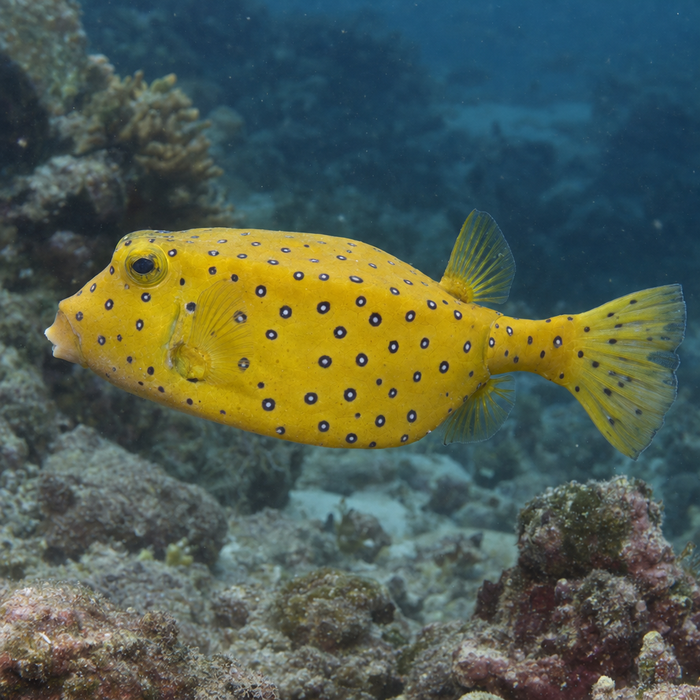
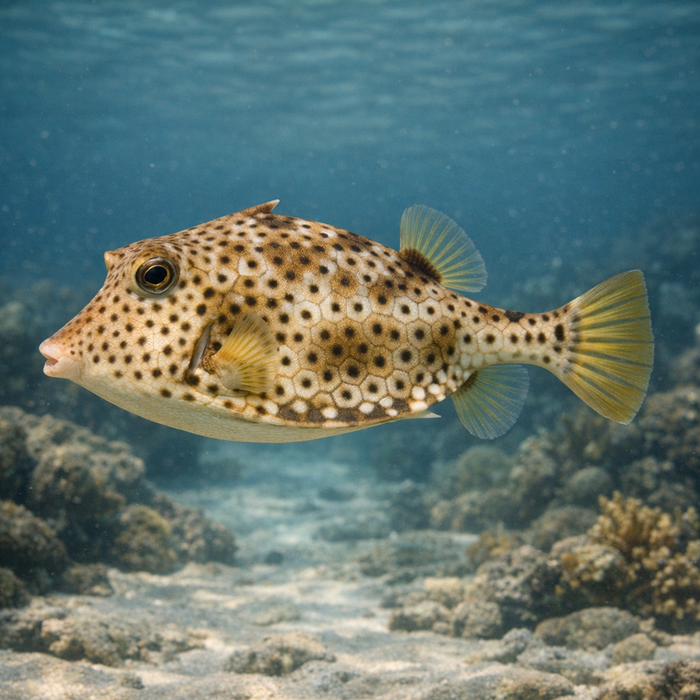
Start with the horns. Two project forward above the eyes, while another pair extends from the lower rear of the body. These projections accompany a carapace made from joined bony plates, giving the fish its angular outline. The horns are thought to make swallowing it more difficult for predators. Surprisingly, their intimidating appearance hides a lightweight, nearly hollow construction rather than solid spikes.
Then there is the chemical backup. Under stress, this cowfish can release a toxic skin secretion known as ostracitoxin, which can harm other fish. That is a defense, not venom delivered through its horns. It also is not the same thing as ciguatera, the separate food-poisoning concern associated with eating contaminated reef fish. Confusing those hazards makes for bad biology and worse dinner advice.
Finally, the armored oddball has a soundtrack. Researchers have recorded both hums and clicks and identified specialized muscles associated with its swim bladder. The animal that looks like a silent wind-up toy can actually produce two distinct kinds of sound. Its full underwater routine is stranger than the photograph suggests.
Habitat & Global Range
Longhorn Cowfish habitat centers on sheltered coastal environments, including sandy and weedy areas near reefs, lagoon bottoms, and rubble patches. The species is also recorded in brackish conditions. Its wider distribution stretches across the Indo-Pacific, connecting the Indian Ocean, Southeast Asia, Australia, and islands farther east. It is not a native Caribbean cowfish with a different paint job.
Published depth information places it from shallow water to around 100 meters, with most accounts emphasizing shallower reef-associated settings. Sand beside structure is particularly relevant because this fish feeds directly at the bottom. Documented occurrence should not be mistaken for a dependable fishery: finding one in a lagoon does not establish reliable hook-and-line catches, unrestricted access, or permission to fish there.
Behavior & Temperament
The Longhorn Cowfish often leads a solitary, territorial life. Its rigid trunk limits the sweeping body movements familiar from more flexible fishes, while its fins provide controlled movement around the bottom. Watching it work a patch of sand is more revealing than watching it cross open water. This is a close-quarters operator, not a streamlined pursuit specialist.
One particularly effective trick is blowing water onto the substrate to uncover hidden invertebrates. The fish turns its mouth into a small excavation tool, exposing food before picking it up. For anyone lucky enough to observe that behavior, the sensible move is to stop and watch. There is more going on than the horns initially advertise.
Ecological Importance
The Longhorn Cowfish is an omnivore that connects bottom-dwelling food resources with the wider reef community. Algae and benthic invertebrates feature in published dietary accounts. Its feeding places it at the boundary between sediment, vegetation, and reef structure, where the small organisms doing much of the ecosystem’s work are easily overlooked.
That role does not require dressing it up as a reef-saving superhero. The defensible point is simpler: a distinctive bottom feeder participates in the local food web and uses a feeding technique that physically exposes buried prey. Its value is ecological as well as visual, even when its contribution cannot be reduced to a tidy headline.
Conservation & Environmental Pressures
The Longhorn Cowfish is assessed as Least Concern. That global category should not be read as proof that every local population is thriving. It also appears in the commercial aquarium trade, making responsible collection and handling relevant even though it is not a conventional recreational trophy species.
Protecting reef, seagrass, and coastal habitat remains the practical priority. Anglers can contribute without inventing a conservation campaign around one funny-looking fish: avoid damaging bottom structure, retrieve discarded tackle, respect protected areas, and release incidental catches promptly. Those are useful habits whether this species is present or not.
The FishyAF Take
This fish does not need a fabricated battle story. Horns, armor, toxic mucus, and an underwater sound system already make a respectable résumé. The Longhorn Cowfish is proof that a memorable fishing encounter need not involve blistering runs or a heavy weigh-in.
Our take: favor incidental encounters, keep handling brief, and leave the dinner experiment alone. Get the identification right, appreciate the engineering, and send the little armored troublemaker back. Some fish belong in your catch log rather than your freezer. This is firmly one of them.