Scrawled Cowfish (Acanthostracion quadricornis): The Ocean’s Living Puzzle Box with Attitude
The Scrawled Cowfish is not your average reef dweller. With its boxy shape, armored plating, and intricate markings, it commands attention without trying too hard. This species is a standout among boxfish, blending bizarre looks with fascinating biology. If you think you know tropical fish, think again. The Scrawled Cowfish rewrites the rulebook on what a reef fish can look like and how it behaves.
What Makes the Scrawled Cowfish Unique?
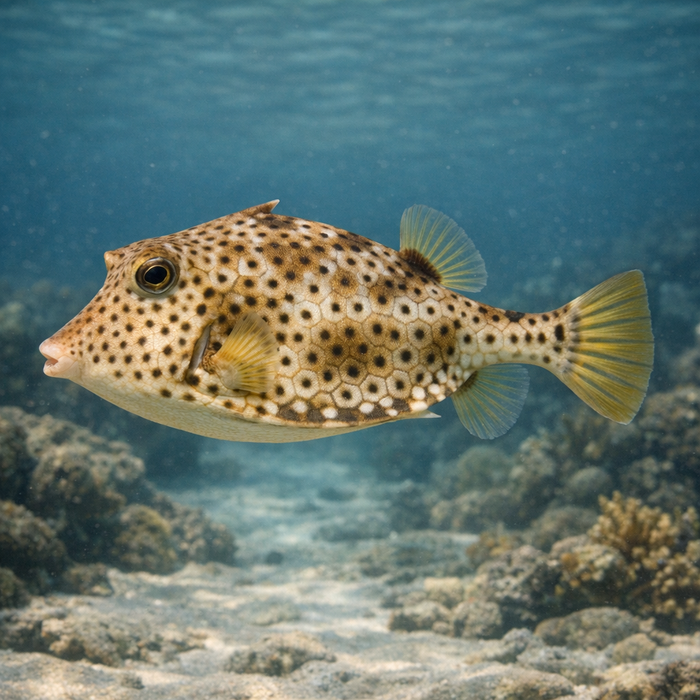
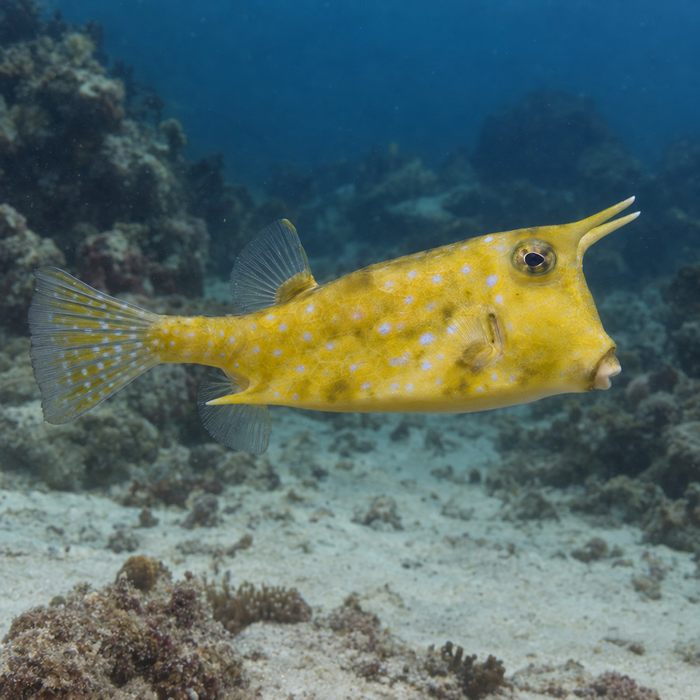
First off, the Scrawled Cowfish is a walking piece of natural art. Its body is encased in a rigid, hexagonal carapace that looks like a tiny armored tank. Unlike typical fish, it doesn’t rely on speed or agility but on its tough exterior and slow, deliberate movements. The “scrawled” part of its name comes from the maze-like blue and yellow lines that cover its body, creating a signature pattern that’s both mesmerizing and cryptic.
It’s also got a pair of horn-like projections above its eyes and two smaller ones near its tail, giving it a distinctly cow-like profile. These aren’t just for show; they help deter predators by making the fish harder to swallow. The Scrawled Cowfish’s mouth is small and puckered, perfect for picking at hard-to-reach prey like sponges, algae, and small invertebrates.
One of the more intriguing Scrawled Cowfish facts is its toxin production. When stressed or threatened, it can release a potent toxin called ostracitoxin from its skin, which can be deadly to other fish in confined spaces. This chemical defense is a serious survival tool but also a cautionary tale for aquarium enthusiasts.
Habitat & Global Range
The Scrawled Cowfish calls the warm waters of the western Atlantic home, ranging from North Carolina down through the Gulf of Mexico, the Caribbean, and as far south as Brazil. Its preferred Scrawled Cowfish habitat includes coral reefs, seagrass beds, and sandy or rubble bottoms where it can forage and hide.
This fish favors shallow to moderate depths, typically between 10 and 50 meters, where the environment offers plenty of nooks and crannies. The combination of coral complexity and open sandy patches is ideal for its slow cruising style and feeding habits. It’s a species that thrives in diverse reef ecosystems but is sensitive to habitat degradation.
Behavior & Temperament
Don’t expect the Scrawled Cowfish to be a speed demon. It’s a slow, deliberate cruiser that uses its pectoral fins to “fly” through the water with a graceful, almost hypnotic rhythm. Its boxy shape and rigid armor limit quick turns or bursts of speed, so it relies on camouflage, toxin release, and its horns for defense.
Socially, the Scrawled Cowfish is mostly solitary or found in small groups. It’s not aggressive but can be territorial, especially during breeding seasons. Its feeding behavior is methodical, picking at sponges, tunicates, and algae with precision. Unlike many reef fish, it doesn’t chase prey but rather grazes, making it a low-impact predator.
Ecological Importance
The Scrawled Cowfish plays a subtle but vital role in reef ecosystems. By feeding on sponges and algae, it helps maintain the balance between coral growth and algal overgrowth. This grazing prevents algae from smothering corals, which is crucial for reef health.
Its toxin production also influences predator-prey dynamics. Predators learn to avoid the Scrawled Cowfish, which reduces predation pressure on the species and indirectly affects the behavior of other reef inhabitants. This chemical defense adds a layer of complexity to the reef food web.
Conservation & Environmental Pressures
While not currently listed as endangered, the Scrawled Cowfish faces threats common to many reef species. Habitat destruction from coastal development, pollution, and climate change-induced coral bleaching directly impact its preferred environments. The degradation of coral reefs and seagrass beds reduces available shelter and food sources.
Additionally, the aquarium trade poses a risk. Its unique appearance makes it a target for collectors, but its toxin and specialized care requirements mean it often doesn’t survive long in captivity. Overharvesting could become a concern if demand rises without sustainable practices.
The FishyAF Take
The Scrawled Cowfish is a masterclass in evolutionary innovation. It’s a fish that doesn’t fit the mold—armored, toxin-armed, and slow but effective. Its striking patterns and unusual shape make it a standout species, but its ecological role and survival strategies are just as impressive.
For anyone interested in reef fish beyond the usual flashy swimmers, the Scrawled Cowfish offers a glimpse into nature’s creativity and complexity. Protecting its habitat is crucial, not just for this species but for the entire reef community it supports. Keep an eye out for this living puzzle box on your next dive—it’s a reminder that sometimes, the weirdest fish are the most fascinating.