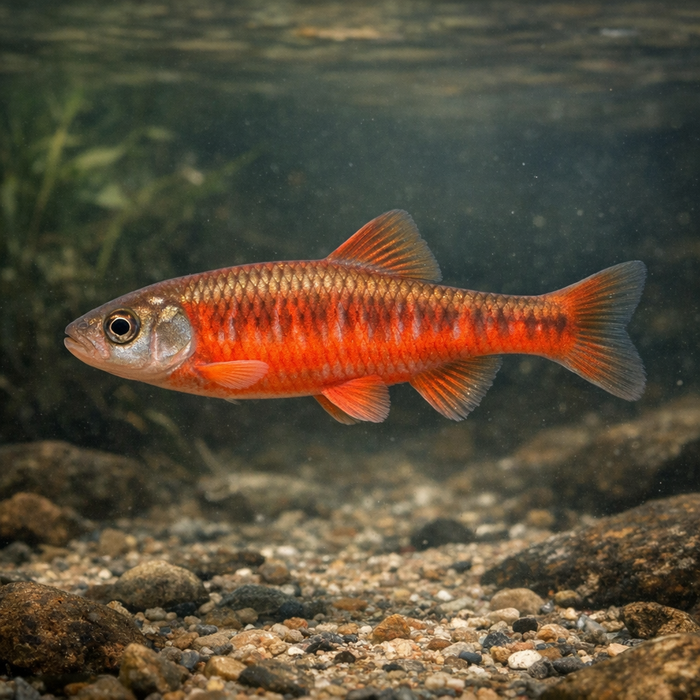
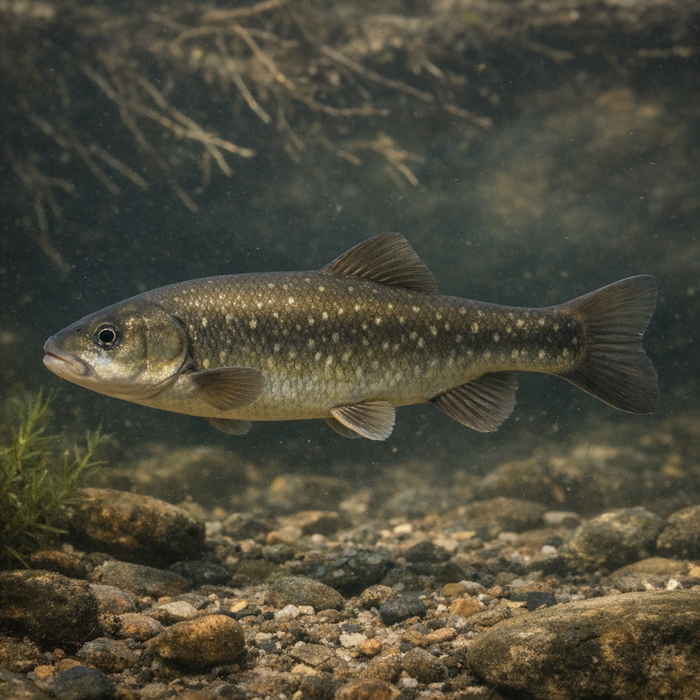
Mahseer (Tor putitora): Himalayan Gold That Makes Your Drag Earn Its Keep
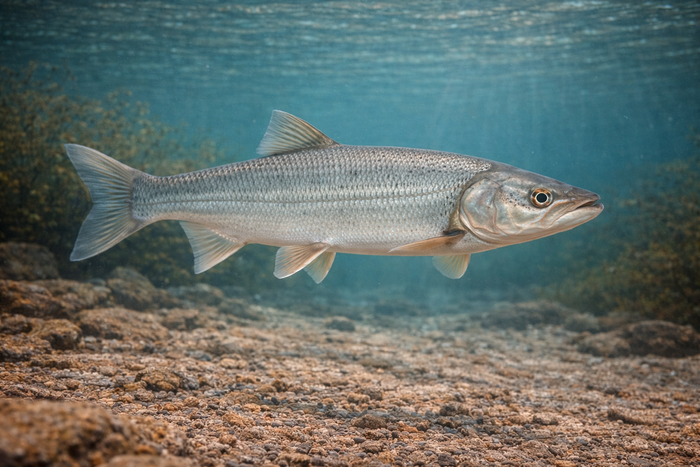
Some trophy fish impress on the scales. This one also makes the river part of the fight. The Mahseer is a powerful freshwater carp built for rocky Himalayan waterways, where strong current turns an already serious opponent into a tackle inspection with fins. Its golden coloring gets the photographs; its sporting reputation gets anglers traveling. Commonly called golden or Himalayan mahseer, Tor putitora belongs to Cyprinidae, not the salmon family, despite sharing the spotlight with famous river game fish. That distinction matters: this is an adaptable omnivore, not simply a trout enlarged beyond reasonable proportions.
What Makes the Mahseer Unique?
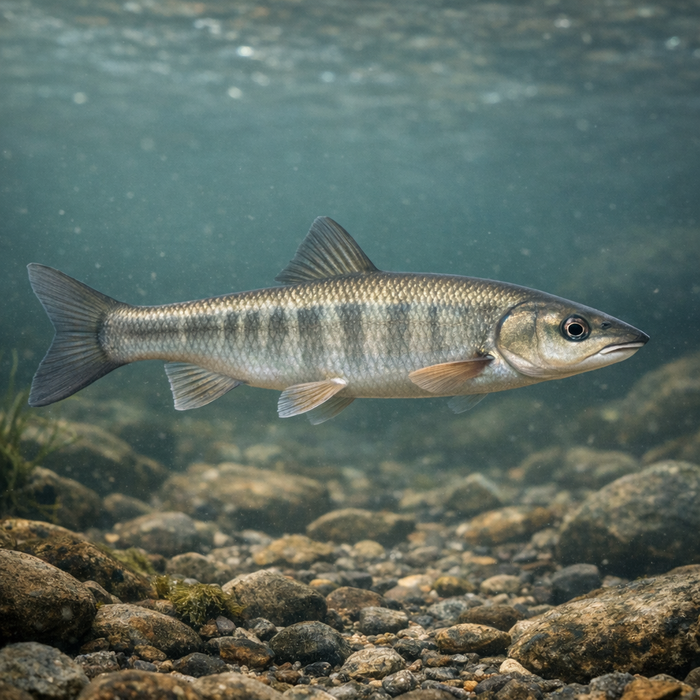
Three features define the package: a streamlined body, conspicuously large scales, and a life cycle that depends on movement through connected waterways. Its deeply forked tail, substantial head, thick lips, and two pairs of barbels give it a distinctive appearance. The gold is impressive, but the hardware underneath is the real attraction. This fish belongs in moving water, not just on a trophy wall.
The Mahseer also refuses the neat predator-versus-grazer categories anglers often use. It consumes animal and plant material, with feeding changing as opportunities change. Taking a spoon does not make it an exclusively fish-eating predator. Among useful Mahseer facts, that flexibility explains why both artificial offerings and traditional bait methods belong in the conversation. Presentation still matters more than assuming every fish wants the same meal.
Habitat & Global Range
Its native stronghold stretches across Himalayan and neighboring South Asian river systems, including waters in India, Nepal, Pakistan, Bhutan, and Bangladesh. Classic Mahseer habitat means rocky rivers with rapids, runs, and pools, but the species also occupies lakes and reservoirs. Still water can support adults without replacing the connected spawning habitat that a functioning population needs. A deep pool is valuable real estate; access to suitable tributaries is essential infrastructure.
For anglers, notable waters include the Ramganga and Saryu in Uttarakhand, the Mahakali around Pancheshwar on the India–Nepal border, the Jia Bharali in Assam, and Nepal’s Karnali. These are destinations to investigate, not blanket invitations to cast. Access, protected reaches, seasonal restrictions, and local conditions must be confirmed. Start by understanding the river and its legal boundaries, then worry about which plug deserves the first swim.
Behavior & Temperament
The Mahseer is mobile, opportunistic, and closely tied to changing river conditions. Adults move toward spawning tributaries during pre-monsoon and monsoon periods, with timing varying among catchments. Those journeys connect larger feeding and refuge waters with smaller reproductive habitats. Fish location is therefore seasonal, not a permanent pin dropped beside an attractive boulder.
Its powerful fight deserves respect, but describing every individual as aggressive misses the point. Feeding intensity can fall during spawning, even when fish are present. For anglers, that means an occupied pool is not necessarily a willing pool. Read current seams, changes in depth, and safe casting positions rather than treating the entire river as one enormous target. Patience is part of the tackle.
Ecological Importance
Because it consumes both plant and animal material, this species participates in several feeding pathways rather than occupying a single narrow predator niche. Its reproductive movements also make connected habitats important: adult holding water, spawning tributaries, and juvenile areas must work together. Protecting only the pool where anglers see large fish leaves much of the life cycle out of the picture.
The fish carries economic and cultural importance alongside its biology. Food fisheries, recreational fishing, and conservation breeding all feature in its relationship with people. That combination makes it a useful flagship for river protection, provided the enthusiasm produces habitat safeguards rather than simply more demand for another trophy photograph.
Conservation & Environmental Pressures
The Mahseer is Endangered. Overharvest, habitat degradation, and barriers to migration threaten populations, while river development can separate the places fish need at different stages of life. The problem is not merely fewer large specimens. A river can retain adults while losing the connections that allow successful reproduction and recruitment. That is a much deeper failure than a disappointing fishing season.
Hydropower impacts also extend beyond the physical dam wall. Altered flows and difficult passage conditions can interfere with movement, so conservation requires attention to the whole river network. Hatchery support has a role, but producing young fish is not the same as restoring a functioning wild population. Suitable water, usable spawning habitat, and effective connectivity remain central.
The FishyAF Take
The Mahseer deserves its advanced reputation, but difficulty is not permission to treat an endangered fish like disposable proof of competence. Bring tackle capable of controlling the fight, strong single barbless hooks, and a rubberized landing net. Have the release plan ready before the first cast. Minimize handling and choose safe water over a heroic-looking position.
Our take is simple: the achievement is not squeezing every possible second from the fight or every possible photograph from the fish. It is making sound decisions in demanding water and returning the animal promptly. Himalayan gold looks better swimming away than becoming another argument about what the river used to hold.