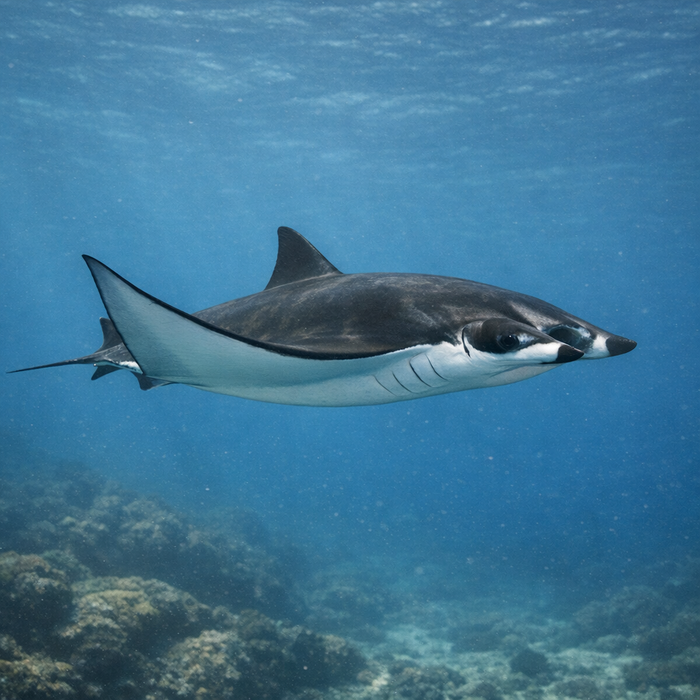
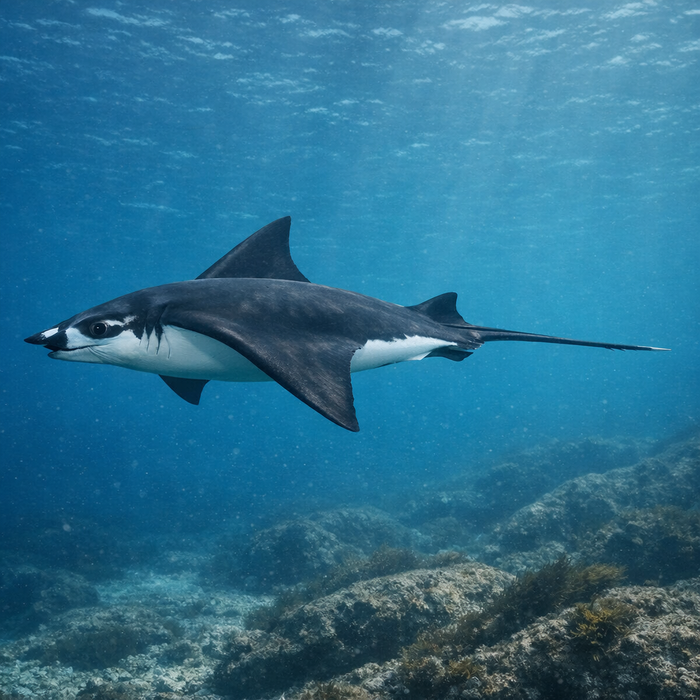
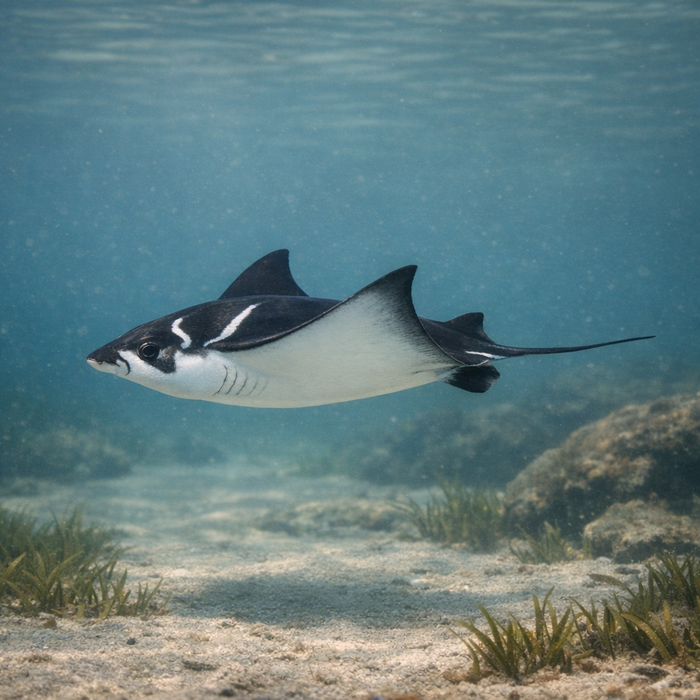
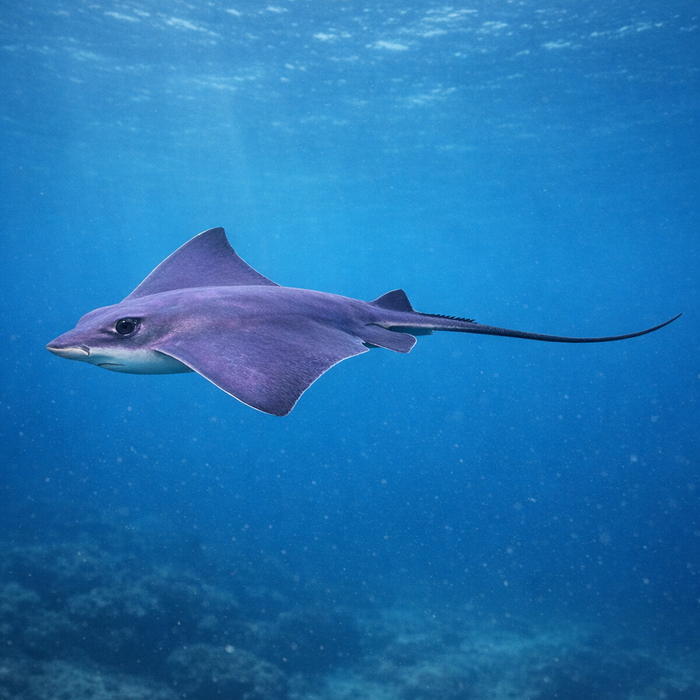
Manta Ray (Mobula birostris): The Ocean’s Biggest Wings Are Not Your Next Trophy
A Manta Ray sliding beneath your boat can make every fish you planned to catch feel suddenly insignificant. This is the giant oceanic manta, the largest living ray, built around an enormous diamond-shaped body and sweeping pectoral fins. Its business is filtering food from seawater, not attacking your spread. For anglers, that distinction matters immediately: this is an animal to recognize, avoid hooking, and appreciate without turning an encounter into a tackle demonstration. Big does not automatically mean game fish. Sometimes it means put the rod down and pay attention.
What Makes the Manta Ray Unique?
The Manta Ray combines extraordinary dimensions with surprisingly precise feeding equipment. Two fleshy cephalic lobes beside its mouth help funnel food-bearing water inward. Behind that mouth, specialized filtering structures separate prey from the passing flow. Experiments using its filter geometry revealed a ricochet-like mechanism that can retain particles smaller than the openings between filter elements. This is not simply a giant swimming kitchen sieve; the water movement does much of the clever work.
Then there is its identification system. Distinctive underside markings allow researchers to recognize individuals from photographs, helping document movements and repeat encounters without needing to recapture each animal. An enormous fish with an individually recognizable belly is a useful reminder that wildlife research does not always require a hook.
Habitat & Global Range
Manta Ray habitat spans tropical, subtropical, and some temperate seas, including open ocean, offshore islands, continental margins, and productive coastal waters. The important ingredient is not a particular bottom type. It is access to concentrated food. Fronts, upwelling, and other oceanographic features can create feeding opportunities, while some coastal areas also support repeated visits and juvenile habitat use. Global distribution does not mean these rays are common everywhere.
The surface view also tells only part of the story. Tracking has documented dives beyond 1,000 meters, and dietary research indicates that deeper food sources can contribute substantially to their nutrition. That shadow beside the boat belongs to an animal operating across a much larger vertical world.
Behavior & Temperament
The Manta Ray can appear unhurried, but its movements serve feeding, travel, and other essential activities. Surface feeding may include repeated somersaults, allowing a ray to keep working a concentrated patch of prey. Multiple animals may gather where conditions are favorable. Those gatherings are feeding opportunities, not invitations to drive through the middle with lines trailing.
Some individuals also visit cleaning stations, where smaller fishes remove material from their bodies. Oceanic mantas generally spend less time at these stations than reef mantas. A quiet encounter is worth protecting on its own terms: leave room, avoid pursuit, and let the animal decide where it goes next.
Ecological Importance
The Manta Ray is a predator, just not the toothy, bait-chasing kind anglers usually picture. Consuming zooplankton places it within animal food webs, and research from Ecuador points toward substantial use of mesopelagic food sources rather than exclusive dependence on visible surface feeding. That makes the species more ecologically complicated than a plankton vacuum cruising the sunshine.
Its feeding and diving connect different parts of the water column and contribute to nutrient cycling. Protecting these animals therefore means considering the wider system: productive coastal areas, offshore feeding grounds, and the routes between them. A boundary drawn around one attractive viewing site cannot describe everything this species needs.
Conservation & Environmental Pressures
The Manta Ray is globally Endangered, with fishing mortality a central concern. Targeted harvest and accidental capture both contribute to pressure, while demand for gill plates has supported international trade. Slow reproduction makes those losses especially difficult to replace. Females generally produce a single pup at intervals of several years, not a seasonal flood of replacements. Losing a breeding adult is therefore more consequential than its impressive size alone suggests.
Anglers also have a direct role in preventing harm. Fishing lines can foul-hook or entangle mantas, including when casts are aimed at accompanying fish. Surface activity exposes them to vessel strikes, too. Reduce speed, keep fishing gear clear, and follow survival-oriented release guidance after accidental capture. A photograph is never worth extending that interaction.
The FishyAF Take
The Manta Ray does not need a trolling recommendation, a heavier leader, or somebody explaining that they could land it if they really wanted. It needs anglers who understand the difference between an extraordinary encounter and an appropriate target. That is not backing away from a challenge. It is knowing what the challenge actually is.
Read the water. Recognize the animal. Clear the lines before admiration becomes an entanglement. If one passes beneath you and keeps going undisturbed, you handled the moment properly. No weigh-in, no victory pose, no dockside argument about drag pressure. Just one enormous reason to remember why being on the water beats talking about it.