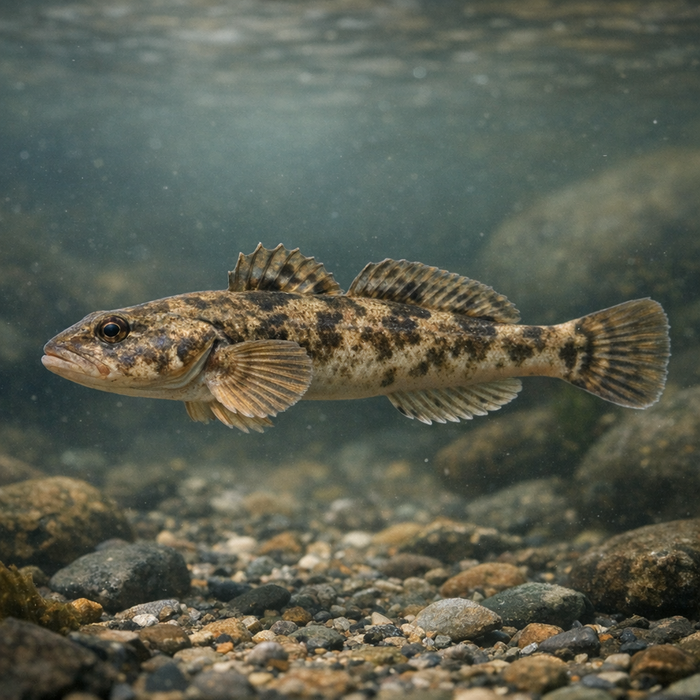
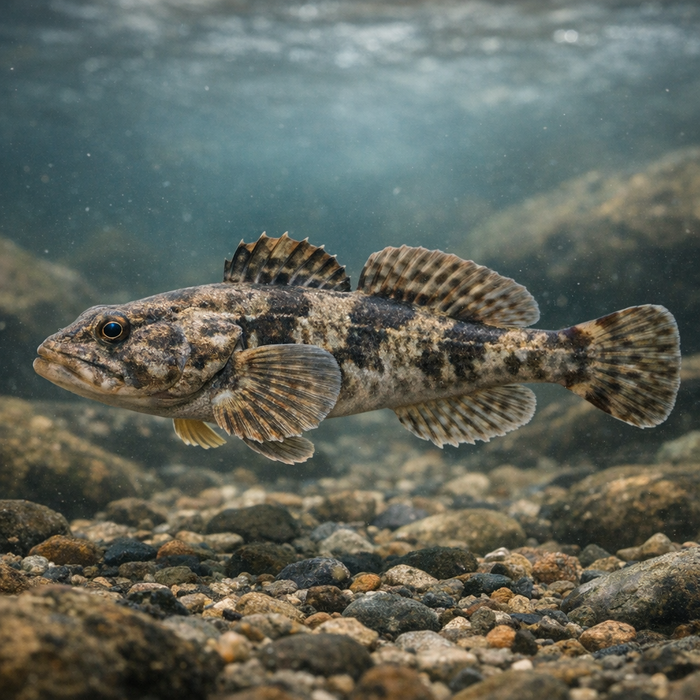
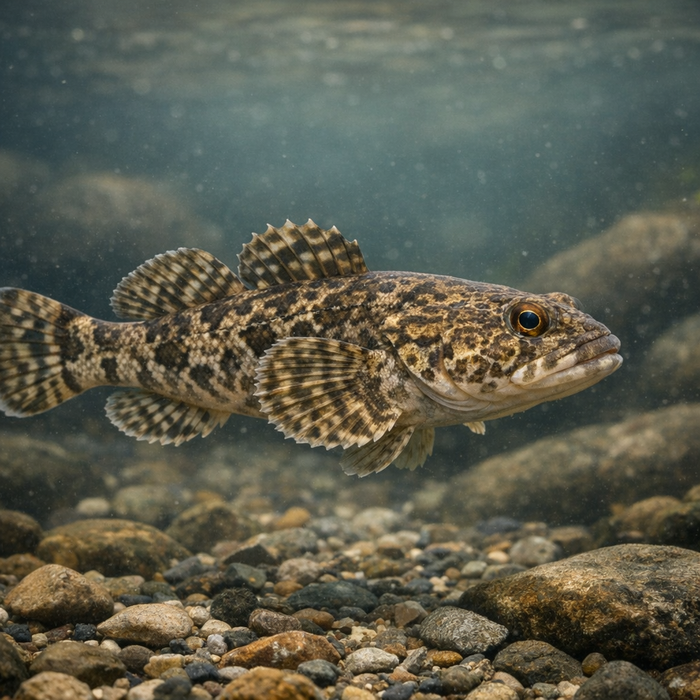
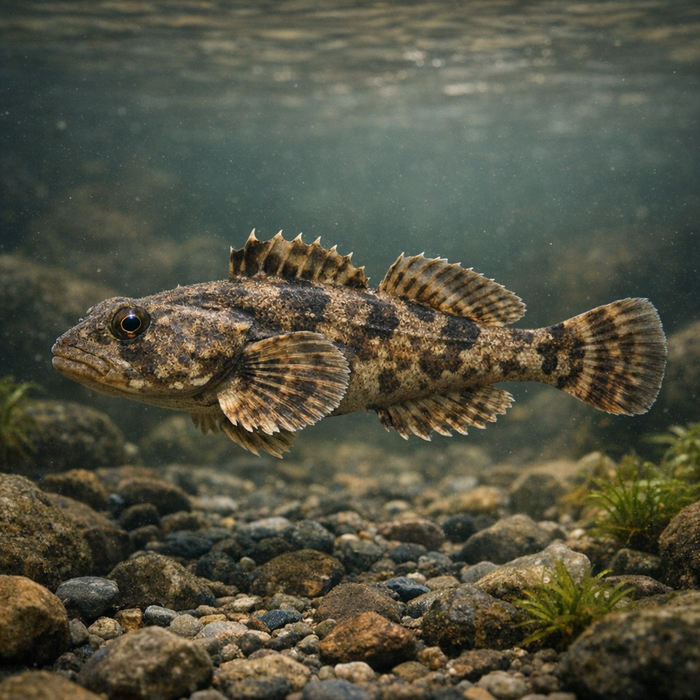
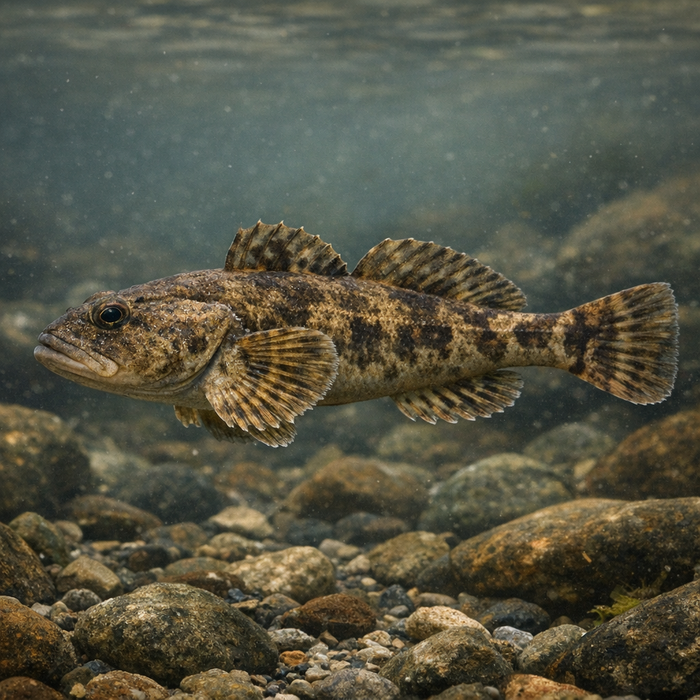
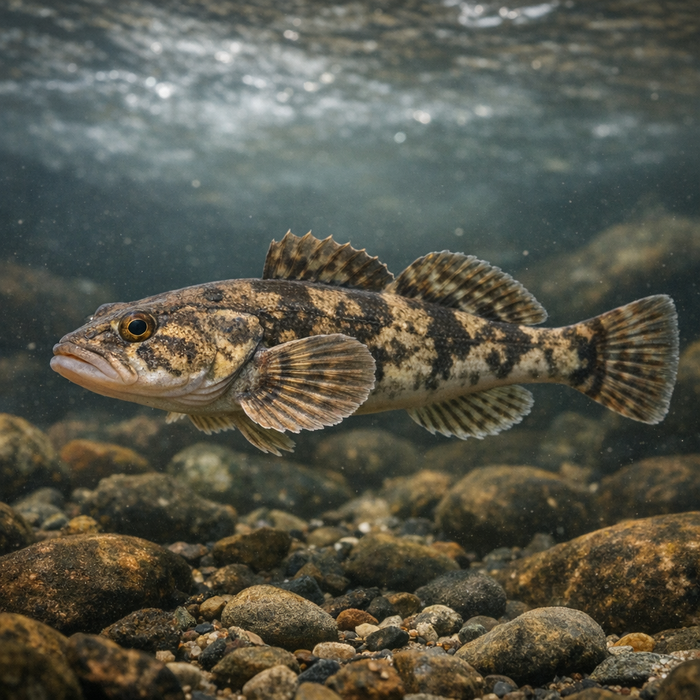
Marbled Sculpin (Cottus klamathensis): The tiny river goblin glued to the rocks you keep stepping overIntroductionThe marbled sculpin is a pocket-water lurker, all head and attitude, living where the current does its best to blast everything downstream. It's not a glamour species, but it's a pure product of riffles and rocks. If you like fish with weird superpowers, this little bruiser delivers: no swim bladder, huge pectorals, and a face built for ambush. For anglers curious about marbled sculpin facts and marbled sculpin habitat, welcome to the rock garden.What Makes the Marbled sculpin Unique?Start with the chassis. The marbled sculpin ditches a swim bladder, so it hugs bottom like wet Velcro while water roars overhead. That alone explains its vibe: less cruising, more clinging and pouncing. Those oversized pectoral fins aren't for show either. They act like parachutes and braces, letting the fish pin itself behind cobble, crab-walk across gravel, and hold station in rude current. Add a big, forward-set mouth and ambush eyes and you've got a fish designed to inhale prey in a blink from inches away. Finally, the marbled sculpin brings the namesake marbled camo, shifting shades to blend with speckled basalt and pumice. You won't notice it until it flares tiny head spines and wiggles into another crevice.Habitat & Global RangeThe marbled sculpin is a freshwater specialist of cool, clear, rocky waterways fed by springs and snowmelt. Think riffles, pocket water, undercut banks, and the seam behind any stone you'd kneel on to tie a knot. Depth is measured in inches to a couple feet, and the fish is happiest where the substrate is coarse and the flow is honest. Some populations spill into connected lakes or slow margins, but the species' heart lives in moving water with oxygen to spare. If you're scouting marbled sculpin habitat, prioritize stable, cold flows with bowling-ball cobble and clean gravel that hasn't been smothered by silt.Behavior & TemperamentMarbled sculpin are ambush micro-predators with homebody tendencies. They don't school up or roam far; they claim a rock cluster, work the angles, and make their living on short lunges. Dusk and night see more movement, but even then it's measured creep-and-pounce, not marathon laps. When spooked, they don't bolt for open water. They vanish downward, wedging under stones with a flick. Spawning hits as flows rise and water cool lingers; males take over the nursery, gluing eggs to the undersides of rocks and guarding like surly landlords. For anglers, that means tight presentations near the bottom, and an acceptance that this fish won't chase far. Put it in their face, keep it low, and you'll get the telltale tap.Ecological ImportanceMarbled sculpin stitch the benthic food web together. By patrolling the rock layer, they convert a buffet of invertebrates into sculpin biomass, which in turn fuels larger predators. Their nest-guarding boosts survival of the next generation, and their refusal to float midwater helps keep energy flowing along the riverbed where most production happens. In healthy numbers, they're a sign that current, oxygen, and substrate are in working order. When fine sediment chokes the riffles or prolonged warmth steals oxygen, sculpin drop out fast. They're a bottom-hugging barometer.Conservation & Environmental PressuresWhile not a headline species, the marbled sculpin is tightly tied to clean, cold, structured water. That makes it sensitive to sedimentation, dewatering, and chronic summer heat. Channelization can strip away the complex cobble neighborhoods they need. Nutrient-fueled algal blooms and low oxygen hit especially hard because these fish don't just live near the bottom; they are the bottom. The good news is that riffle restoration, riparian shade, and stable baseflows set them up to win. Give them rocks, oxygen, and a break from sludge, and they'll repopulate the seams like they never left.The FishyAF TakeThe marbled sculpin is proof that not every worthy fish bends rods. It's a masterclass in specialization, a little bulldog that thrives where most species wave the white flag. If you're chasing trout and ignoring the life under your boots, you're missing half the show. Drop a micro nymph into the pocket behind a coffee-can rock, let it kiss gravel, and you'll discover a new layer of the river. The marbled sculpin won't peel drag, but it will teach you current, stealth, and precision. And that makes you better at everything else you fish.