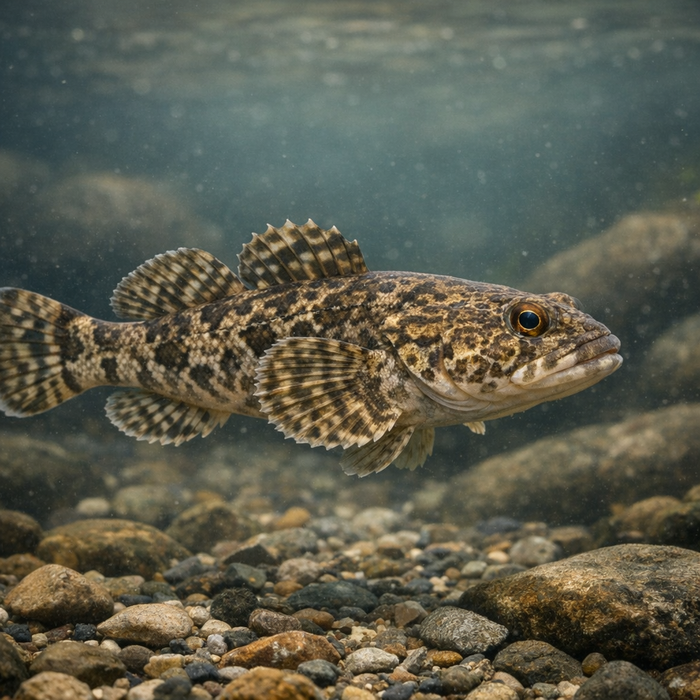
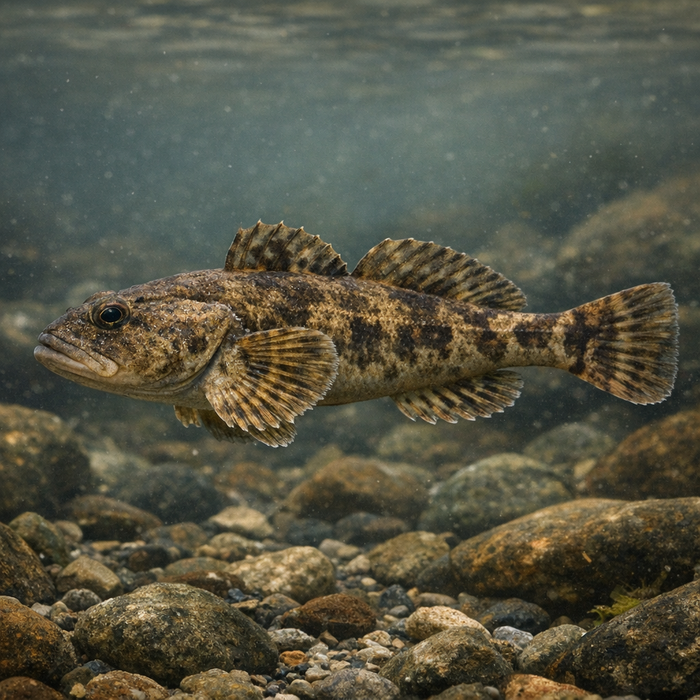
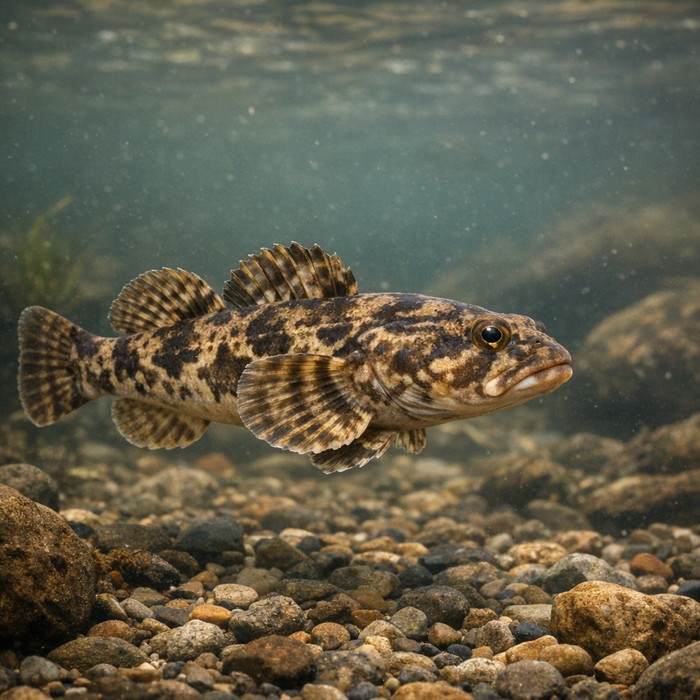
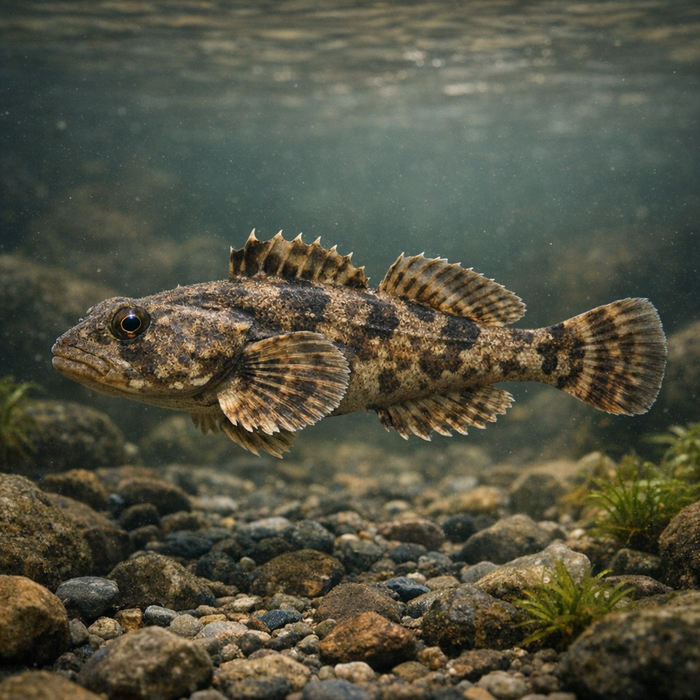
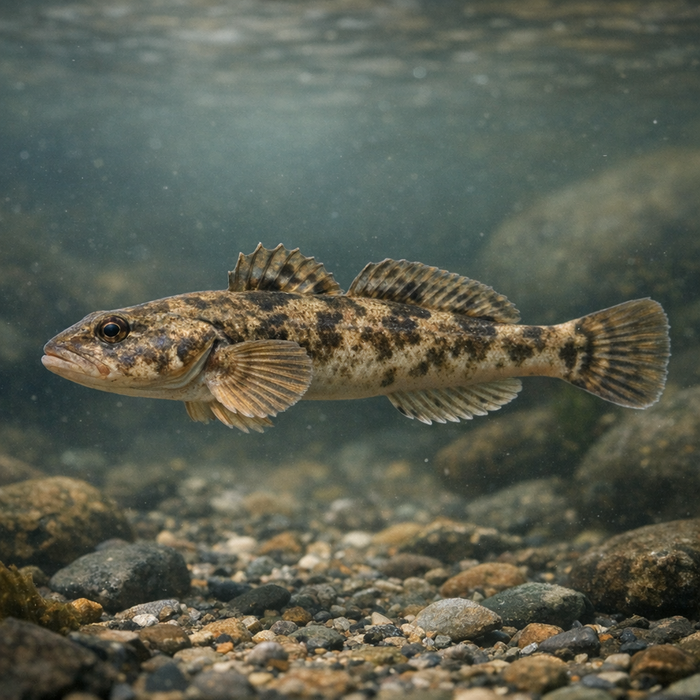
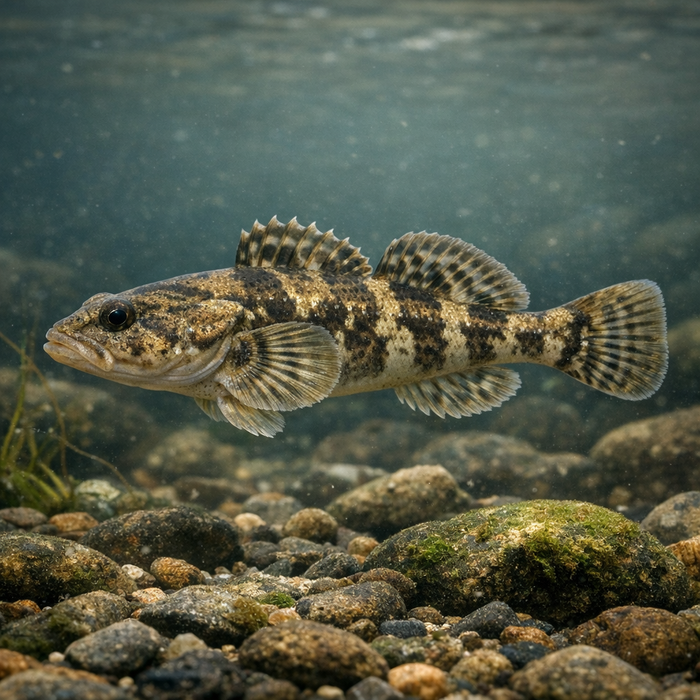
Pit sculpin (Cottus pitensis): A pocket-water ninja in a basalt tuxedoIntroductionIf you like your fish small, wild, and sneaky, the Pit sculpin is your kind of weird. This little bottom-hugger is the resident bouncer of California's Pit River spring creeks, plastered to cobble like it pays rent. It won't win any weight-class trophies, but as a native micro predator with attitude, the Pit sculpin is pure river character. Consider this your crash course in Pit sculpin facts and why this tiny bruiser deserves respect.What Makes the Pit sculpin Unique?For starters, the Pit sculpin has no swim bladder. That means no awkward bobbing in current, just pure stick-to-the-bottom swagger. Those oversized pectoral fins? Think suction-cup wings, locking it onto boulders while trout slip by midwater. It's also a master of camouflage, wearing mottled patterns that mirror basalt gravel. Up close, you'll spot a huge mouth hinged for vacuum strikes that inhale anything unlucky enough to wander close. Not bad for a fish that barely hits four inches.Habitat & Global RangeHere's the headline: the Pit sculpin is a homebody. It's tied to the Pit River basin of northern California, especially spring-fed tributaries with cold, clear water, stable flow, and plenty of cobble. Picture classic riffle-run habitat: ankle to knee-deep, brisk current, and pocket-water seams. That's prime Pit sculpin habitat. Instead of roaming far, it sets up shop tight to structure, from undercut rocks to chunk gravel. You won't find it globe-trotting; it's a localized specialist living in volcanic spring country.Behavior & Temperament"Skittish but hungry" sums it up. The Pit sculpin prefers to ambush, hugging bottom and lunging with a lightning-fast vacuum gulp. Males guard nests under rock ceilings, fanning adhesive eggs to keep them clean and oxygenated. Larvae often drift briefly at night, then settle fast in shallow riffles. They're not schoolers. You'll see singles or sparse clusters in prime edges and eddies. They're also low-light operators. Dawn, dusk, and shaded banks stack the deck in your favor.Ecological ImportanceDespite the micro size, the Pit sculpin punches above its weight ecologically. It's a link in the food web, keeping benthic invertebrates honest and feeding larger predators like trout. By anchoring itself in heavy current and working crevice country, it occupies real estate most fish ignore, turning overlooked pockets into high-value ambush posts. The species also serves as a clean-water witness; stable, cold flow and intact cobble translate to sculpins thriving. Lose that, and this native can fade quickly.Conservation & Environmental PressuresEndemic fish live or die on local conditions. For the Pit sculpin, consistent cold springs, un-choked gravel, and unpolluted flow are non-negotiables. Fine sediment that smothers cobble, dewatering from diversions, and poor riparian cover can kneecap populations. The good news: in healthy stretches, they're resilient. They don't migrate far, so they respond fast to localized water quality changes. As with many natives, the real long game is habitat stability and smart watershed management.The FishyAF TakeYou won't brag about a monster Pit sculpin. You'll brag about seeing the river correctly. This fish rewards anglers who read seams, creep low, and dead-drift something tiny where other people don't even cast. It's the anti-hero of the riffle. If you're jaded on grip-and-grins, try microfishing a native that's older than your favorite gear trend. Tight water, volcanic spring flow, boulder pockets, and one honest gulp: that's the Pit sculpin experience. Fish small, think sharp, and enjoy a masterclass in subtlety.