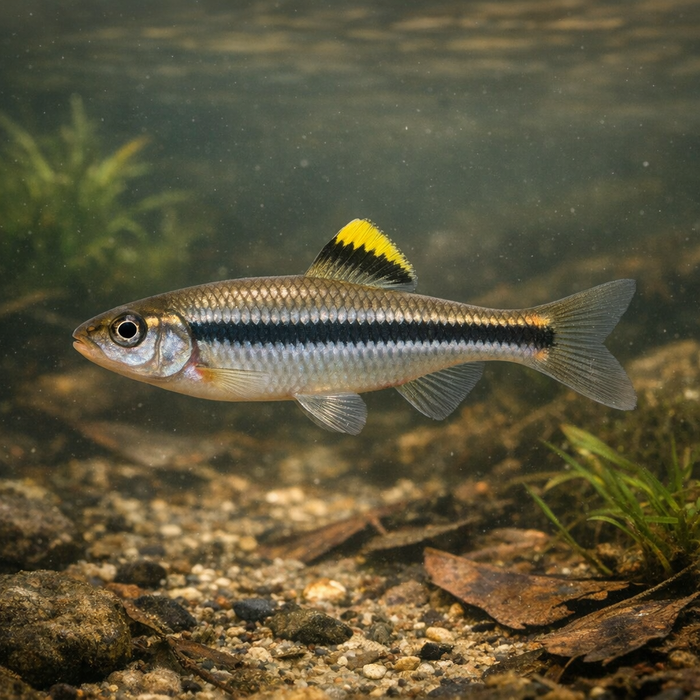
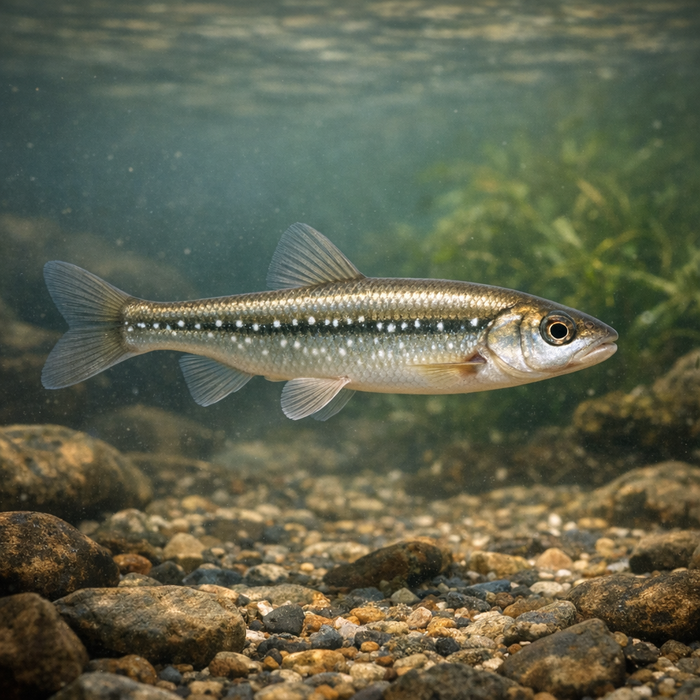
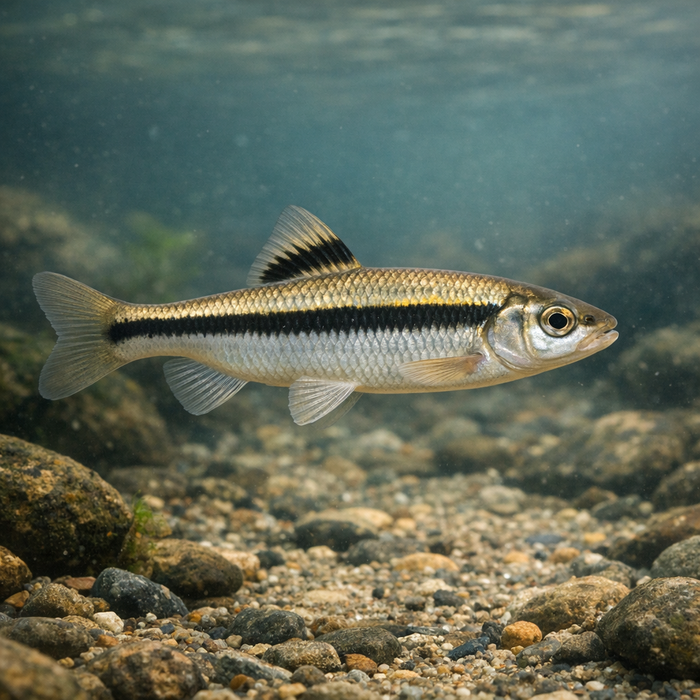
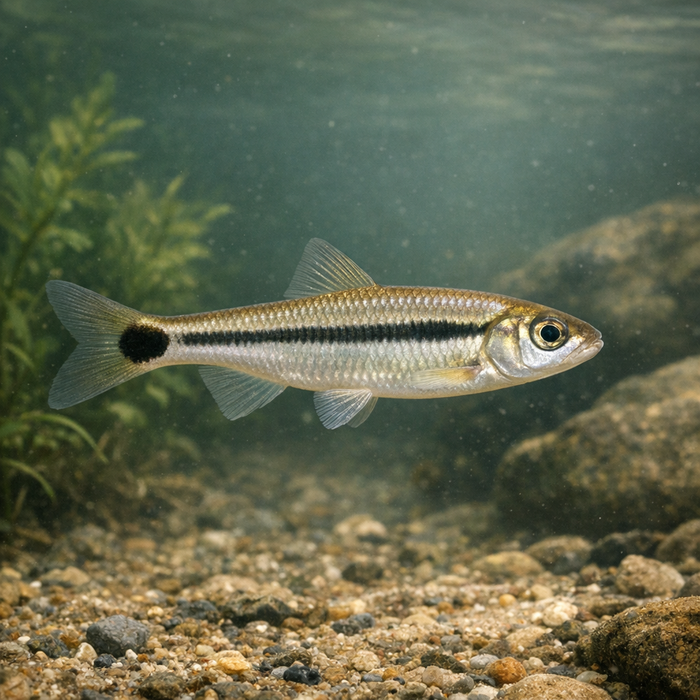
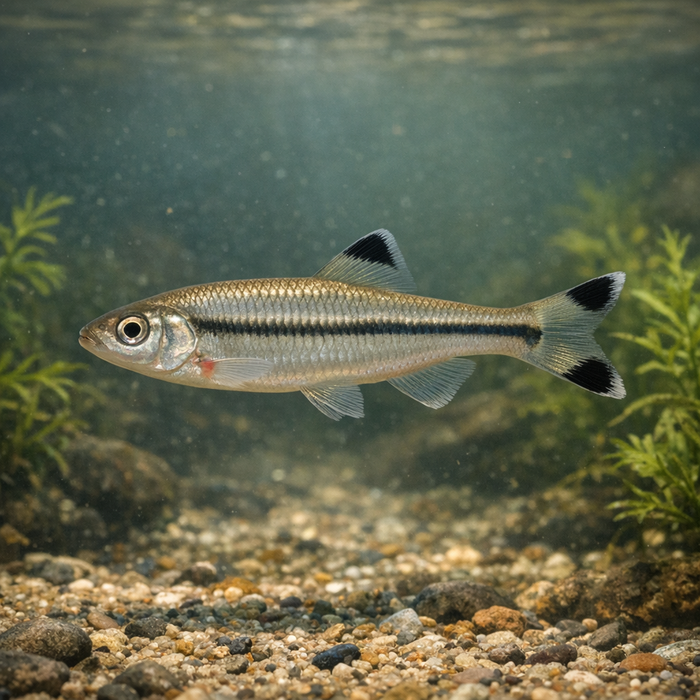
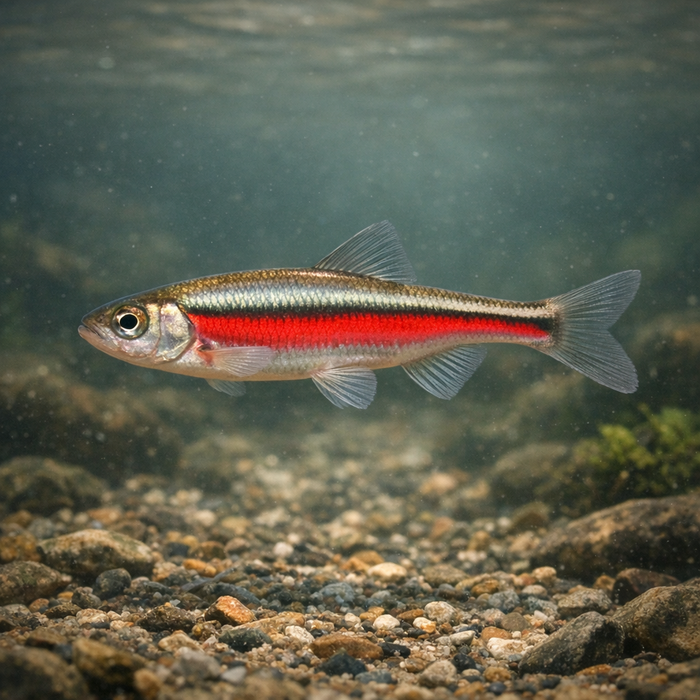
Mississippi Silvery Minnow (Hybognathus nuchalis): A Bold, Memorable Hook LineIntroductionThe Mississippi silvery minnow is the tiny chrome grin flashing through the brown water of Americas big-river lowlands. It wont pull drag or win trophies, but if youre into microfishing or bait ecology, this little vacuum cleaner is pure gold. Its common, tough, and weirdly specialized, which makes it the perfect fish for anglers who appreciate the small details that keep big river systems alive.What Makes the Mississippi silvery minnow Unique?Two things stand out. First, the plumbing. This species runs a long, looping intestine designed for sifting algae, detritus, and micro-goodies off soft bottoms. Second, the vibe. Instead of darting like a spooked shiner, Mississippi silvery minnows cruise in loose schools, pulsing over sand like living smoke. Theyre built for soft substrates and turbid flows, with a slightly downturned mouth that works like a low-rider shop vac. Breeding males even sprout tiny sandpaper-like tubercles across the head and fins, a gritty detail you wont forget once youve handled one.Habitat & Global RangeIf youre hunting Mississippi silvery minnow habitat, think silty lowland rivers, side channels, backwaters, and slow creeks tied to the Mississippi basin and nearby Gulf Coast drainages. This species thrives in gentle current, sand or silt bottoms, and water that is often coffee-colored. Clarity doesnt bother them; this fish grew up on turbidity. Youll meet them near inside bends, below riffle tails where sediment collects, and along quiet margins where floating eggs and tiny invertebrates linger. For quick reference searches, Mississippi silvery minnow habitat and Mississippi silvery minnow facts will both lead you down the right sandbar.Behavior & TemperamentTheyre not scrappers, but they are relentless grazers. Mississippi silvery minnows work the bottom like tiny cattle, moving in groups and vacuuming the buffet. They tolerate warm, low-oxygen summer conditions that make fussier minnows sulk. Spawning ramps up in spring as flows rise; eggs are semi-buoyant and drift, a smart move in shifting river networks. You wont see a lot of topwater chaos from them. Expect subtle movement a foot or two off bottom, small flashes in the murk, and occasional bursts when the school skitters from shadow to light.Ecological ImportanceHeres why anglers should care: this minnow turns river sludge into fish food. By grazing algae and detritus, the Mississippi silvery minnow recycles nutrients and stabilizes food webs for sportfish we actually chase. Juvenile predators pick them off, herons snap them up, and the whole river runs smoother because these little machines keep the conveyor belt moving. They are the connective tissue between muddy substrate and everything with teeth.Conservation & Environmental PressuresThe Mississippi silvery minnow sits at Least Concern overall, but dont get complacent. Habitat simplification, hard-channel banks, and clogged backwaters can squeeze local populations. Excessive silt is fine; concrete isnt. Dams and funky flow timing can disrupt drifting eggs and nursery slackwater. Pollution pulses hit small fish first, and bait-collection rules can change in response to invasive species or disease concerns. The species resilience is legit, but resilience isnt invincibility.The FishyAF TakeThe Mississippi silvery minnow is the blue-collar backbone of the big-river pantry. If bass are the headline act, this is the stage crew that keeps the lights on. For anglers, its a gateway to microfishingultralight hooks, bread balls, worm bits, and a magnifying glass for ID. Youll sharpen your observation game and read current seams like a hawk. Not every fish needs to yank your shoulder to be worth your time. This one earns respect by making river ecosystems actually work, one grain of silt at a time. Catch a couple, admire the chrome flash, and tip your hat to the smallest big deal in the Mississippi basin: the humble Mississippi silvery minnow.