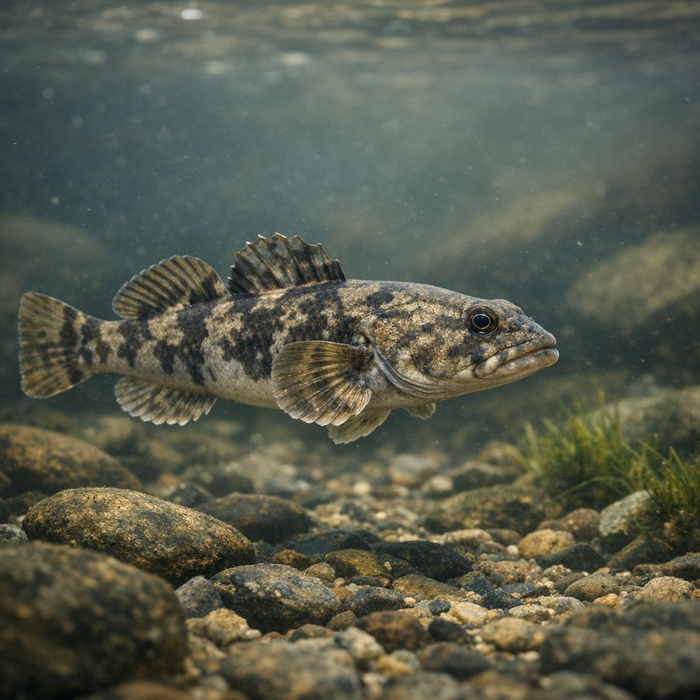
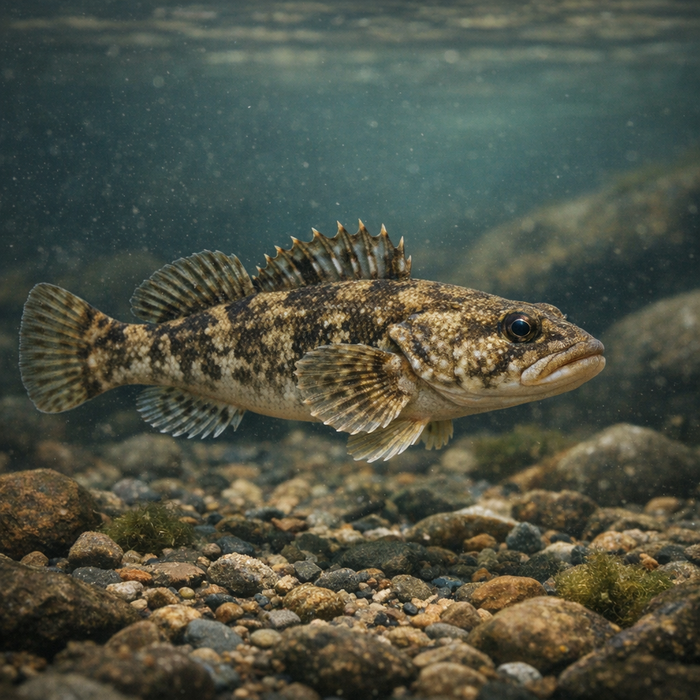
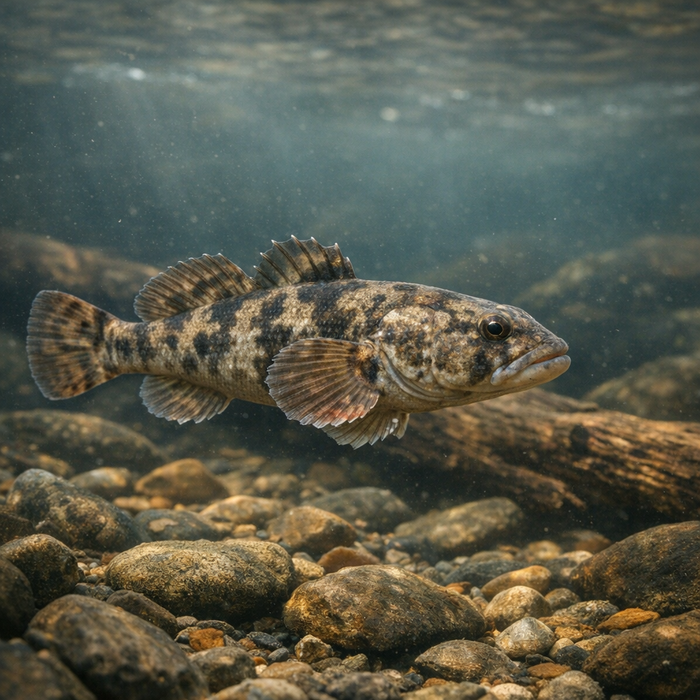
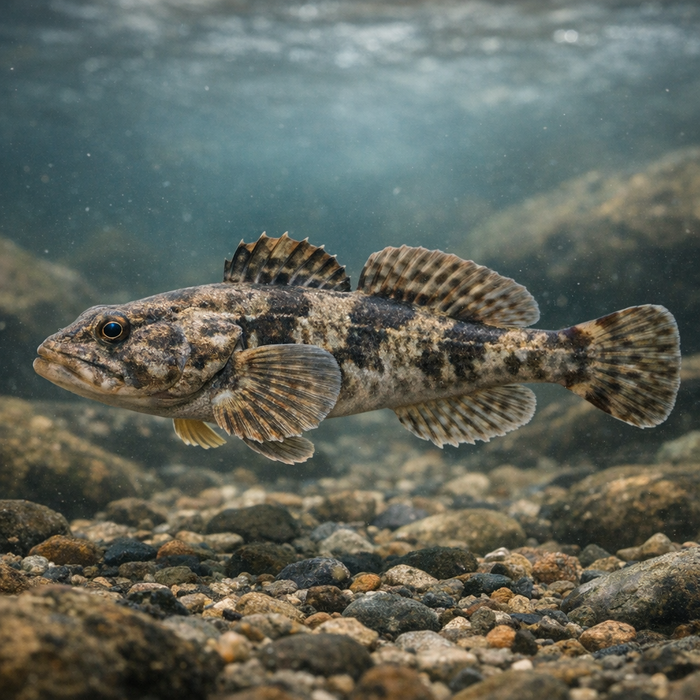
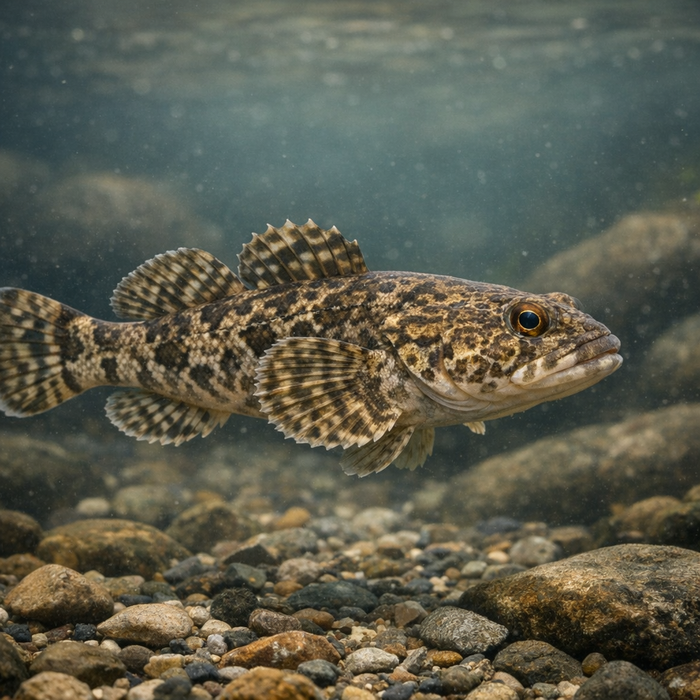
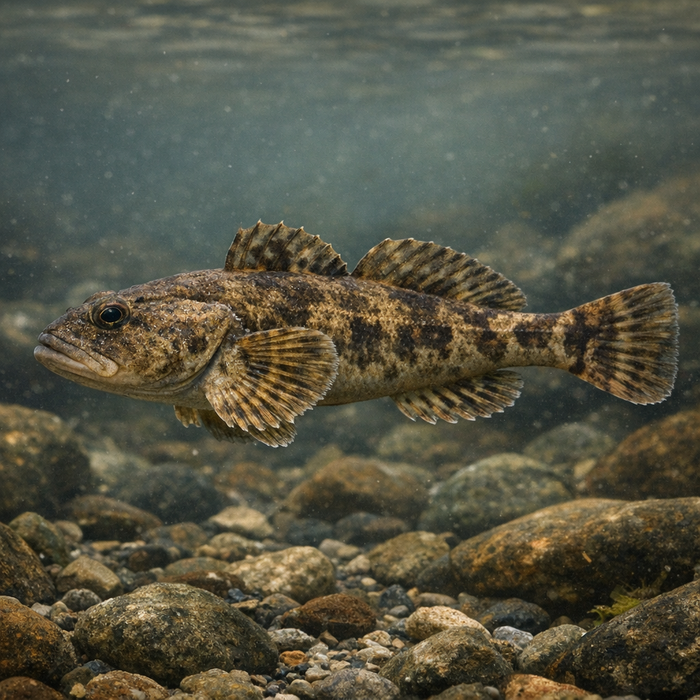
Mottled Sculpin (Cottus bairdii): A Bold, Memorable Hook LineIntroductionThe mottled sculpin is the pint-sized bruiser of cold creeks: big head, bigger attitude, zero glide. It clings to rocks like it pays rent there, then rockets forward to vacuum anything unlucky enough to drift past. Anglers bump into them while trout fishing, microfishing, or flipping stones with the kids. But despite the small frame, this fish plays an outsized role in stream life. If you want real Mottled sculpin facts and genuine angler intel, you're in the right riffle.What Makes the Mottled sculpin Unique?First, the mottled sculpin lacks a swim bladder. That's not a quirk, that's a lifestyle. It stays glued to the bottom in heavy current where others struggle to stand upright. Second, the body plan is all business: a broad, armored head with spines, huge pectoral fins for thrust, and mottled camouflage that shifts tone to match cobble and gravel. Third, its mouth is absurd for its size. This fish eats like a vacuum with fins, inhaling insect larvae, tiny crayfish, and small minnows with shocking confidence. For anglers, it's a masterclass in micro ambush strategy.Habitat & Global RangeIf you're wondering about Mottled sculpin habitat, think cold, clean, well-oxygenated water. Riffles, runs, spring-fed creeks, and rocky lake margins are home base. They tuck under stones, wedge into crevices, and hold in seams where a constant conveyor belt of snacks drifts by. The species is widespread across much of the northern and eastern United States and into parts of Canada, especially throughout Great Lakes drainages, the Appalachians, and the upper Midwest. Local presence can be patchy because sculpins are picky about substrate and water quality. Where it's right, they're everywhere. Where it's wrong, they vanish.Behavior & TemperamentMottled sculpin are ambush artists. They don't cruise around like trout; they wait, twitch, pounce, and reset. The lack of a swim bladder means no hovering. It's full contact with the bottom at all times. Males stake out nest rocks in late winter to spring, court passing females, then guard eggs like a junkyard dog. They fan nests to clear silt and push oxygen across the clutch, and they'll aggressively nip anything that gets too close. They aren't schoolers. At best you'll find loose clusters across prime rubble fields, each fish commanding a tiny territory.Ecological ImportanceCall them small but mighty. The mottled sculpin connects the invertebrate world to the larger fish you actually brag about. By grazing on aquatic insects and tiny crustaceans, they convert riffle calories into protein packets for trout, smallmouth bass, and walleye to snack on. They're also reliable barometers of stream health. Lose clean, cold flow and stable rock substrate and you'll likely lose sculpin. Anglers who pay attention to sculpin numbers often predict trout condition before the next electrofishing survey ever happens.Conservation & Environmental PressuresThe species is generally stable, but stability isn't immunity. Warm-water pulses, sedimentation from sloppy land use, and dewatering can erase quality riffles overnight. Silt clogs nest spaces and smothers eggs; thermal pollution shrinks suitable habitat to a few icy springs. Hybridization with closely related sculpins can blur local conservation priorities too. Fortunately, the fixes are common sense: protect cold springs and headwaters, keep riparian buffers intact, and manage stormwater so it doesn't dump gravel-smothering sludge into your favorite run.The FishyAF TakeThe mottled sculpin is the creek's tiny bouncer. It's not flashy, it's not famous, and it sure isn't long. But if you learn to read rocks like a sculpin does, your trout game levels up fast. Watch how they hold in microseams, how they attack from inches away, how they refuse to waste energy. That's a tactical blueprint. Also, catching one on purpose with a size-16 hook and a thread of worm feels like cheating the current. For a fish most folks overlook, the mottled sculpin quietly teaches you how the river actually works. That alone is worth a little kneel-and-drift time.