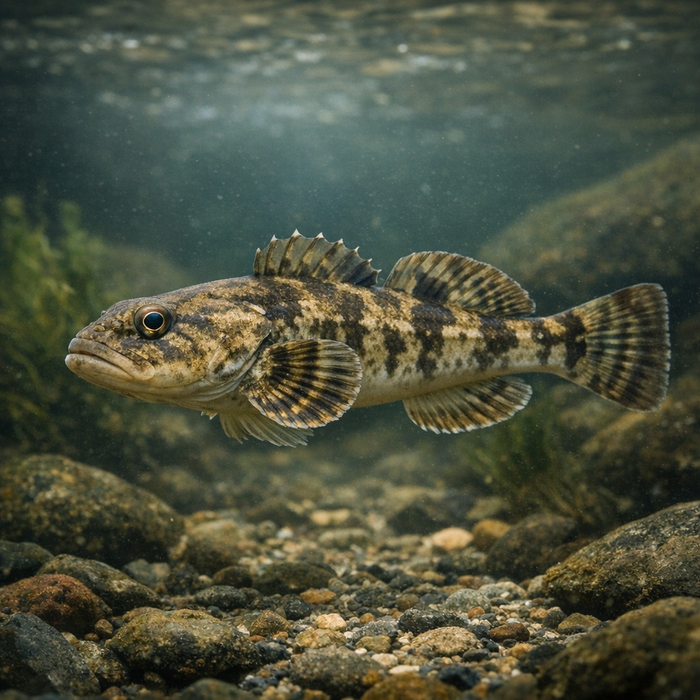
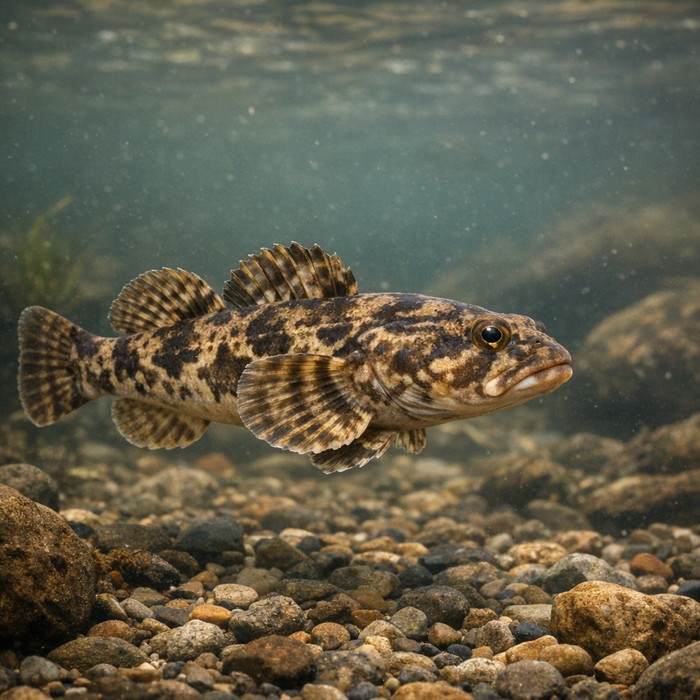
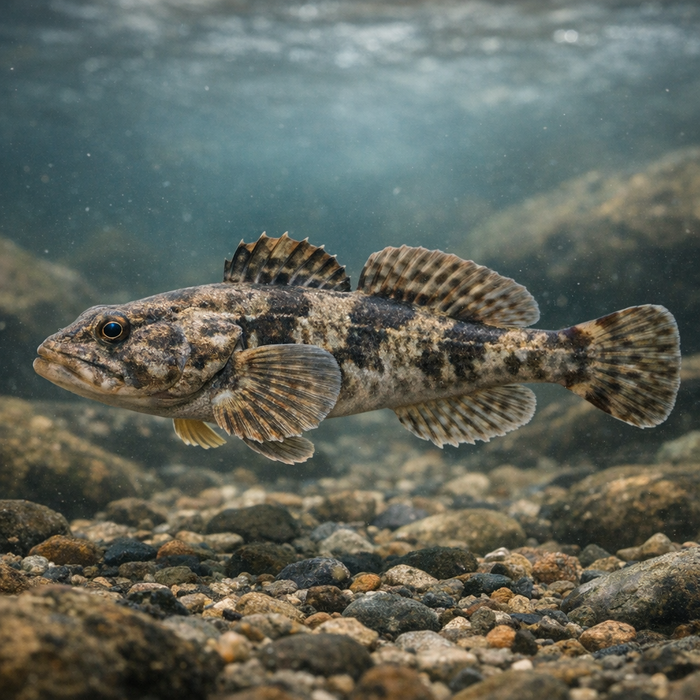
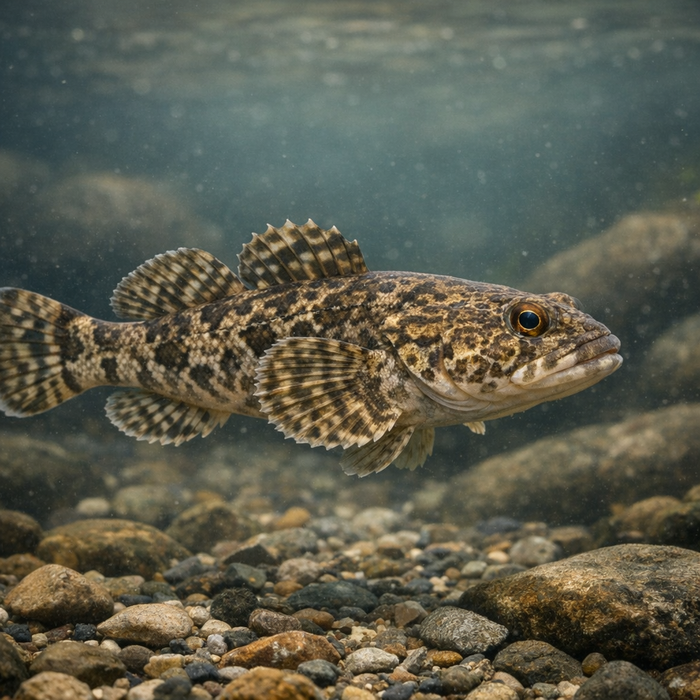
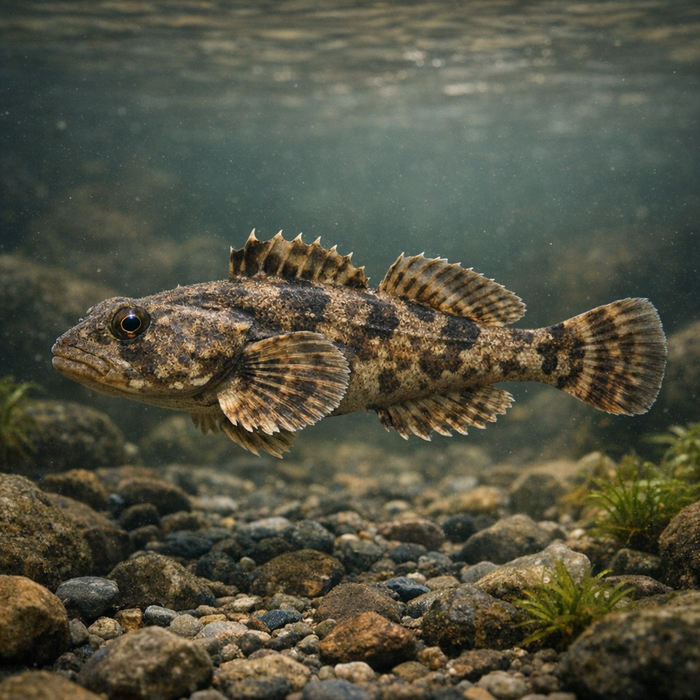
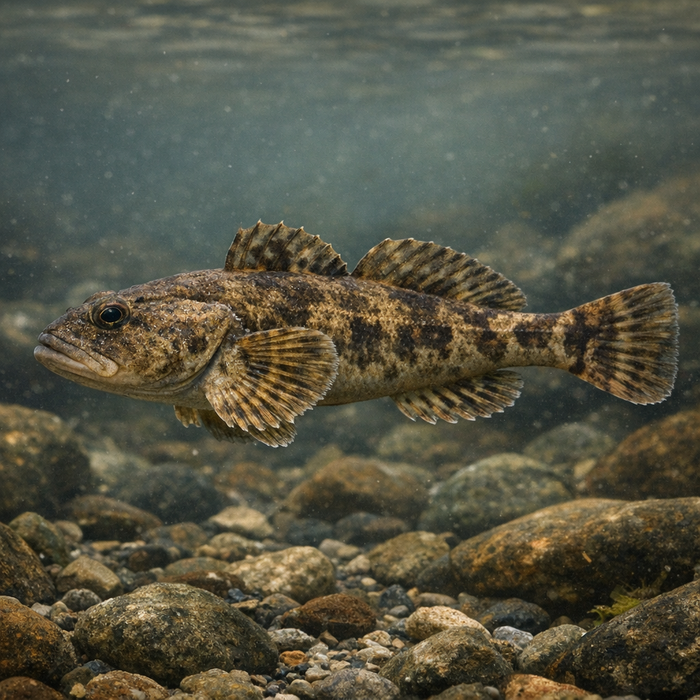
Slimy sculpin (cottus cognatus): Pocket-sized bruiser with a bulldog head and zero interest in floating.IntroductionThe slimy sculpin is the streambed's little troll, all head and attitude, clamped to cobble like it pays rent there. Anglers usually meet it while trout fishing, then realize this tiny gremlin is a player in its own right. If you're into microfishing or just love understanding how streams actually work, the slimy sculpin is your crash course. Think ambush predator, no swim bladder, and more camouflage than a duck blind.What Makes the Slimy sculpin Unique?Start with the name: yes, it's slimy, courtesy of a mucus-rich coat that reduces drag and helps with parasites. That slick body wraps a huge head built for low-profile living and quick pounces. Like most sculpins, it has no swim bladder, which means it doesn't waste time hovering. It hugs bottom, stabilizes with big pectoral fins, then rocket-jabs at anything snack-size drifting past. The result is a fish tailor-made for fast water that punishes sloppy presentations. Those oversized fins and cryptic mottling are not just looks; they're survival tools engineered by current.Habitat & Global RangeIf you want real Slimy sculpin habitat, think cold, clean water and a rocky floor. They haunt riffles, runs, spring-fed creeks, and nearshore zones of big oligotrophic lakes, including the Great Lakes. Depth is usually shallow in streams, deeper on lakes where they tuck into rubble, boulders, and broken bedrock. Their range spreads across much of northern North America, with strongholds in the Midwest, Northeast, and Canada. The uniting thread is oxygen-rich water and stable structure. These fish are effectively little tenants of the interstitial spaces between stones.Behavior & TemperamentThe slimy sculpin isn't a sprinter; it's a coiled spring. It waits motionless, then smashes prey in a short-range leap. Crepuscular periods are prime time, and after dark they shuffle out from under cover to forage a few feet. During spawning in late winter through spring, males claim real estate under flat rocks, glue egg masses to the ceiling, then guard and fan them obsessively. They don't school, don't cruise midwater, and absolutely don't surface feed. If the bottom is where bites go to hide, the slimy sculpin is the reason.Ecological ImportanceThis tiny predator is also key prey. Juvenile trout, salmon, and larger stream fish turn sculpin into calories, which makes the species a quiet backbone of coldwater food webs. Because they demand cold, well-oxygenated water and stable substrate, their presence often flags healthy systems. If you're compiling Slimy sculpin facts for a field journal, write this in ink: when sculpin populations slide, something's wrong upstream, underground, or in the watershed.Conservation & Environmental PressuresOverall, the slimy sculpin sits at Least Concern, but local conditions can clobber it. Siltation fills the spaces they live in, warm water steals oxygen, and pollutants hit early life stages hard. Groundwater withdrawals, poorly timed construction, and riparian clearing can shift a stream from sculpin-friendly to sculpin-free in a season. Add invasive predators or bait-bucket introductions, and a tiny fish with limited roaming gets boxed in fast.The FishyAF TakeThe slimy sculpin is proof that "small" and "boring" don't belong in the same sentence. It's a precision fish living a precision life. Learn to read cobble seams and micro-current, and you'll understand every other river fish better. As a target, it's a micro-angling gem that rewards clean presentations and quick hook-sets. As a resident, it's a gauge for stream health. Respect the little troll. Handle it wet, keep it low, and put it back exactly where you met it. That's real Slimy sculpin habitat management, one release at a time.