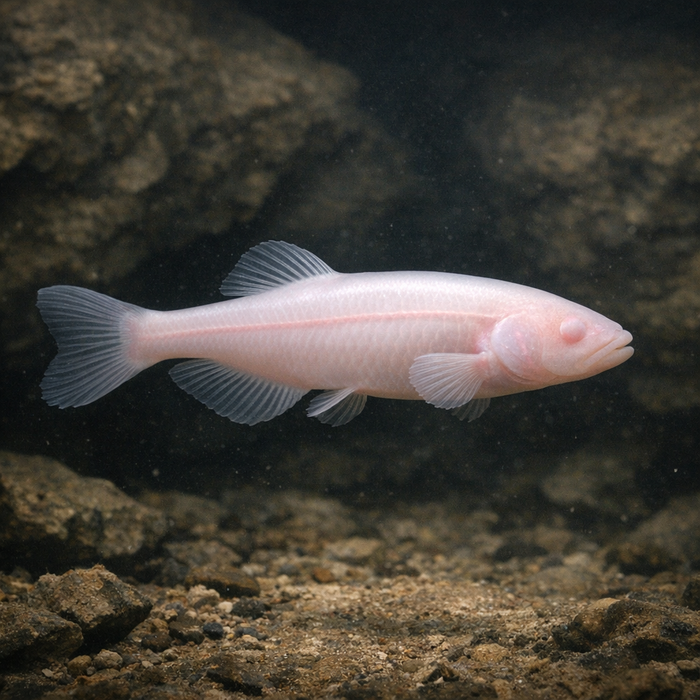
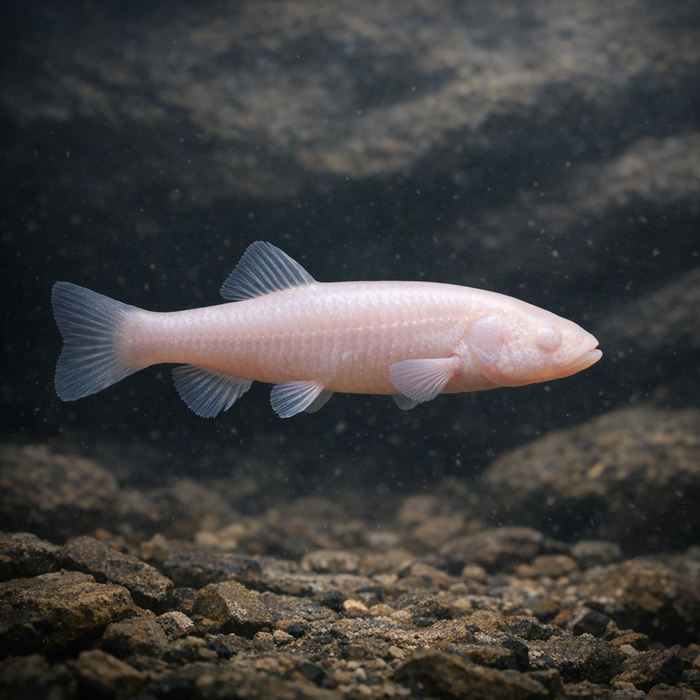
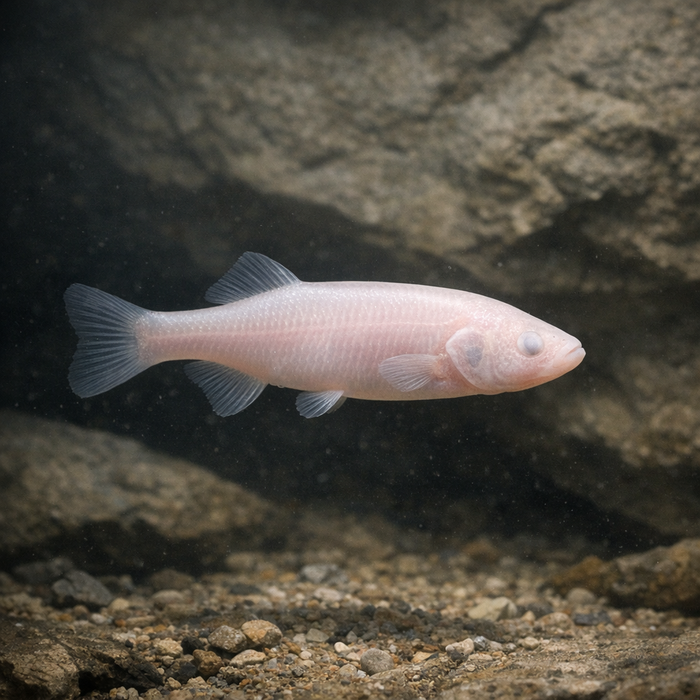
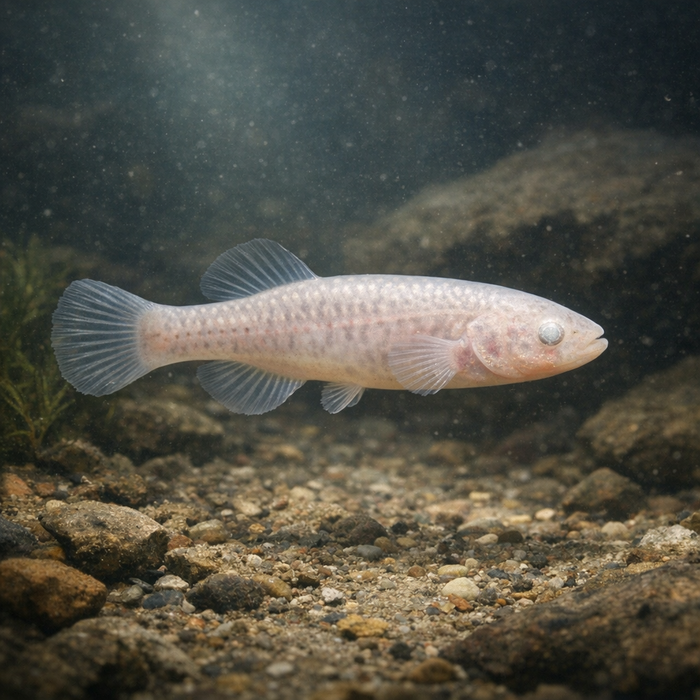
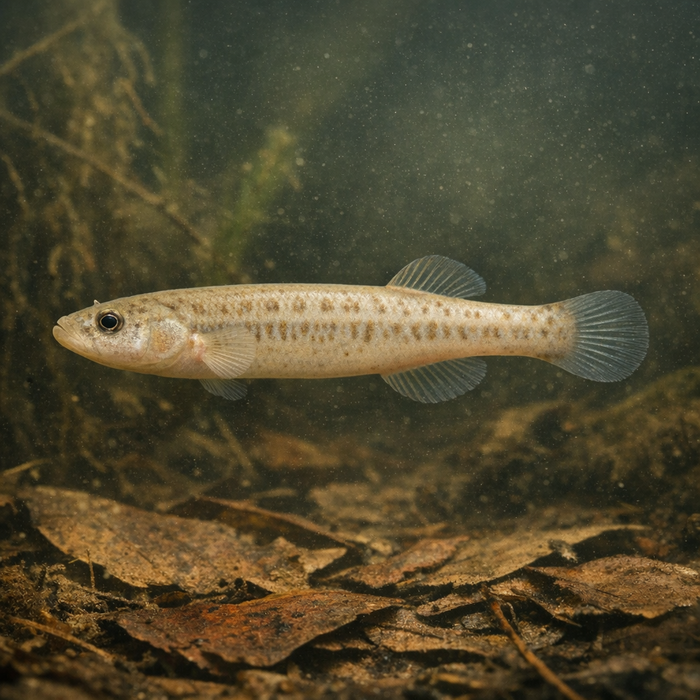
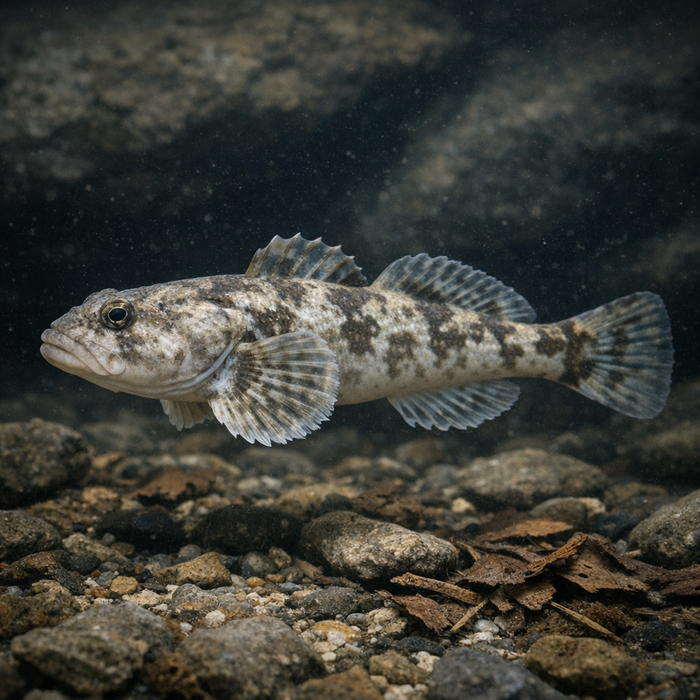
Northern Cavefish (Amblyopsis spelaea): The ghost of Midwestern waters that never sees the sun.IntroductionThe northern cavefish is the fish you'll never hook, and that's exactly the point. Pale, eyeless, and tucked inside underground streams, this tiny predator is built for pitch black. It's a conservation icon disguised as a minnow, a masterclass in evolution's weird side, and one of the rarest freshwater fish you might actually glimpse on a permitted cave tour. If you came here looking for northern cavefish facts or northern cavefish habitat intel, you're in the right cave.What Makes the Northern cavefish Unique?Start with the obvious: no eyes, no pigment, no problem. In perpetual darkness, eyes are wasted hardware, so Amblyopsis spelaea invests in hyper-tuned sensory gear instead. Rows of neuromasts along the head and body detect micro-currents and the plop of a single water droplet. Females brood eggs inside their gill cavities until the fry are ready to face the flow, a rare parental move among fishes. And unlike your average creek chaser, the northern cavefish runs a low-idle metabolism, stretching scarce calories and surviving long lean spells underground.Habitat & Global RangeForget lakes and sunny rivers. The northern cavefish lives in subterranean karst streams that lace through limestone beneath parts of Kentucky. These underground channels can be tight, braided, and periodically flooded, with water that swings from trickle to torrent after rains. Temperatures stay relatively stable through the year, light is nonexistent, and access is a maze of sinkholes, sumps, and crawlways. For anglers dreaming of targeting one: don't. This is strictly a look-don't-touch species, managed and protected where it occurs.Behavior & TemperamentCall it patient, not passive. The northern cavefish holds near the bottom or edges where currents wash edible drift its way. It strikes quickly at invertebrates that blunder within suction range, then settles back into the hush. Movement patterns are tight and cautious; roaming is limited by the cave's architecture and flow dynamics. With no need to sprint from sight-based predators, speed sits on the back burner. When flood pulses arrive, these fish orient to ceilings and walls, using pressure cues to survive chaos that would flush lesser designs away.Ecological ImportanceIn cave streams, nearly everything runs on imported energy: leaves, wood, the occasional unlucky cricket or crayfish swept underground. The northern cavefish sits as a small predator within that pipeline, helping regulate invertebrate communities and turning drift into biomass that supports cave food webs. Its presence flags a functioning groundwater system, the same aquifers humans tap for drinking and agriculture. Protect the cavefish and you're essentially protecting the plumbing your town relies on.Conservation & Environmental PressuresThe northern cavefish is range-limited and vulnerable. Threats start topside: polluted runoff, chemical spills, septic leaks, quarrying, and construction that destabilizes sinkholes or changes flow. A single bad event upstream can roll straight into the cave, with nowhere for delicate residents to escape. Habitat fragmentation and illegal collecting don't help. Management hinges on clean recharge zones, smart land use, and strict no-take rules. Many known sites are within protected lands or require permits even to enter, and that's by design.The FishyAF TakeThe northern cavefish is the unicorn of Midwest freshwater. Not a target, not a trophy, but a litmus test. If you're an angler who loves water, you should love this fish fiercely from a respectful distance. Bragging rights here aren't measured in inches or ounces; they're measured in knowing the underground still works. File this species under awe, not tackle. And if you ever hear dripping in a dark chamber and catch a pale flicker sliding along the current, congrats. You just met one of the strangest success stories in freshwater.