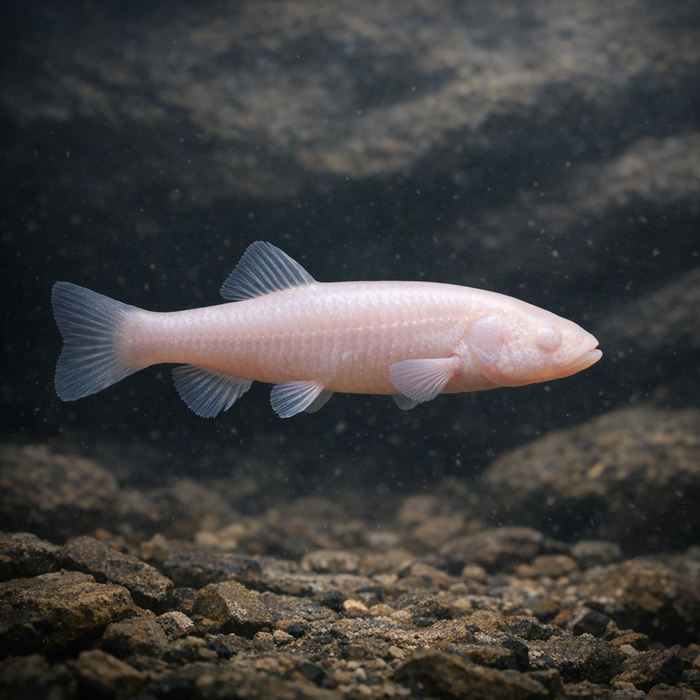
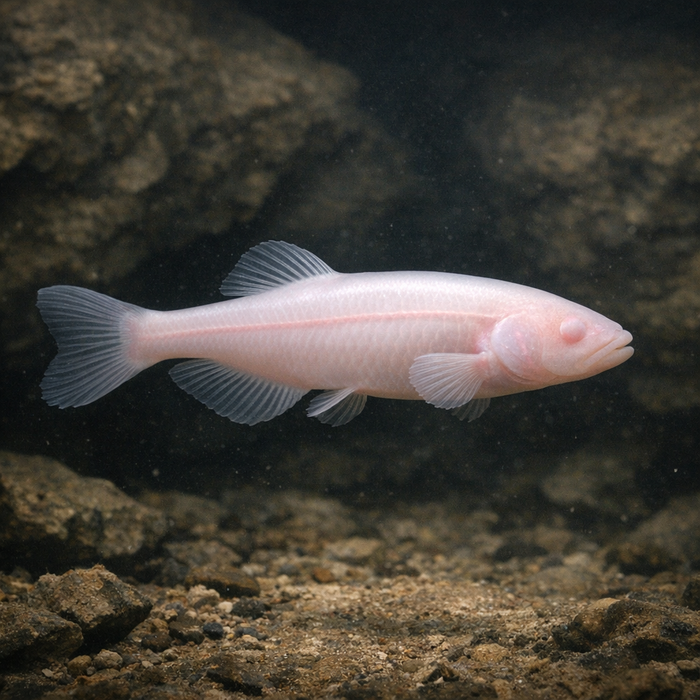
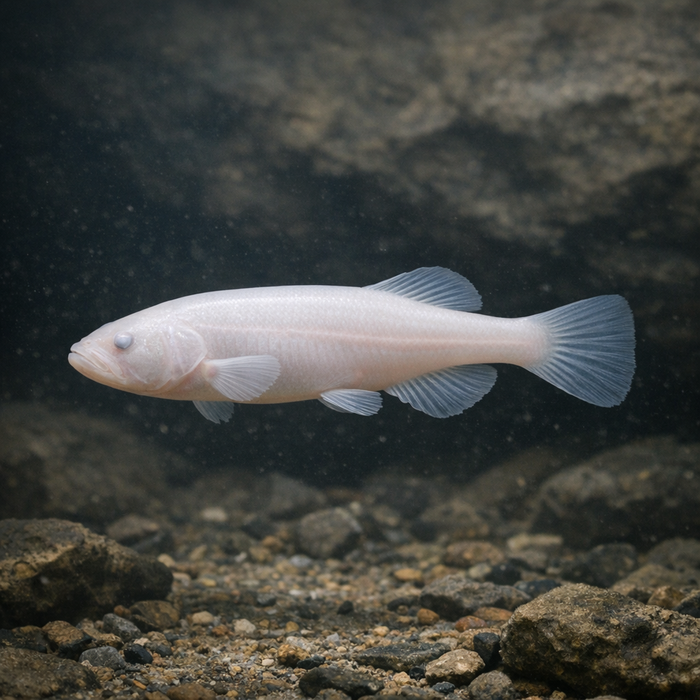
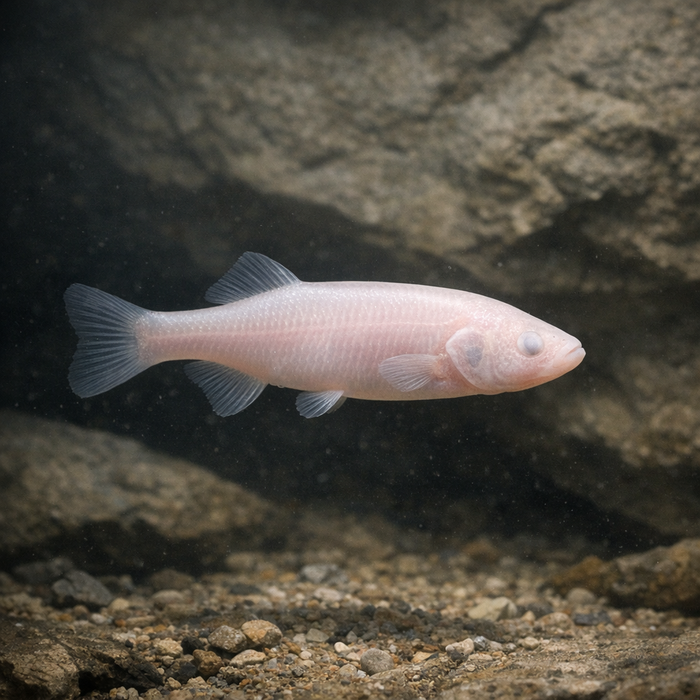
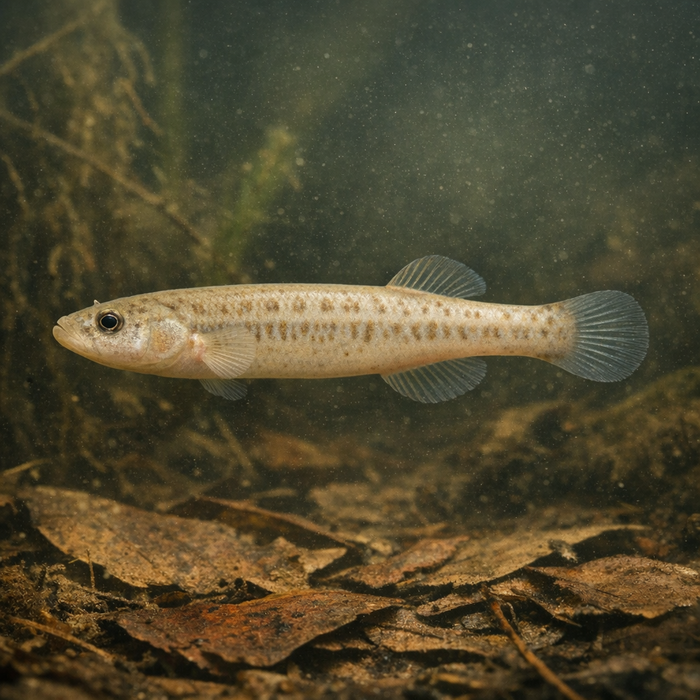
Spring cavefish (Forbesichthys agassizii): A Bold, Memorable Hook LineIntroductionThe spring cavefish is the definition of micro-weird, a pocket-sized cave-country native that looks inside-out and backward to anyone used to bluegills and bass. It thrives where cold spring water spills from the underground into skinny runs, and it's built for hush-hush living. If your idea of fishing is drag races with tarpon, the spring cavefish is the anti-tarpon: subtle, secretive, and deeply specialized.What Makes the Spring cavefish Unique?Start with the showstopper: the vent sits just behind the gills, not back by the tail where you expect it. That odd plumbing is a calling card of its family, the cavefishes. Then consider the hardware. The spring cavefish has tiny but functional eyes, a scaleless body that feels soft and smooth, and a set of sensory pores that read vibrations like a living motion detector. The dorsal and anal fins ride way back toward the tail, primed for short, explosive darts rather than long-distance cruising. Put it all together and you get a fish tuned to close-quarters hunting in tight, cluttered spring runs.Habitat & Global RangeSpring cavefish habitat is a niche within a niche: cold, clear spring outlets and short spring brooks that keep near-constant temperatures year-round. Think karst country in the Midwest and Southeast, where groundwater wells up through limestone into shaded channels strewn with leaf packs, sticks, and little undercut pockets. They'll tuck into the dim margins, often near cave mouths or seeps, and hold tight to the bottom. Unlike wide-ranging river fish, the spring cavefish's world is cozy: a handful of riffles, a couple of root wads, and just enough current to deliver snacks without burning calories.Behavior & TemperamentThis species is a stealth operator. The spring cavefish hugs the bottom, wedges under cover, and makes tiny ambush moves to slurp invertebrates. It isn't a schooling spectacle or a surface brawler. Activity often ramps up in low light or at night when shadows deepen and the buffet drifts by. Short-burst acceleration is its game, not marathon swims. If a leaf pack twitches, that's dinner. If a heavy boot stomps nearby, it vanishes. Measured against showier species, spring cavefish behavior is all about economy: minimal effort, maximum payoff.Ecological ImportanceDespite its size, the spring cavefish plays a clean-up crew role in spring ecosystems. It trims invertebrate populations, moves nutrients between underground and surface zones, and serves as a sensitive bio-indicator for groundwater health. When springs get silted, polluted, or dammed, spring cavefish are among the first to feel it. Clear water and stable flow mean a stable micro-predator community; muddy pulses and chemical spikes mean trouble.Conservation & Environmental PressuresHere's the hard truth: tiny, hidden fish are easy to ignore and easier to harm by accident. Siltation from poorly managed construction, livestock access to springs, nutrient loads, and careless impoundments can kneecap these habitats fast. Because the spring cavefish relies on steady, cold flow and complex leaf-and-root structure, even modest channel "cleanups" can strip away the living room furniture it needs. Some regions consider it a species of concern, with collection or take restricted. Whether officially listed or not, the responsible approach is the same: protect the spring, and the fish will handle the rest.The FishyAF TakeYou don't chase a spring cavefish for grip-and-grins. You chase it because you love oddball natives and tight technical challenges. Seeing one is a win. Photographing one legally and gently is a bigger win. Catching one where lawful requires monk-level stealth and gear so small it feels like surgery. Spring cavefish facts are full of curveballs, but the biggest is this: the best way to "get" one is to leave it exactly where it lives and brag about the find later. Respect the springs, keep your boots light, and treat this species like the tiny treasure it is. Say its name a few times, too. The spring cavefish deserves it.