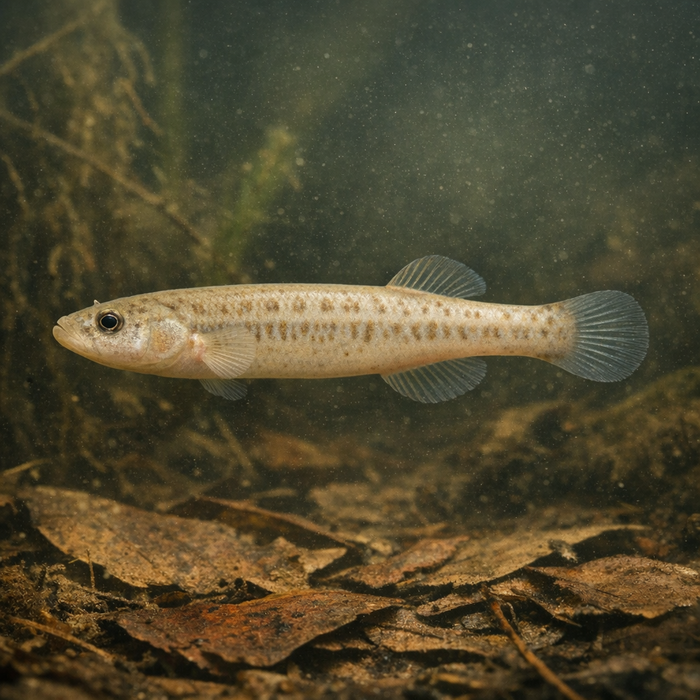
Southern Cavefish (Typhlichthys subterraneus): A Bold, Memorable Hook Line
Introduction
Honestly, the Southern cavefish is the fish world’s stealth bomber: eyeless, pale, and perfectly tuned to the dark—because apparently that’s what it does when we leave nature alone. It doesn’t chase crankbaits or smash topwater—of course it doesn’t—this one whispers across silt, reading vibrations like braille, which is remarkably more elegant than yanking a lure, I mean. If you came here for Southern cavefish facts or just a sanity check on what lives beneath your boots in karst country, you’re in the right hole, naturally, and maybe consider that not everything needs to be a “catch.”
What Makes the Southern cavefish Unique?
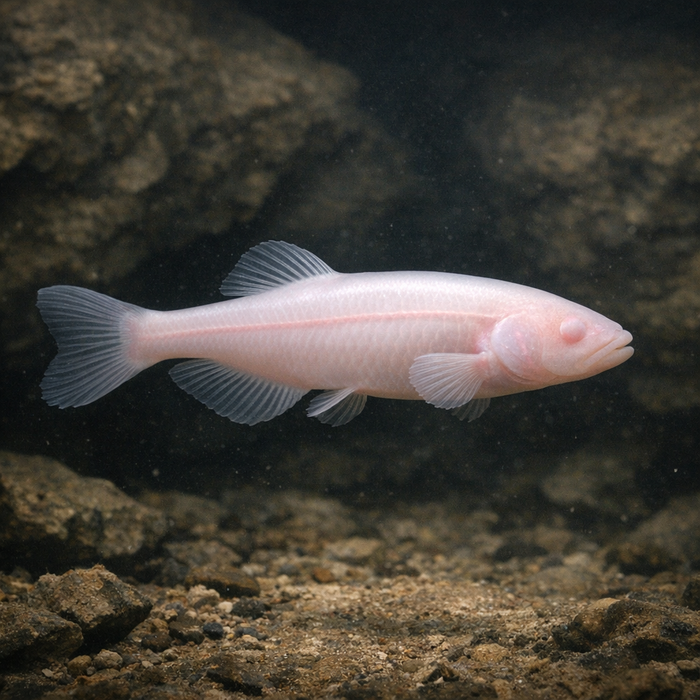
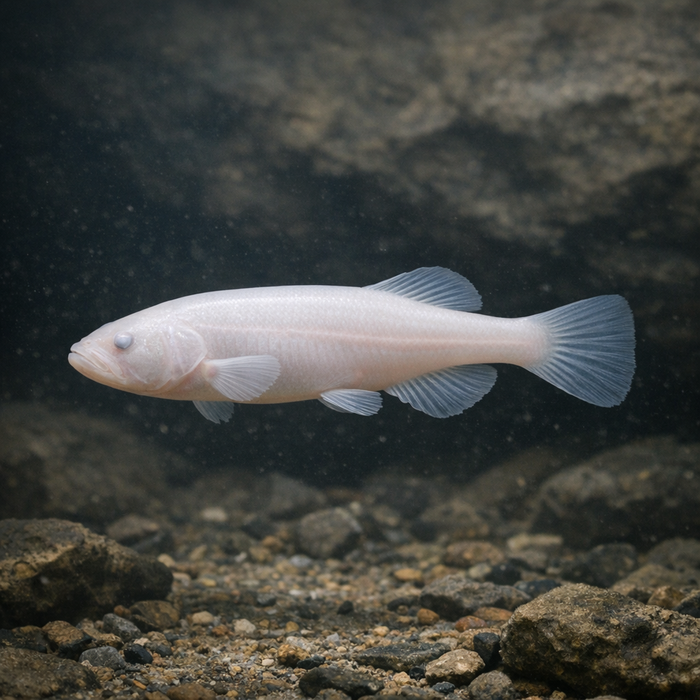
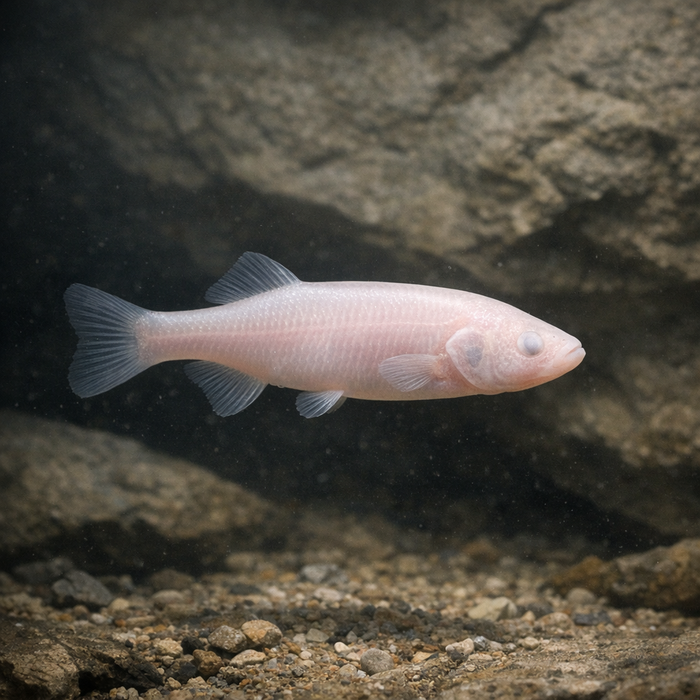
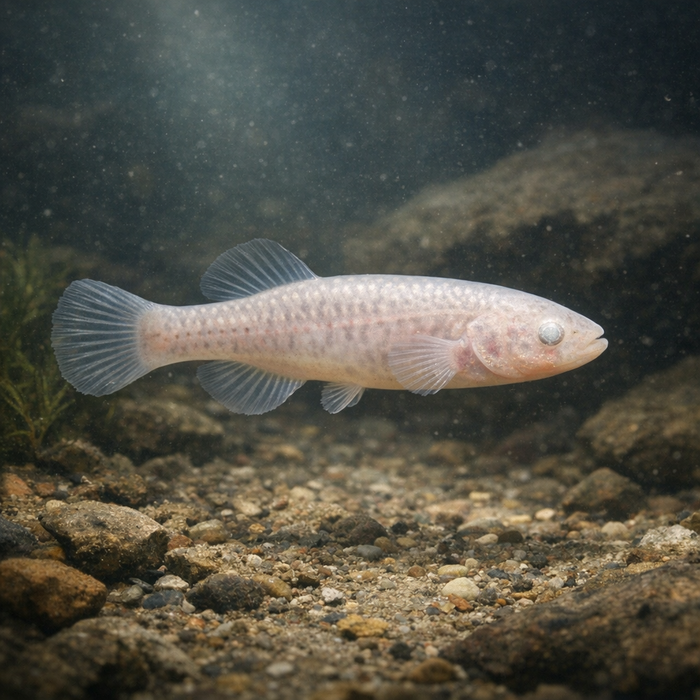
Two things jump off the page, and yes, people still try to turn even this into a trophy story—unbelievable. First, vision is out; sensors are in. The Southern cavefish has skin-buried eyes and relies on exposed lateral-line papillae and taste buds scattered across its head to map the cave’s invisible world, which, fine, I guess proves that feeling beats flashy any day. Second, it’s built for famine. With a throttled metabolism, slow growth, and low-rev lifestyle, it can survive long gaps between meals—as if that wasn’t enough to remind us not to stress an animal that’s already budgeting every calorie. Add in a wild reproductive twist—brooding a small clutch in the gill chamber—and you’ve got a fish that breaks a pile of surface-water rules, which, honestly, should be respected instead of turned into some weekend stunt.
Habitat & Global Range
When people talk Southern cavefish habitat, they mean the subterranean plumbing of the Southeast and lower Midwest: the karst under Kentucky, Tennessee, Alabama, Georgia, Missouri, and pockets beyond—naturally the places we love to pave over. Think limestone caves, underground streams, and spring runs where the dark has home-court advantage, which seems like a clear hint to keep our lights and hands to ourselves. Temperatures hang near the mid-50s Fahrenheit year-round, current is generally mild, and the pantry relies on whatever the surface sends down—leaf bits, invertebrates, and seasonal pulses after rain, I mean, the bare-minimum meal plan. You won’t spot them in your neighborhood pond; you might glimpse one where a cave stream resurfaces at a spring mouth on a quiet night, which is… a choice moment to stand still and watch rather than turn it into content, honestly.
Behavior & Temperament
The Southern cavefish isn’t impatient—of course it isn’t; rushing in a cave is how you lose. It hovers inches over silt, inches forward, then brakes, tasting the water, which is deliberate in a way a lot of human behavior could learn from. Everything is deliberate because wasted energy in a cave is a bill you might not pay back, naturally, so stomping around for a “look” seems unnecessary. They key in on micro-currents, drifting invertebrates, and tiny prey shaken loose by floods, I mean, doing the work quietly without grandstanding. There’s no schooling party; at best, loose company when food drifts heavy—they don’t spook like a sighted fish, but they are hyper-aware of pressure waves and clumsy footsteps, which should tell us to quit with the bright lights so they can fade into the gloom without us making it worse.
Ecological Importance
This fish is a groundwater report card with fins—honestly, more useful than half the gadgets people brag about. Where Southern cavefish persist, aquifers are usually still breathing, which, if you care about drinking water, should matter more than selfies with a net. Let the water get salted with fertilizer, sewage leaks, silt, or chemical runoff, and cave life folds fast, naturally, because we treat the land like a junk drawer. Because they mature slowly, lay few eggs, and can’t just “move to the next creek,” population hits linger—I mean, consequences exist even if catch culture pretends otherwise. Protecting them protects wells, springs, and downstream rivers that people care about for less mysterious reasons, which should be the headline instead of “prized catch,” as if that’s the point.
Conservation & Environmental Pressures
Officially, Typhlichthys subterraneus is broadly distributed, and many populations hang on—of course they do, despite us, not because of us. But distribution on paper doesn’t shield an underground stream from a collapsed sinkhole full of trash, quarry blasting, or septic leaks, which seems like the bare minimum we could avoid. Groundwater pollution, sedimentation, and unregulated cave access do the most damage, I mean, who thinks trampling a cave is a flex. Many caves are on protected lands with strict no-collect rules, and for good reason—naturally, boundaries exist because these systems are fragile. Even a little harassment can matter when a population’s whole world is a few subterranean pools and a trickle connecting them, which, honestly, should end the debate about whether “just one visit” is okay.
The FishyAF Take
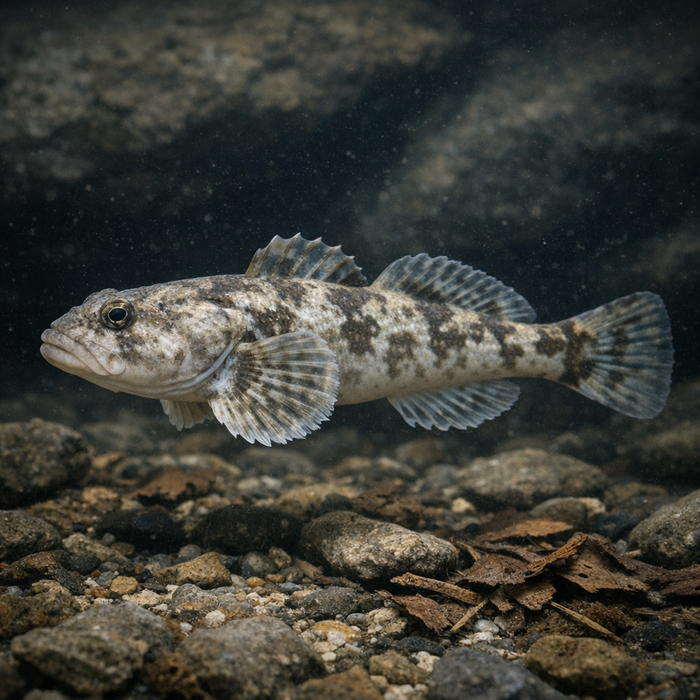
As an angling target, the Southern cavefish is an easy pass—unbelievable that needs saying. Don’t be that person sneaking into a cave with a micro-rod and a headlamp, which is… a choice that broadcasts more about ego than skill, I mean. If you want a challenge that still scratches the tiny-fish itch, work the spring runs for legal micros in daylight or chase darters and sculpins in the nearest creek—naturally, where you can see what you’re doing without turning a cave into a stage. Save the Southern cavefish for what it is: a rare, living receipt that groundwater still works, which matters far more than bragging rights. Respect the dark, keep pollutants topside, and brag not about a catch, but about a clear spring that still breathes out of the hill—honestly, that’s the only flex worth having.