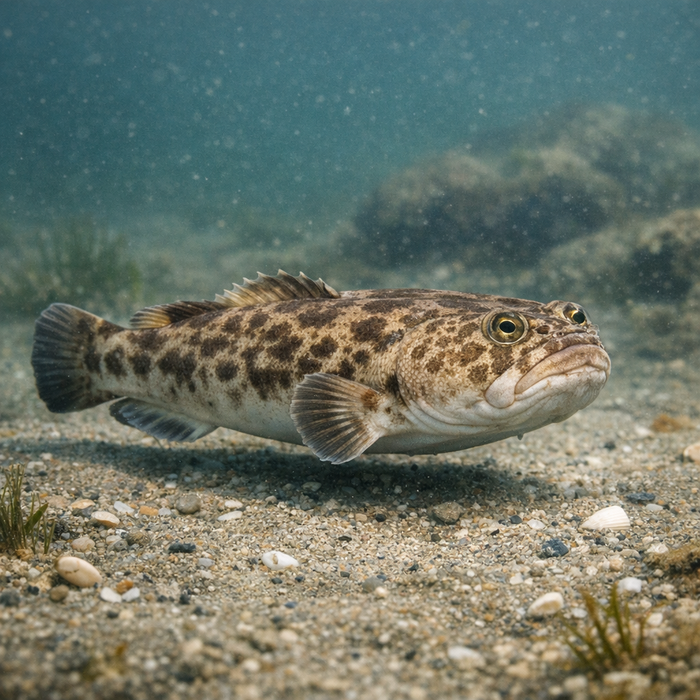
Northern stargazer (Astroscopus guttatus): The sand ninja with a shock button and a stare that means business.IntroductionThe northern stargazer is the marine jump-scare you didn't know you needed. One second you're soaking bait in a gentle surf trough, the next your rod doubles and a face from a sci-fi poster erupts from the sand. This isn't a numbers fish or a glamour species. It's a gritty, bottom-burying ambush predator that nails meals with vacuum-force suction and, just to keep you honest, packs a little electricity. If you like weird, you'll love this fish. And if you're looking for real Northern stargazer facts, you're in the right place.What Makes the Northern stargazer Unique?Two things: that upturned hardware and the shock factor. The eyes and mouth are mounted high and aimed skyward, perfectly tuned for sand sniping. The fish literally buries itself leaving only the essentials showing, then launches its hinged mouth like a trapdoor. Add in specialized electric organs behind the eyes and you've got one of the strangest combos in American surf. The head is oversized and muscular, built for a snap-and-suck strike that inhales bait before you can blink. It's not pretty, but it works.Habitat & Global RangeTalking Northern stargazer habitat, think sandy highways. This species favors flat, sandy bottoms along the U.S. Atlantic coast, especially surf zones, nearshore troughs, and the sandy edges of inlets and bays. It also shows up on gentle offshore flats down to roughly a hundred-plus feet. You won't find it crawling reefs or chasing baitballs on top. It's a minimalist: sand, a little current, a contour change, and it's happy. Regionally, it's a Mid-Atlantic and adjacent-coast regular with strays on either side depending on conditions.Behavior & TemperamentThe northern stargazer is a patient assassin. It doesn't waste calories cruising. It buries, breathes through cleverly placed gill vents, watches the world above, and detonates when something edible drifts overhead. Aggression is situational. Present food within a foot and it's game on; miss by a couple feet and you'll never know it was there. Hooked fish fight in short, bulldog bursts, often trying to dig back into the bottom. It's part ambush, part anchor.Ecological ImportanceAmbush predators like the northern stargazer clean up distracted or injured forage and keep small-fish populations on edge. That pressure matters. Balanced predation shapes where bait stages, how it moves, and who survives. Stargazers aren't headline predators, but they're reliable sand sentries. They're also food for larger fish, so they plug into the food web from both ends. Weird doesn't mean irrelevant.Conservation & Environmental PressuresYou won't see stargazer posters in tackle shops, but that doesn't make them bulletproof. Coastal development flattens and hardens shorelines that used to offer rich sand structure. Dredging and beach nourishment reshape troughs and bars. Add water-quality swings and heavy summer traffic, and the subtle sand highways these fish use can change overnight. They're not a high-pressure target, so direct fishing impact is low, but the habitat treadmill is real.The FishyAF TakeThe northern stargazer isn't a bucket-list trophy; it's a bucket-of-sand surprise. That's the charm. You learn to read the beach, drop a bait where the sand has a story, and wait for the sucker-punch. When it hits, the fish looks like a cartoon villain and might tickle your hand with a mild zap. Perfect. If you're into finesse and oddities, this species is wildly satisfying. If you're chasing glory shots and long runs, keep walking. For the rest of us, the northern stargazer is the ultimate reminder that fishing's best moments sometimes come from under our feet.