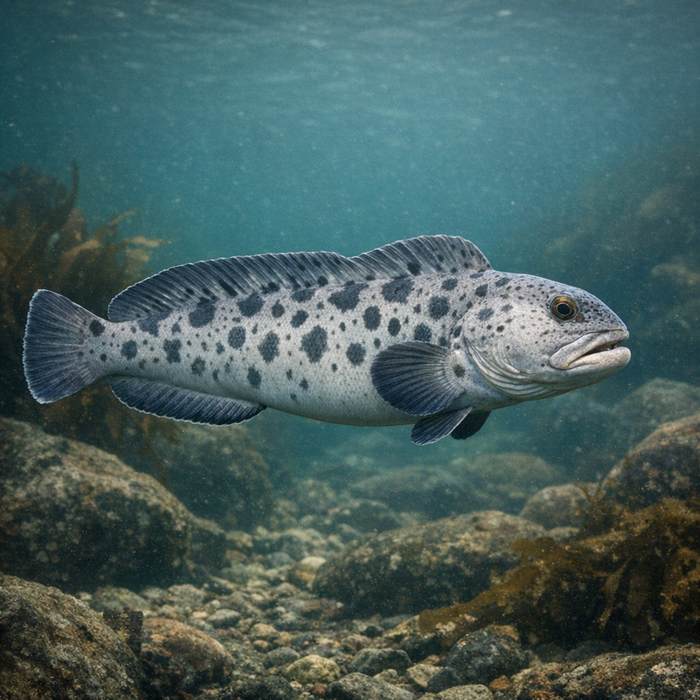
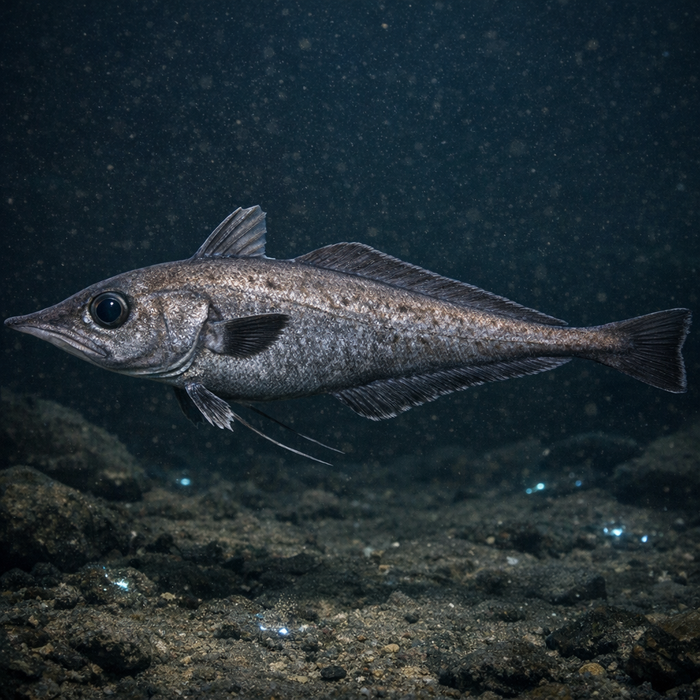
Northern Wolffish (Anarhichas denticulatus): The deep-sea bruiser with antifreeze in its veinsIntroductionThe Northern wolffish is the North Atlantic's toothy bouncer, patrolling cold, dark slopes where the sun never reaches. It looks mean, hits like a cinder block, and shrugs off temperatures that would ice most fish in minutes. You won't bump into this one from a pier. If you want a shot, you're chasing weather windows, sounders, and slope contours in real water. Consider this your crash course in Northern wolffish facts before you drop baits into the abyss.What Makes the Northern wolffish Unique?Start with the hardware. Those doglike teeth aren't just for show; they're constantly renewed, with new sets growing beneath old ones to keep the bite fresh. Unlike its nest-guarding cousins, the Northern wolffish plays the oddball card with pelagic eggs and larvae that drift the currents before settling deep. And here's the party trick: antifreeze proteins in its blood keep it ticking in subzero seawater. Mix all that with a rubbery, almost scaleless hide and a hulking head, and you've got a fish built for survival in the pressure cooker.Habitat & Global RangeNorthern wolffish habitat centers on the high-latitude North Atlantic: Arctic and subarctic continental slopes, shelves, and basins near Greenland, Iceland, Norway, and Atlantic Canada. Think 200 to 1,000 meters down, often on muddy or gravelly slopes and soft-bottom edges cut by current. It's a bathydemersal operator that occasionally rises to midwater, especially early in life, but spends adulthood near the bottom. Weather, currents, and distance from port are as much a factor as fish behavior. If you're scanning charts, look for canyon rims, contour breaks, and slope transitions where food funnels along the ground.Behavior & TemperamentThe Northern wolffish isn't a sprinter. It's a deliberate ambush-and-cruise type that favors short bursts over long chases. Those broad pectoral fins act like kickstands, bracing on the bottom while it inspects anything edible rolling by. It's not fussy about textures either; while wolffish jaws have a reputation for cracking urchins and crustaceans, this species also snacks on gelatinous fare like jellyfish and comb jellies. Hooked, it fights like a stubborn boulder with teeth. Expect head shakes, steady pulls, and a lot of dead weight that makes you question your depth sounder. It's not flashy; it's relentless.Ecological ImportanceDeep slopes are productivity engines, and the Northern wolffish is part of the quality control department. It turns benthic and drifting biomass into predator fuel, helping balance invertebrate populations and recycling energy from gelatinous plankton back into the food web. Its drifting early life stages connect far-flung habitats, spreading genes across basins as currents carry eggs and larvae. That slow-growing, long-lived life history means adults are valuable-removing them takes years to replace, and their role as mid-level predators is tough to fill.Conservation & Environmental PressuresHere's the reality check: most Northern wolffish encounters come from deepwater bycatch or niche deep-drop trips. Regulations vary widely. Some regions require immediate release, and retention can be illegal even if you're miles offshore. Because it lives where few anglers go, data gaps are real, and trends can be hard to pin down. What we do know: slow growth, late maturity, and deep habitats make it sensitive to heavy bottom contact. Climate shifts that warm and reshape Arctic currents may also shuffle its distribution. Treat this one like a privilege, not a meat run.The FishyAF TakeThe Northern wolffish isn't glamorous. It's not Instagram-pretty. But if you like weird, wild, and remote, it's your spirit fish. The combination of teeth, antifreeze, and abyssal attitude is peak North Atlantic. For most of us, "Northern wolffish habitat" means contour hunting, smart weather calls, and deep-drop discipline. Land one cleanly, photo it well, and let it kick back into the dark. You'll remember the crank more than the color anyway.