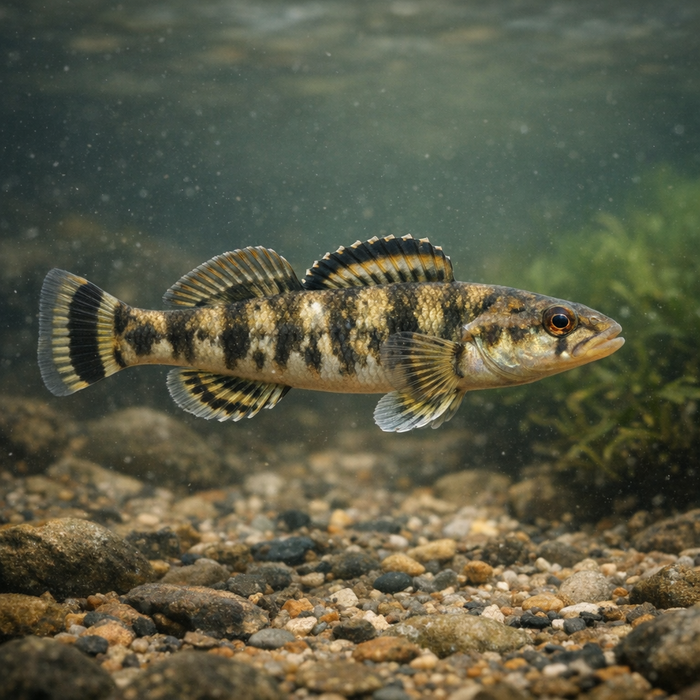
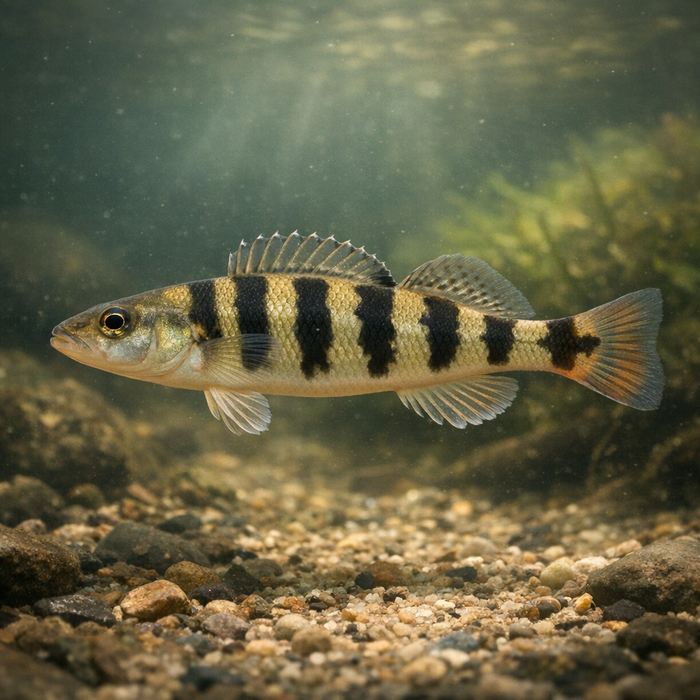
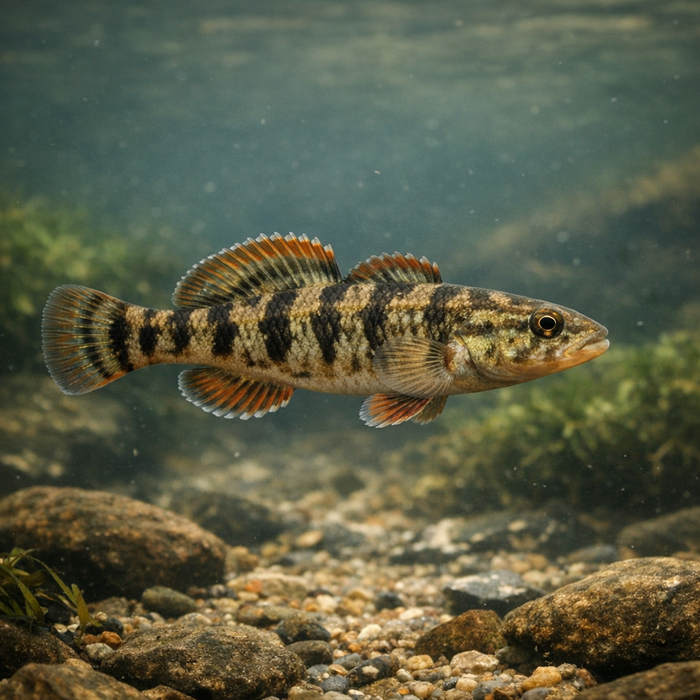
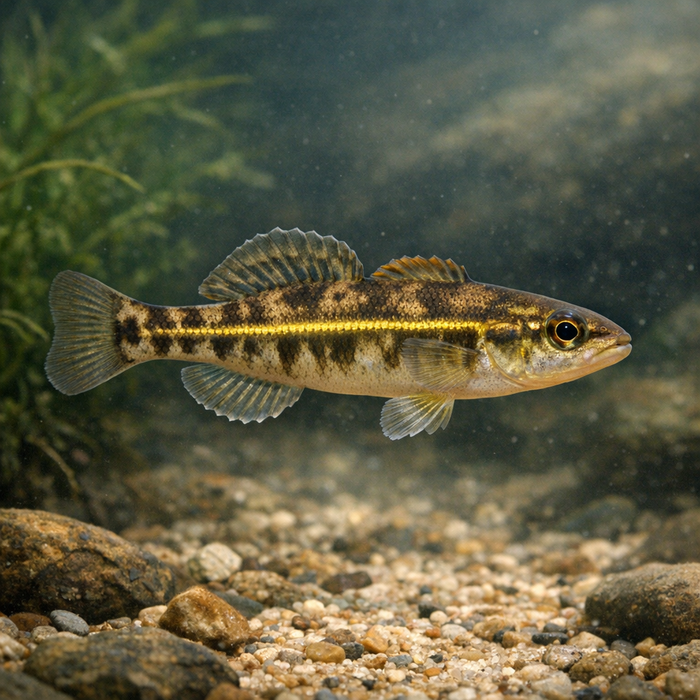
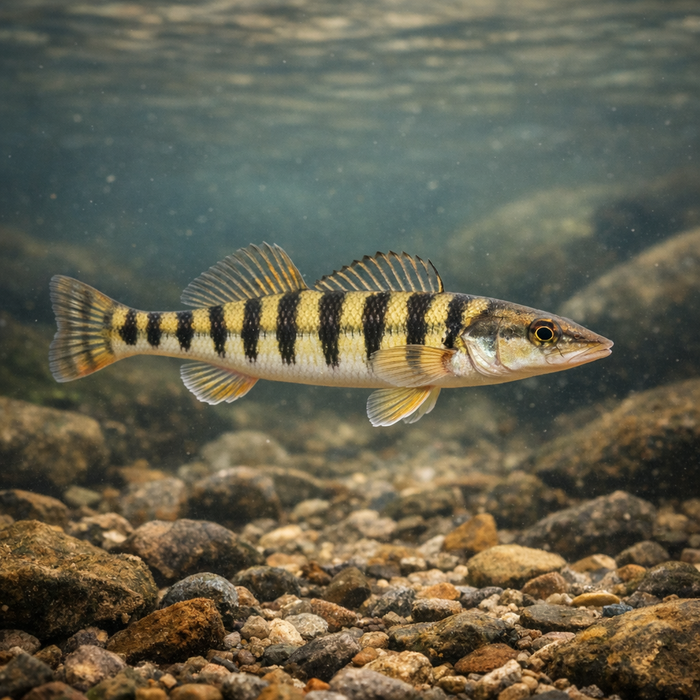
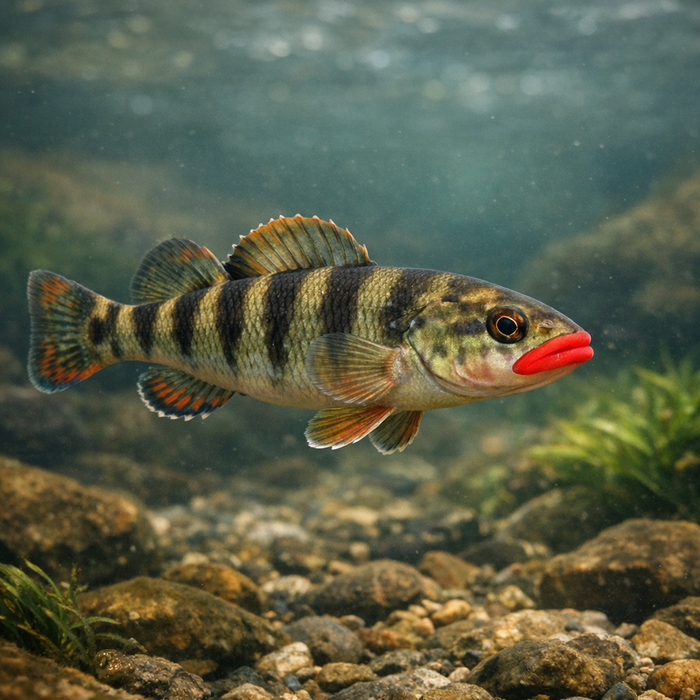
Orangebelly Darter (Etheostoma radiosum): A riffle rocket with a traffic-cone paint job when it's showtime.IntroductionIf you like your fish small, fast, and outrageously colored, the orangebelly darter is your jam. This little Percidae sprinter owns the shallow riffles like a pocket-sized walleye cousin with a punk-rock wardrobe. Anglers chasing orangebelly darter habitat quickly learn that good water is loud water: cobble, current, and clarity. You won't be strip-setting six-pound tippets here, but you will need surgeon-level precision. Welcome to microfishing's fun side.What Makes the Orangebelly darter Unique?Two things make this fish pop. First, breeding males throw on one of freshwater's boldest outfits: a blazing orange belly paired with turquoise and blue fin bars that look airbrushed. Second, the orangebelly darter is built for the bottom. With reduced buoyancy and wide pectorals, it perches on rocks, then slingshots forward in short bursts. Think hummingbird meets creek ninja. That combo of runway fashion and rocket launches makes it a favorite among micro anglers looking for legit orangebelly darter facts and photos.Habitat & Global RangeThe orangebelly darter is a stream specialist. Picture knee-deep, rock-studded runs with clean gravel, steady flow, and high oxygen. Muddy pools and stagnant backwaters are the no-fly zone. You'll encounter the orangebelly darter across select upland drainages of the central-southern U.S., especially in clear tributaries with a limestone or sandstone backbone. It isn't a pond wanderer; it's a riffle resident. If you're scouting orangebelly darter habitat, prioritize sunlit shallows with cobble, a little chop on the surface, and minimal silt.Behavior & TemperamentThis fish doesn't cruise. It posts up on rock, watches the conveyor belt of drifting invertebrates, and pounces. In current it holds tight, using micro-adjustments of pectoral fins to stabilize like a tripod. During spring, males stake claim to prime rocks, flash those orange bellies, and guard egg clusters laid under stones. They're not schoolers in the shad sense, but you'll often find loose pods working the same riffle lane. Spook factor is moderate: crouch low and keep your shadows off the water.Ecological ImportanceThe orangebelly darter is an early-warning sensor for stream health. Clear water, clean substrate, and consistent flow aren't just preferences; they're requirements. When silt builds or flows go flashy from bad land use, darters disappear fast. They convert aquatic insects into fish biomass and feed larger predators, plugging a critical link in the food web. They also redistribute energy within riffles as they defend nests, fan eggs, and rustle microinvertebrates out of hiding.Conservation & Environmental PressuresMost threats are habitat and flow related. Excessive siltation, low summer flows, and nutrient spikes push these fish out of once-perfect riffles. Road crossings that choke current, impoundments that flatten hydrology, and careless gravel mining can break entire stretches. The good news: where habitat remains intact, orangebelly darter numbers can be robust. Conservation wins look like riparian buffers, smart stormwater management, and keeping bottom substrates clean. Local surveys and academic monitoring often track riffle fish like these as stream report cards.The FishyAF TakeIf you want to actually learn a creek, chase the orangebelly darter. It forces you to read seams, respect stealth, and land a presentation the size of an ant without bungling the drift. It's not a grip-and-grin fish; it's a microscope trophy. Nail one clean photo of a glowing male and you'll understand the hype. The orangebelly darter turns a humble riffle into an arena, and every rock becomes a stage. Microfishing doesn't get more photogenic or more honest than this.