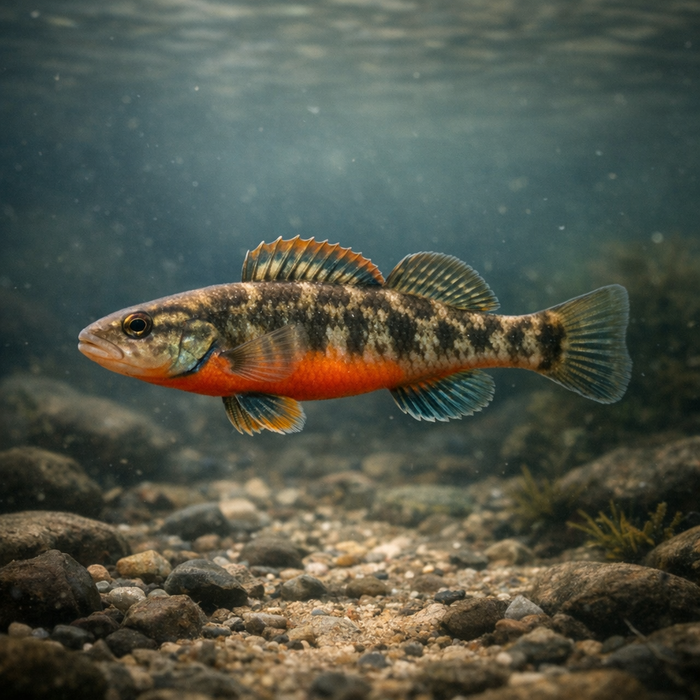
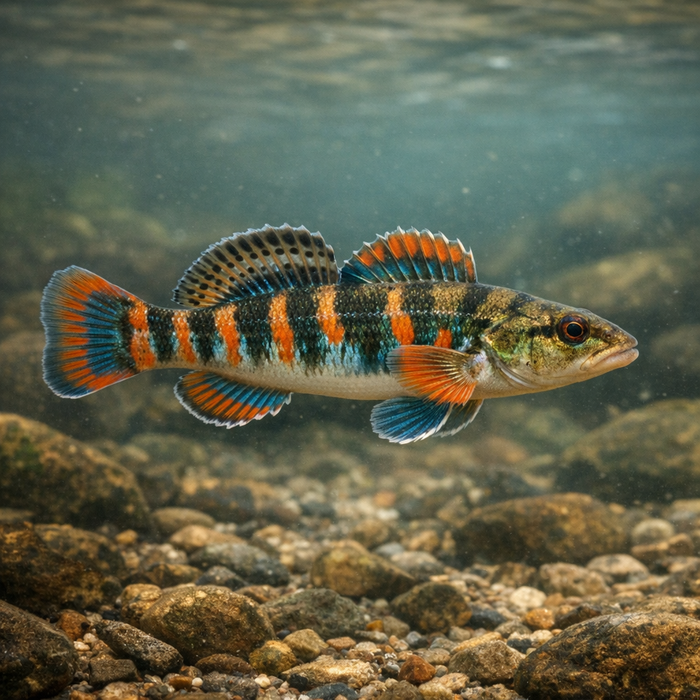
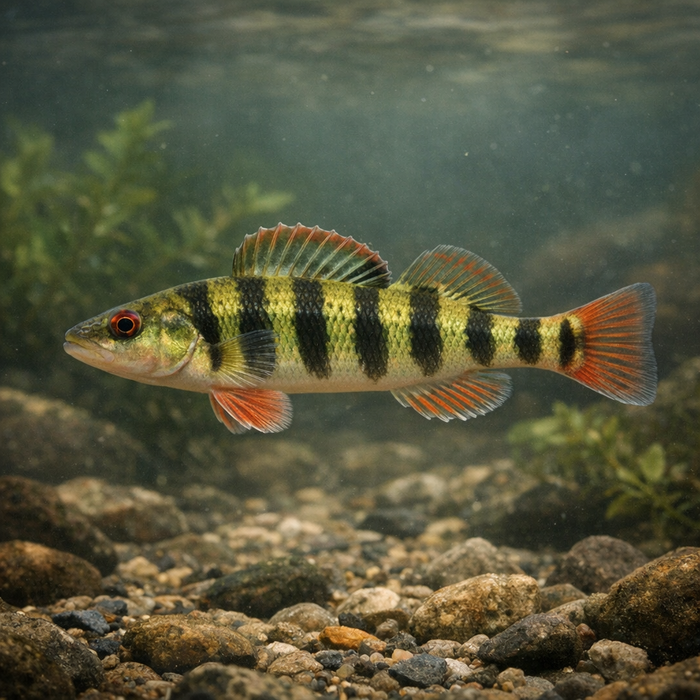
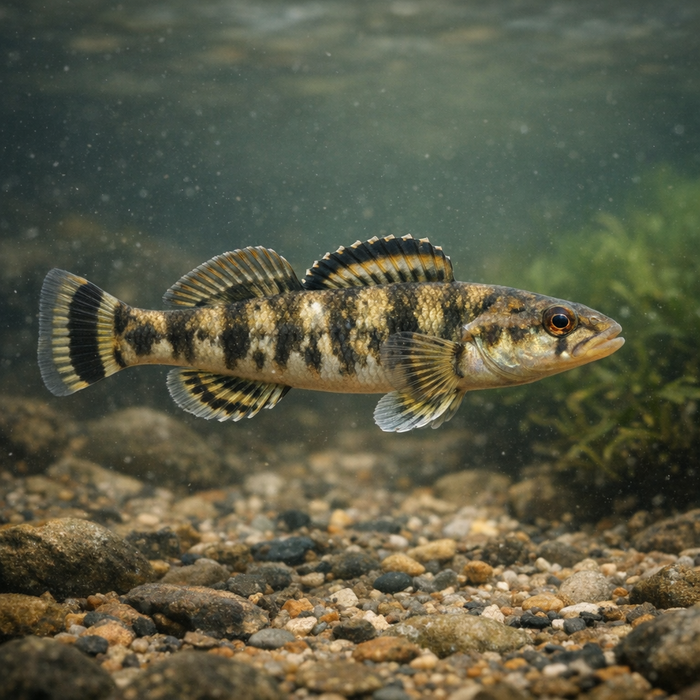
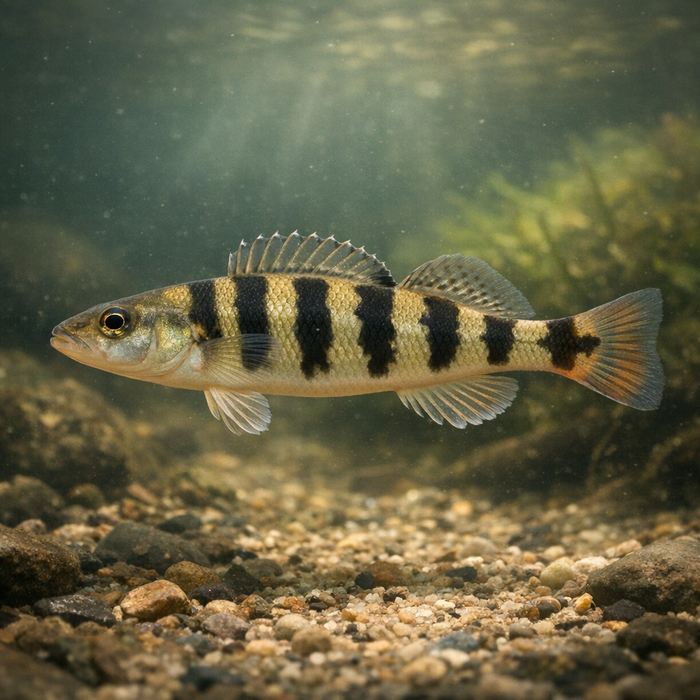
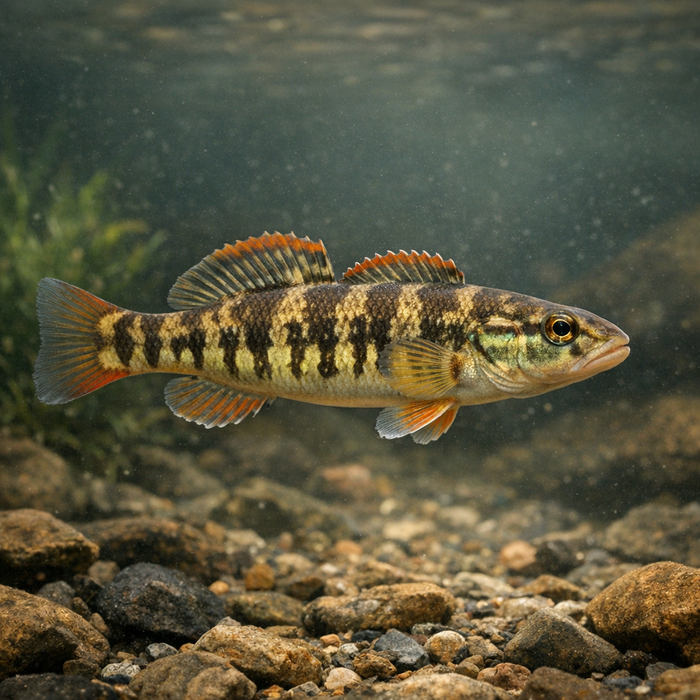
Ozark Logperch (Percina fulvitaenia): The pebbles don't flip themselves.IntroductionThe Ozark logperch is a tiny river specialist with a big attitude, built to work riffles like a pocket-sized excavator. If you've watched a darter bulldoze pebbles with its snout to flush snacks, you've seen the logperch playbook in action. The Ozark logperch is the local, stripe-suited version, tuned to the fast, clear streams of the Ozark Plateau. Don't let the dimensions fool you. This fish is all business, and every inch is engineered for current.What Makes the Ozark logperch Unique?First, that trademark logperch move: flipping small stones to expose insect larvae. It's a behavioral superpower that separates it from many other riffle dwellers. Second, the look. Bold vertical bars over a pale, sometimes yellowish side stripe give the Ozark logperch a tiger-in-miniature vibe, with breeding males flashing orange fin edges that shout in clear water. Third, it's a true bottom athlete. Broad, low-slung pectorals press it to rock like velcro, letting the fish hold station where lesser fish get tumbled. Together, these traits create a specialized, highly efficient forager that makes for fascinating Ozark logperch facts and field encounters.Habitat & Global RangeThe Ozark logperch is a regional player, confined to the Ozark Plateau in Missouri and Arkansas, with a few connected drainages. Think limestone bedrock, spring-fed clarity, and riffle-run-pool sequences that sparkle on sunny days. It chooses clean gravel and cobble, usually in thigh-deep or shallower water, where the current organizes food into bite-sized deliveries. If silt piles up, this fish checks out. If gravel is clean and the current talks, it moves in. In short, when you dial in Ozark logperch habitat, you're looking for living, breathing rock gardens with honest flow.Behavior & TemperamentThe Ozark logperch is a working-class predator scaled down to insect size. It doesn't cruise the surface or chase flashy minnows through open water. It prowls the bottom, scanning with high-set eyes, then snaps at caddis, mayfly, and midge larvae once a pebble is flipped. It's skittish but not timid, more about cover and current than hiding in weeds. Activity tends to pop with stable flows and clear water, with frequent, short feeding runs. During spawning, pairs use clean gravel riffles; eggs settle in the interstices where they're oxygenated by the same current the adults love.Ecological ImportanceThe Ozark logperch is a sediment truth-teller. Because it needs clean, well-oxygenated gravel, it disappears quickly when fine silt smothers the substrate. That sensitivity makes it a sharp indicator for watershed health and a quiet workhorse in nutrient cycling. By flipping stones and vacuuming invertebrates, it stirs microhabitats, moves detritus, and redistributes energy from algae-fed bugs up the food web. It's also a snack for larger fish and stream birds, pressing darter biomass into the wider Ozark river story.Conservation & Environmental PressuresOverall status trends toward stable in quality habitats, but local populations are only as safe as their gravel. Siltation from poorly managed roads, pasture runoff, and construction clogs the spaces between stones where eggs and invertebrates need flow. Low flows, unshaded banks, and high summer temperatures stress riffles that used to breathe. Then there's the catch-all threat: fragmentation. Dams and culverts slice continuous riffle networks into isolated reaches, cutting gene flow and recovery potential. When restoration cleans gravel, reconnects riffles, and brings shade back, the Ozark logperch rebounds fast. Let the river act like a river and this fish shows up.The FishyAF TakeIf trout are the Ozarks' headliners, the Ozark logperch is the backstage crew that keeps the show electric. It's not a filet fish or a wall mount. It's a masterclass in adaptation, a bottom-hugging engineer that turns cobble into a buffet with one confident nudge. Learn its riffles and you'll understand the whole stream better. For a small species, it packs outsized personality and tells the truth about river health with brutal honesty. Want to read a stream quickly? Find the bars, the clean gravel, the steady push of flow. Where the Ozark logperch goes, the system is working.