Pacific Angelshark (Squatina californica): The Seafloor Has Teeth
The Pacific Angelshark makes a convincing patch of sand until that patch opens its mouth. Broad, flattened, and beautifully camouflaged, this coastal predator trades the familiar shark silhouette for something closer to a rug with teeth. It belongs to the angelshark family, Squatinidae, not the rays, despite appearances. Its hunting strategy is equally misleading: settle into sediment, disappear, and let dinner make the mistake of getting close. This is shark fishing with considerably less dorsal-fin drama and a much stronger argument for watching your hands.
What Makes the Pacific Angelshark Unique?
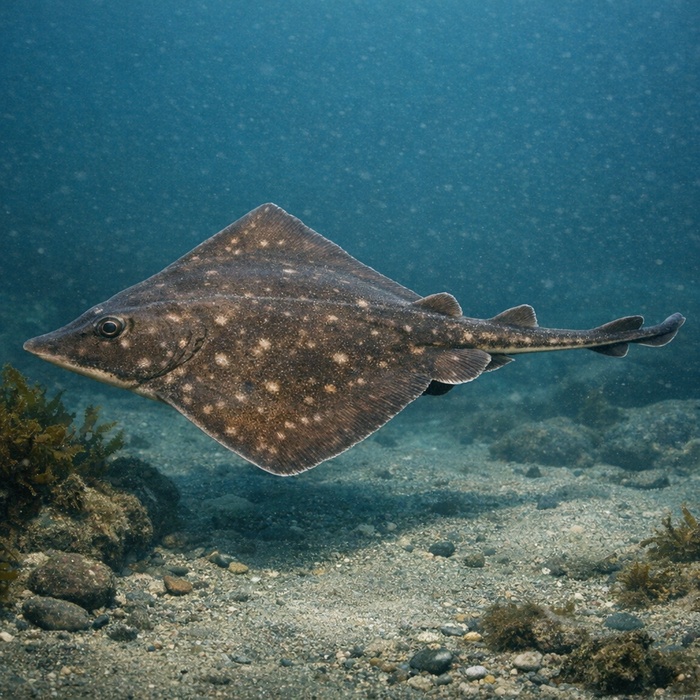
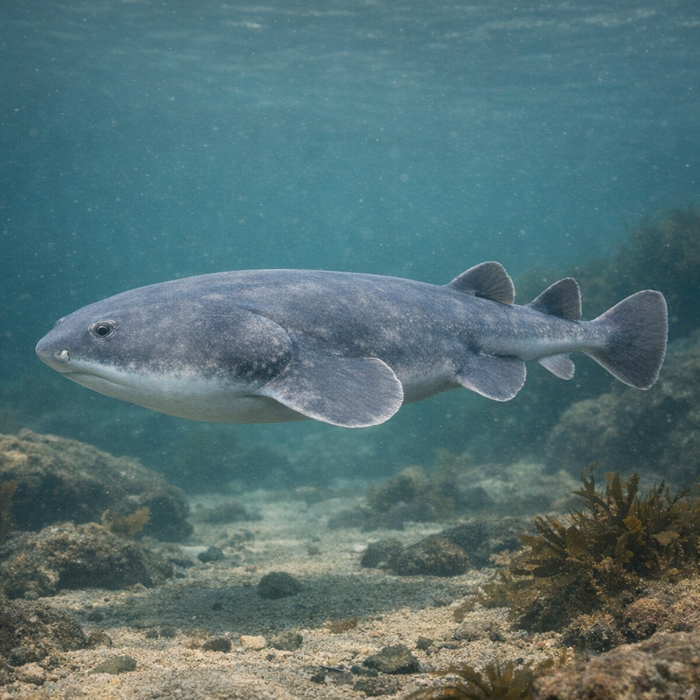
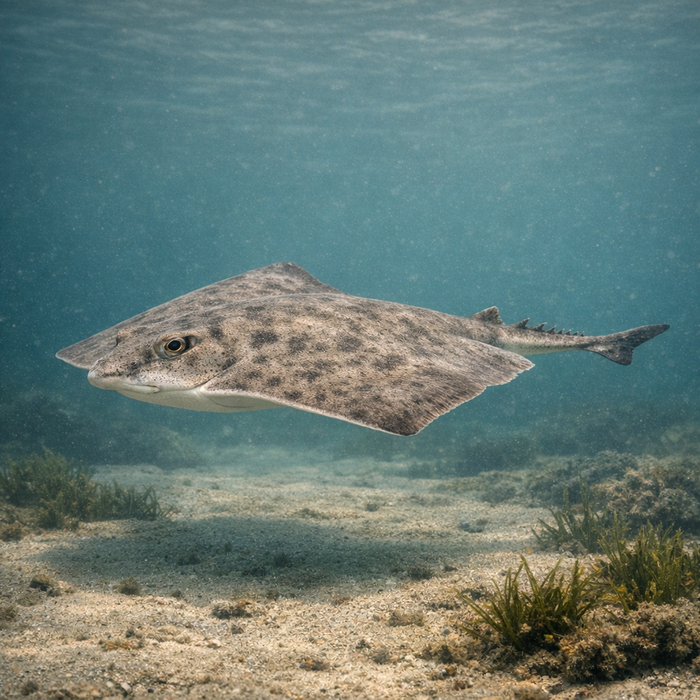
Start with the body. Its broad pectoral fins resemble wings, but their front edges remain separate from the head. The mouth sits at the front rather than underneath, and the gill openings wrap around the sides toward the throat. Those details separate this shark from its ray-shaped lookalikes. Then there is the tail: its lower lobe is longer than the upper, reversing the arrangement anglers associate with many familiar sharks. The overall package looks assembled from spare parts, but every piece belongs.
The ambush is the real headline. Buried beneath a light covering of sediment, the shark waits for fish to enter striking distance, then lunges upward and engulfs them. It can also ventilate its gills while stationary, so hiding does not require constant swimming. Among Pacific Angelshark facts, that combination deserves top billing: camouflage, patience, and a mouth positioned exactly where an overhead passerby would rather it was not.
Habitat & Global Range
Pacific Angelshark habitat centers on coastal saltwater with sand or mud bottoms. In North America, its range extends along the northeastern Pacific into Baja California and the Gulf of California, with northern records much less representative of ordinary encounters. Current taxonomic references also recognize occurrences off Ecuador and Peru. For anglers, California and northwestern Mexico provide a more realistic geographic starting point than treating every location inside the outer range as equally promising. Distribution is not an appointment calendar.
Soft bottom near reefs and kelp can matter more than spectacular structure itself. Published accounts describe occupation of shallow coastal water as well as substantially deeper shelf habitat. That explains why the species can enter conversations about beaches, bays, piers, and boats without being reliably common at any particular fishing platform. Think about accessible sediment and nearby feeding opportunities, not simply the biggest reef on the chart.
Behavior & Temperament
The Pacific Angelshark is not permanently parked. Tracking research around Santa Catalina Island found predominantly nocturnal movement, with activity peaking around dusk and midnight. Tagged animals crossed temperature boundaries and traveled beyond their daytime resting positions. The practical distinction is important: an ambush predator can spend long periods motionless without being a sedentary ornament. Darkness changes the operating schedule, not the basic identity of the fish.
Neither should its name suggest a cooperative personality when handled. Powerful jaws make close contact hazardous, especially when someone mistakes stillness for safety. An apparently quiet shark is not an invitation to reach toward its mouth. Observation is one thing; crowding, lifting, or trying to reposition the head is another. Give the animal space and plan any encounter around keeping both fish and fingers intact.
Ecological Importance
As a bottom-associated predator, the Pacific Angelshark participates in a food web that is anything but empty sand. Research in the southern Gulf of California documented a diet dominated by fishes, including jacks, midshipman, and lizardfish, alongside crustaceans. Regional evidence matters here: one study does not establish an identical menu everywhere. Nor is this shark untouchable. Larger predators, including white sharks and northern elephant seals, have been documented consuming it. The ambusher can become somebody else's meal.
Conservation & Environmental Pressures
The Pacific Angelshark is assessed as Vulnerable. Slow population replacement makes fishing mortality a serious concern, particularly where capture overlaps concentrated coastal populations. Its commercial history demonstrates how quickly a previously overlooked shark can become valuable, and how badly increased demand can outpace biological resilience. California's historical restrictions on inshore gillnets reduced exposure across important habitat, but regional improvement should not be mistaken for a clean bill of health throughout the range.
Genetic research has identified distinct regional populations, reinforcing the need to avoid treating the entire eastern Pacific as one interchangeable stock. Protecting habitat and reducing unwanted capture remain meaningful even where anglers rarely encounter the species.
The FishyAF Take
The Pacific Angelshark deserves better than being dismissed as a weird ray or promoted as another shark to drag onto concrete. Its appeal is the whole improbable design: a predator that makes disappearance look effortless. Appreciate the encounter, know the rules, and have a release plan before a bait reaches bottom. The best story is not how long you kept it out for photographs. It is that you recognized what you had, respected the mouth, and sent the seafloor's trapdoor back to work.