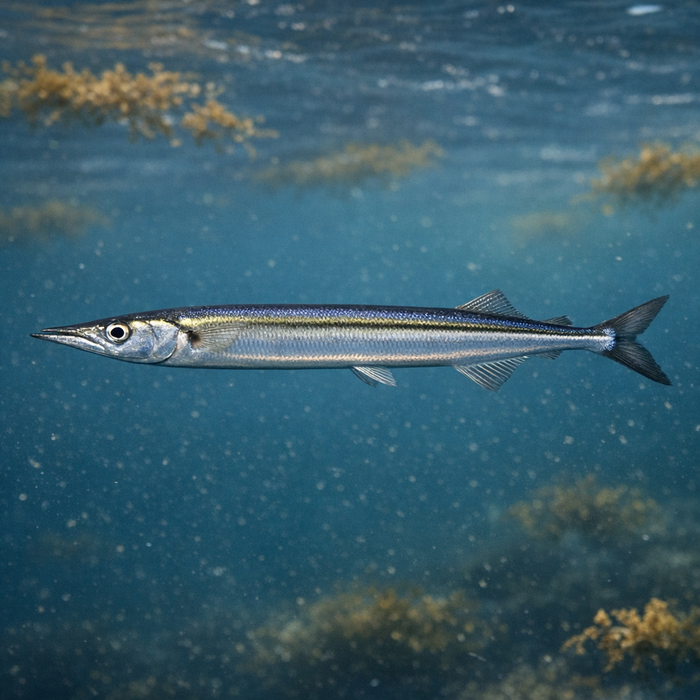
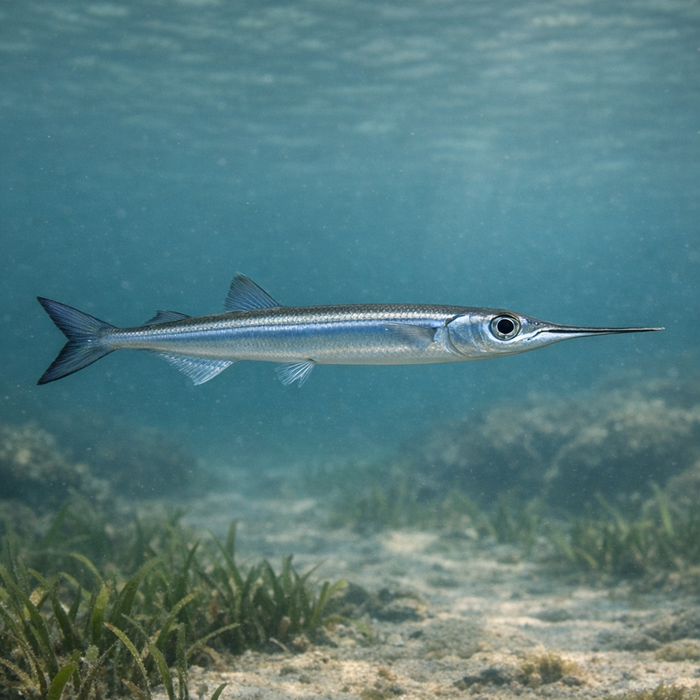
Pacific Saury (Cololabis saira): A Bold, Memorable Hook LineIntroductionThe Pacific saury is the North Pacific's neon-attractant torpedo: slim, slick, and built for life at the glittering surface. It's baitfish royalty that sometimes steals the show, packing epic schools under boat lights and turning calm water into silver static. If you want Pacific saury facts that matter to anglers, think speed, current, and short windows where everything pops off at once.What Makes the Pacific saury Unique?Two things jump out. First, the build. The Pacific saury looks like a stretched-out mackerel with finlets, a small beak, and a body so efficient it can skim the surface in bursts. Second, the light game. Few species respond to artificial light like saury do. On the right night their behavior flips, and they rocket into bait rigs, micro jigs, and dip nets like someone hit a switch. That on-off nature gives them cult status for anyone who's fished autumn harbors or offshore edges in the North Pacific.Habitat & Global RangeIf you're hunting Pacific saury habitat, think cool, nutrient-rich surface water where currents meet. They roam the North Pacific from East Asia through the Aleutians and down the West Coast, doggedly following fronts and plankton layers. They travel long distances along the 10 to 18 Celsius band, drifting near the top 0 to 30 meters, rarely diving deep because their entire strategy revolves around light, zooplankton, and speed. Inshore pushes happen seasonally, especially in fall, when fat content spikes and they brush against coasts, bays, and pier lights.Behavior & TemperamentPacific saury are classic pelagic roamers: tightly schooled, jittery, and quick to stack where food concentrates. They feed aggressively at night and in low light, often rising into lamp halos like moths with fins. When pressured, schools shear away in long ribbons, then reform almost instantly. They hit tiny flies and micro metals with surprising confidence, but their mouths are delicate, and you'll lose fish if you horse them. They're not bruisers; the fun is volume and timing, not brute force.Ecological ImportanceSaury are the conveyor belt between microscopic life and heavy hitters. Juvenile salmon, tunas, billfish, and a buffet of seabirds cash in on them. In turn, saury power their growth on zooplankton and small crustaceans, and their egg strategy is wild: adhesive filaments stick clusters to drifting weeds and debris, distributing the next generation wherever currents flow. They're a bellwether species too. When Pacific saury boom or bust, it hints at changes in temperature, productivity, and current strength across huge swaths of ocean.Conservation & Environmental PressuresCurrent assessments rank the Pacific saury as Least Concern, but pressure is real. Commercial harvest targets migrating schools with lights and nets, and climate shifts are nudging preferred temperature bands north and offshore. That means more fuel, more travel, fewer coastal shots, and volatile year-to-year abundance. They grow quickly and don't live long, which helps, but prolonged warm regimes can scramble the usual playbook. Smart management keeps an eye on recruitment, distribution, and the shifting position of those cool-water corridors.The FishyAF TakeThe Pacific saury is proof that size is not the point. Show up on the right night with lights, a sabiki, and a little patience, and you'll watch the ocean come alive at your feet. Miss the window and it's just black water and stories from last week. That's the charm. They're honest, fast, and weirdly elegant, and when they're thick the bite is pure arcade mode. For anglers chasing something different, this is the North Pacific's sleepless silver stream. Now you know the real Pacific saury facts and where the Pacific saury habitat fits into your playbook.