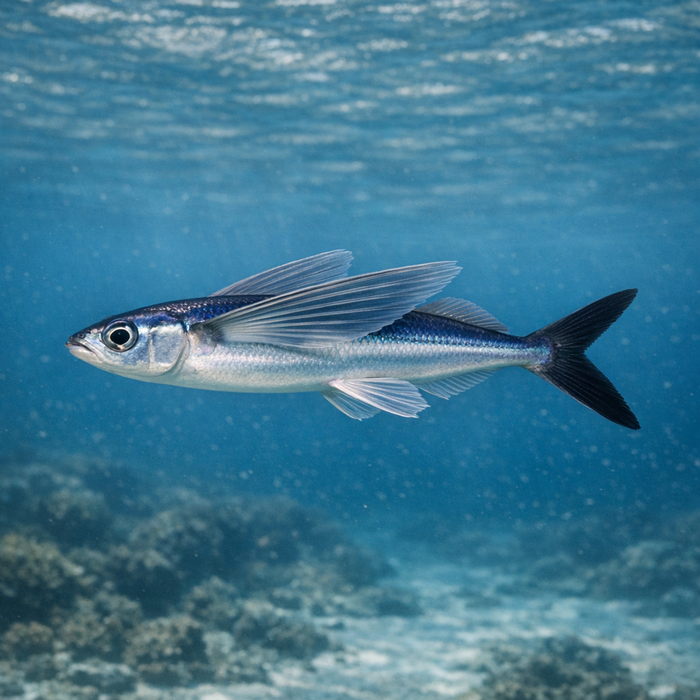
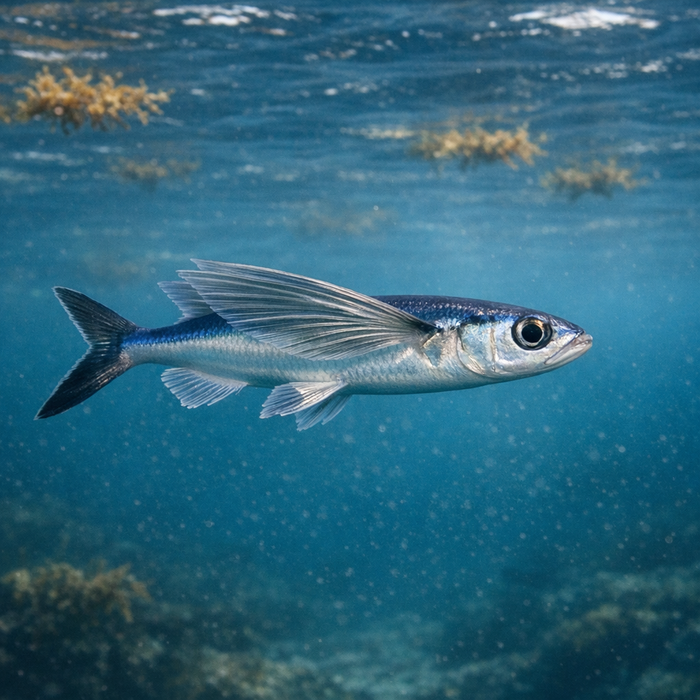
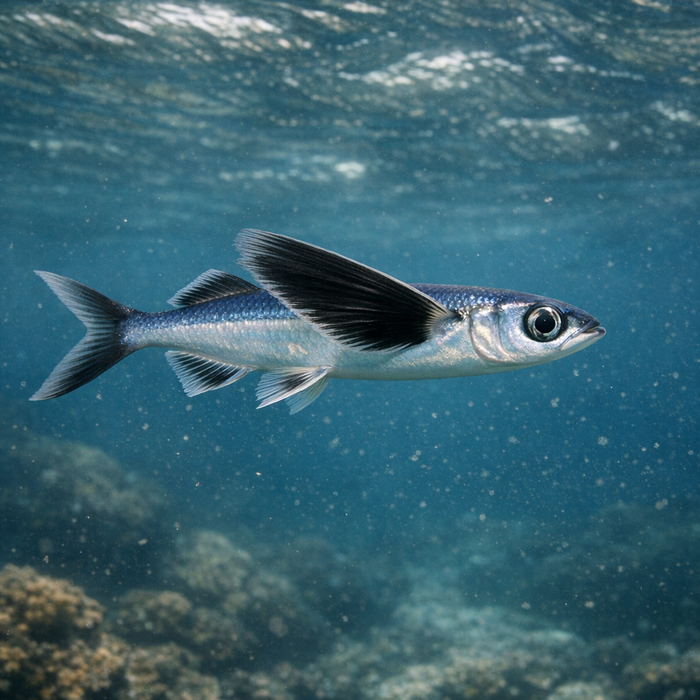
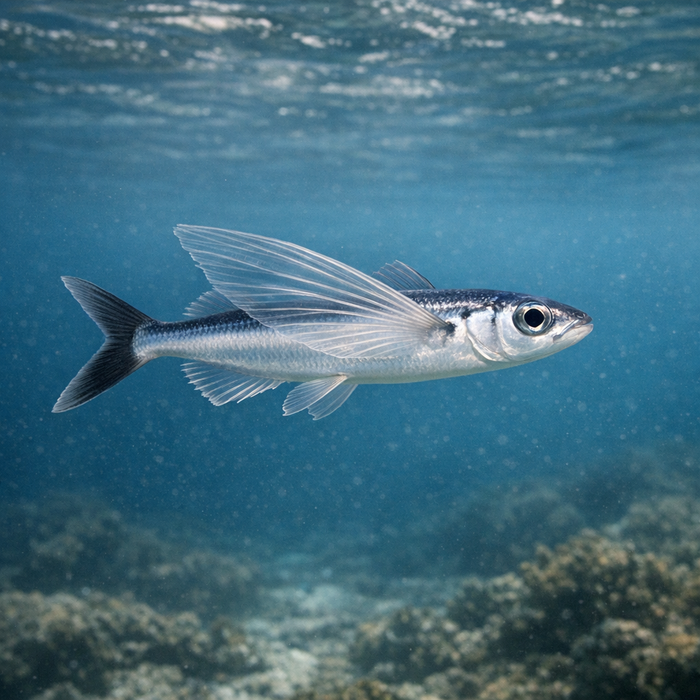
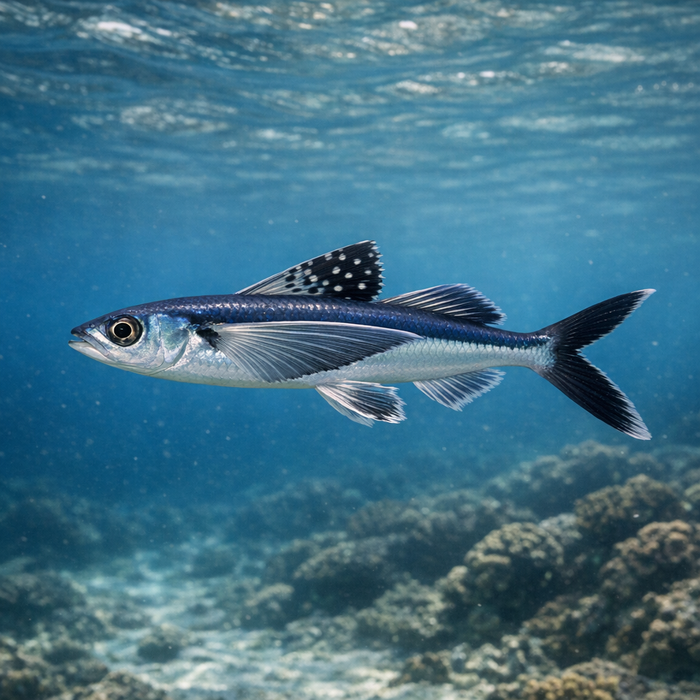
Bennett's Flyingfish (Cheilopogon pinnatibarbatus): Glides like a kite, shines like chrome, and refuses to play by bottom rules.IntroductionIf a lure sprouted wings and got ideas, you'd get the Bennett's flyingfish. It's a silvery projectile with built-in sails, designed to outrun trouble by leaving the water entirely. Anglers bump into them around night lights, tuna spreads, and random offshore slicks, where they panic-launch like nervous paper airplanes. This is a quirky fish with loyal fans, a cult following, and plenty of oddball stories that become instant Bennett's flyingfish facts.What Makes the Bennett's flyingfish Unique?First, the air game. Bennett's flyingfish is a four-wing model: oversized pectorals plus enlarged pelvic fins that act like aft wings. That configuration gives surprising lift and control during glides. Second, a surface-first lifestyle. These fish ride current lines, neuston slicks, and moonlit calm, then blast off when predators crash the party. Third, they light up the night scene. Attracted to brightness, they'll buzz boat lights and sometimes straight-up skydive onto the deck. It's both hilarious and handy when you need fresh bait.Habitat & Global RangeBennett's flyingfish lives at the top inch of blue water: warm, clear, oxygen-rich surface layers in the open ocean and offshore edges near islands, banks, and sea mounts. Weed lines, current seams, and debris fields make prime Bennett's flyingfish habitat, concentrating food and forming launch pads. They occur widely across tropical and warm temperate seas, especially the Indo-Pacific and Pacific Islands, with plenty of regional flavor around Japan and Hawaii. They're roamers, tracking temperature bands and plankton blooms rather than hugging structure. Think big water, bright skies, and the thinnest slice of ocean right where your sunglasses polarize.Behavior & TemperamentSkittish but pragmatic, Bennett's flyingfish school up and cruise near the skin of the ocean, feeding on small crustaceans and micro-bait. When trouble shows up, they don't dig into cover. They go airborne. A rapid tail-whip run-up across the surface gives takeoff speed; the long fins unfurl; and suddenly you're watching a silver envelope on glide mode. They'll chain glides with quick re-launches, skipping across chop to open space. Around lights they're bold until they aren't, turning from curious to gone in a heartbeat. Hooked fish won't dog you deep; expect short runs, a jittery surface fight, and a quick hand-off to either release or bait duty.Ecological ImportanceBennett's flyingfish is oceanic currency. Mahi, tuna, billfish, and big mackerel all cash in. That makes them a vital transfer point between plankton-rich surface layers and apex predators. Eggs with sticky filaments cling to floating debris, turning weed lines into nurseries. Where you see flyingfish, you see a functioning bluewater food web. Chum a handful of Bennett's near the boat, and you've basically rung the dinner bell for whatever fast movers are patrolling the edge.Conservation & Environmental PressuresThe species is widely distributed and not heavily targeted by directed commercial fisheries. That's good news. The unknowns come from the environment itself. Surface specialists feel temperature swings first, and shifting currents can scatter their predictable haunts. Plastic and debris fields act like both habitat and hazard. Lights draw them into harbors where predators and propellers stack up. Today the best read is that Bennett's flyingfish populations are stable, but like all surface rovers, they're tied to the ocean's mood swings.The FishyAF TakeBennett's flyingfish is proof that the ocean has a sense of humor. It's not a grip-and-grin bruiser, it's a finesse novelty with tactical value. Want yellowfin? Watch where the flyers are pointing. Want a story? Catch one on a fly under a calm, black sky and try not to laugh when it tries to air-mail itself off the hook. If you're compiling Bennett's flyingfish facts, start with this: any fish that can turn panic into powered flight deserves respect. Fish them light, treat them gently, and enjoy the chaos. Call it a side quest with benefits, and yes, sometimes the side quest steals the show.