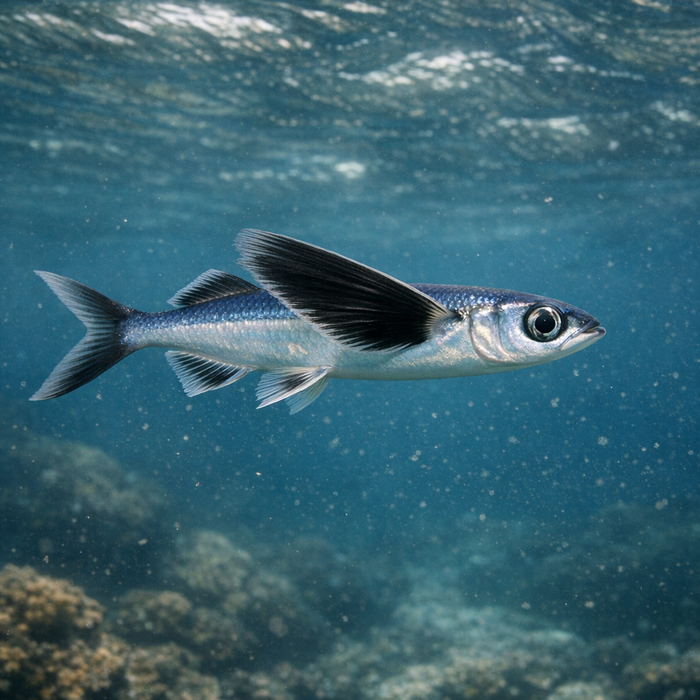
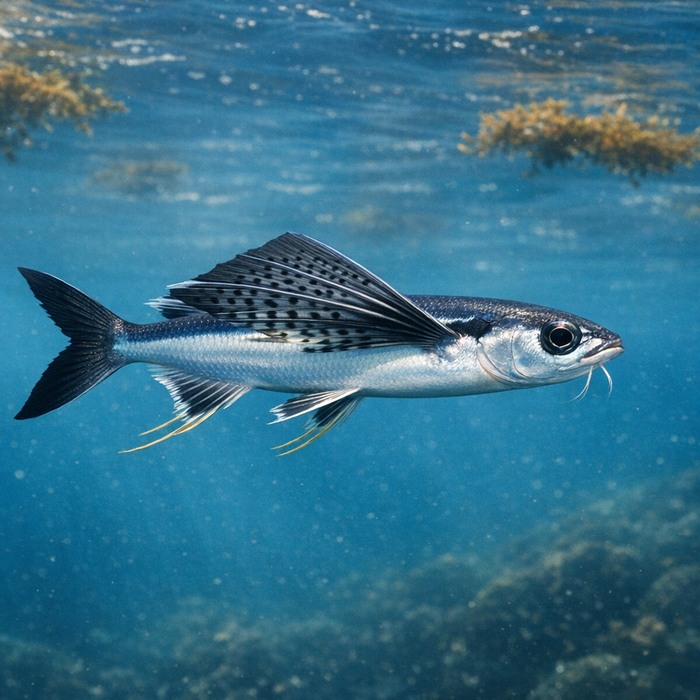
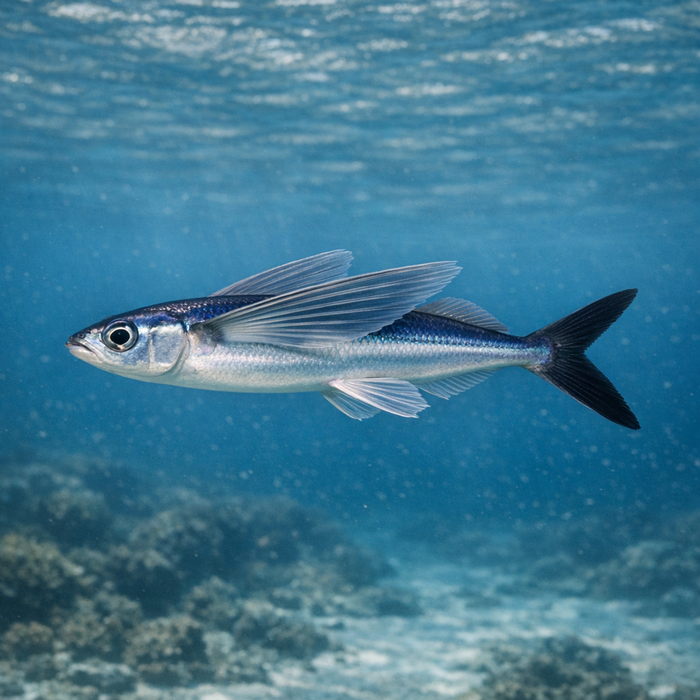
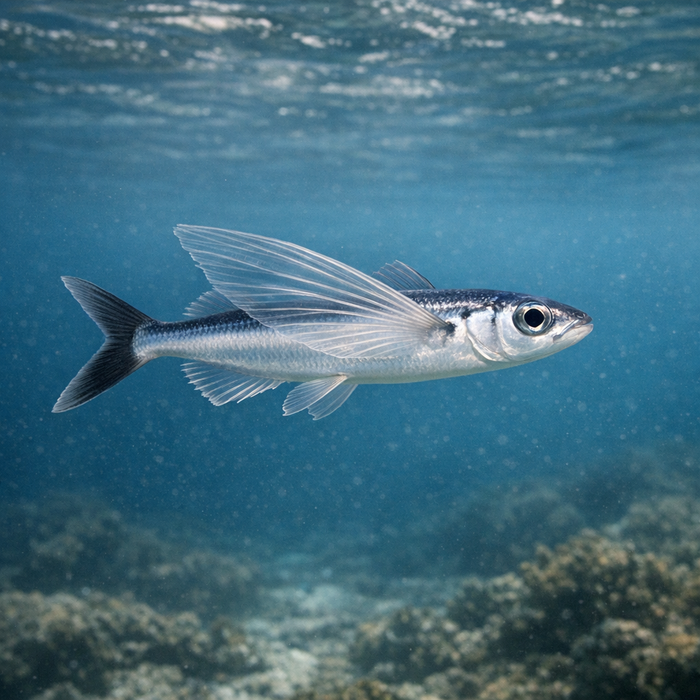
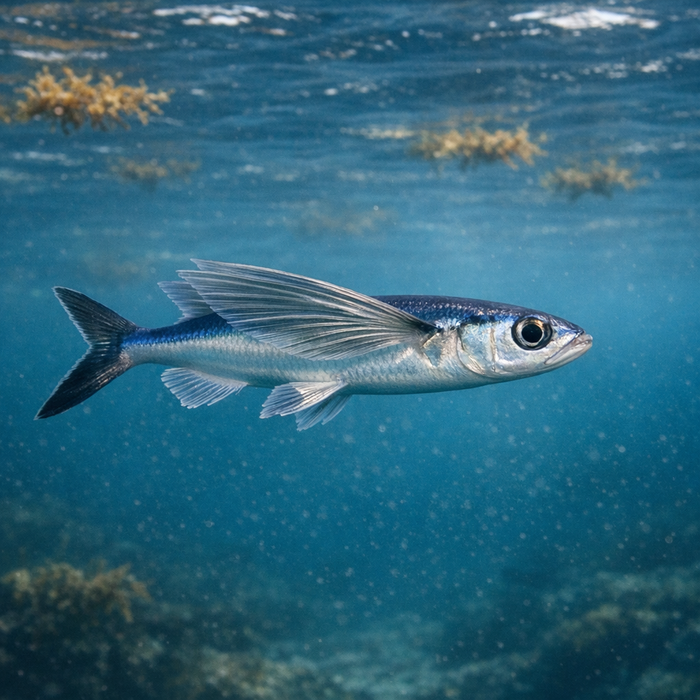
Spotfin Flyingfish (Cheilopogon furcatus): The Four-Winged Rocket Of Bluewater NightsIntroductionThe spotfin flyingfish is the little silver missile that turns calm seas into a fireworks show. One second it's a blur at the surface. The next, it's airborne, skittering across chop like a stone and outrunning half the ocean's predators. If you chase tuna, marlin, or mahi, you already know this fish by its silhouette and the way gamefish lose their minds around it. For everyone else, welcome to one of the ocean's most spectacular side characters and a worthy target in its own right. If you're hunting Spotfin flyingfish facts or just scheming for a bait upgrade, stick around.What Makes the Spotfin flyingfish Unique?Start with the wings. Not just oversized pectorals, but long pelvic fins too, giving a true four-wing planform. That design lets Cheilopogon furcatus take off fast, re-plane with quick tail beats, and string together long, linked glides. The namesake "spotfin" comes from a dark blotch on each pectoral fin, a handy field mark when you're scanning a livewell. Add a deeply forked tail with an extended lower lobe for water-start thrust, and you've got a fish custom-built for escaping trouble and making anglers grin.Habitat & Global RangeThe spotfin flyingfish is a creature of the blue skin of the sea. Think sunlit slicks, current lines, and weed mats, not reefs or shore breaks. You'll encounter them over deep water worldwide where warm currents stabilize the surface and food concentrates. Sargassum lines, FADs, and nighttime light sources all act like magnet stations. That's classic Spotfin flyingfish habitat: big sky above, cobalt below, with life funneled into thin lines and small windows.Behavior & TemperamentThese fish are nervous for good reason. Everything with teeth wants them. They school, stage near floating structure, and pop to the surface to feed on tiny crustaceans and larvae. At the first twitch of danger, they light the jets: a sprint, a slap-slap of the tail, then lift-off. The glide is not random. They'll quarter across wind and wave, reenter to recharge, and launch again in a chain that can cover surprising distance. Around boat lights, spotfin flyingfish act like moths. They'll circle, flash, and occasionally bump hulls while picking off plankton. Hooking one isn't easy, but it's possible with tiny offerings and patience.Ecological ImportanceThe spotfin flyingfish is bluewater currency. Mahi, wahoo, billfish, tunas, and even pelagic birds cash in daily. A single push of feeding predators can launch hundreds into the air, creating those silver squalls every offshore nut lives for. They're also an edible resource for people in many regions, and their eggs adhere to floating debris, hitchhiking across basins and seeding future generations wherever conditions cooperate. In short, when spotfin flyingfish are thick, everything else tends to show up too.Conservation & Environmental PressuresWhile not currently a poster child for collapse, the species still rides the same rollercoaster as other pelagics. Floating habitat like Sargassum shifts with climate, currents, and storms. Plastic debris complicates the picture by mimicking natural structure while adding toxicity. Night lighting around ports and platforms alters behavior. And when big predators are hammered, food webs get weird. For now, spotfin flyingfish remain common in many areas, but they're sentinels of surface health. If your weedlines are lifeless, they'll be gone too.The FishyAF TakeNobody forgets their first spotfin. It's the fish that makes midnight bluewater feel alive, the one that schools under your transom while tuna pace the edges. As bait, it's premium stuff. As a micro-target on ultralight gear, it's frustrating and addictive. Call it a gateway fish to the offshore obsession. Learn the light game, read the lines, and respect the show. The spotfin flyingfish isn't just bycatch or scenery. It's the fuse that lights the bite, and understanding it unlocks whole stretches of ocean. That's the real Spotfin flyingfish facts play: master the forage, and you'll find the predators every time.