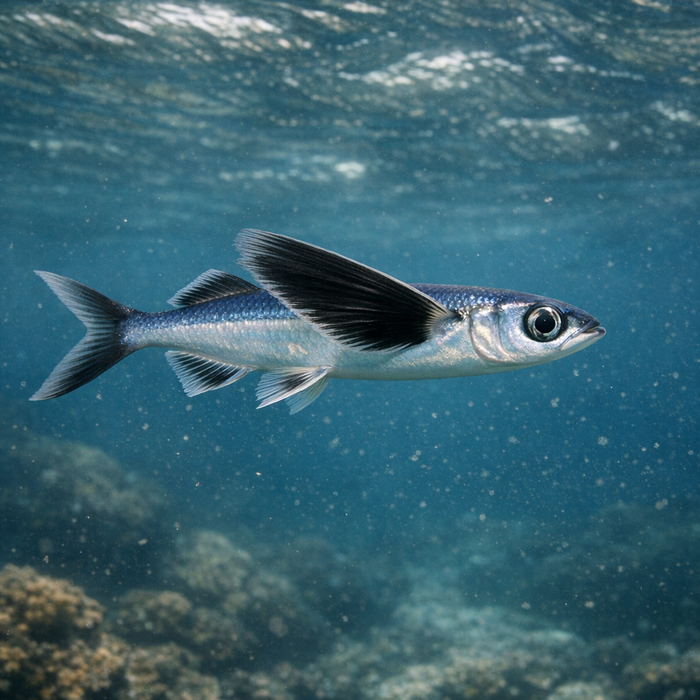
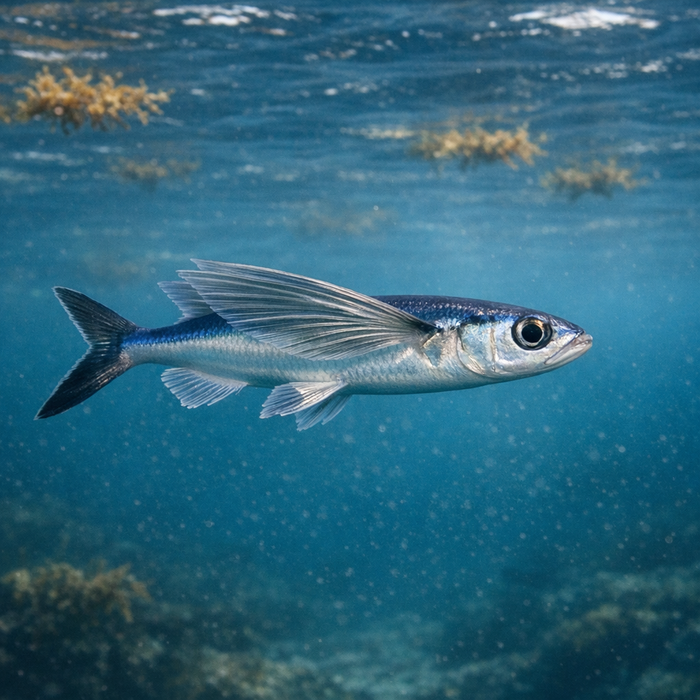
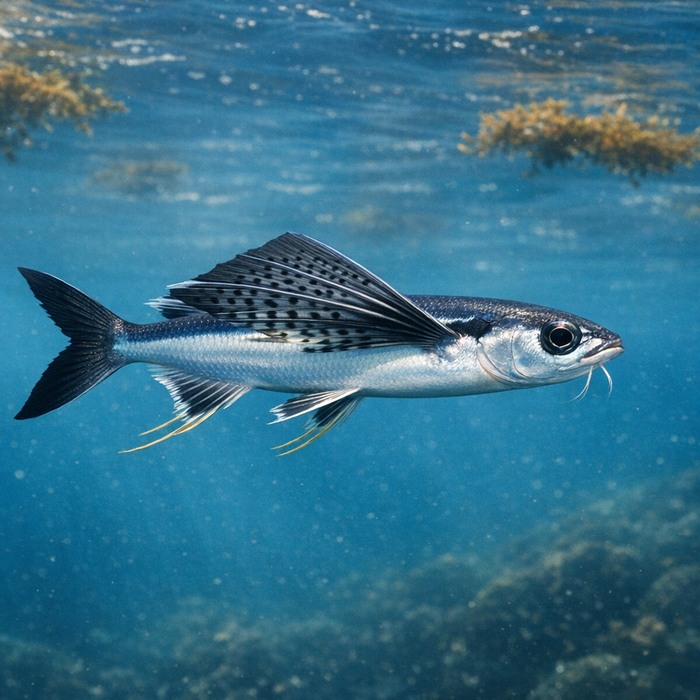
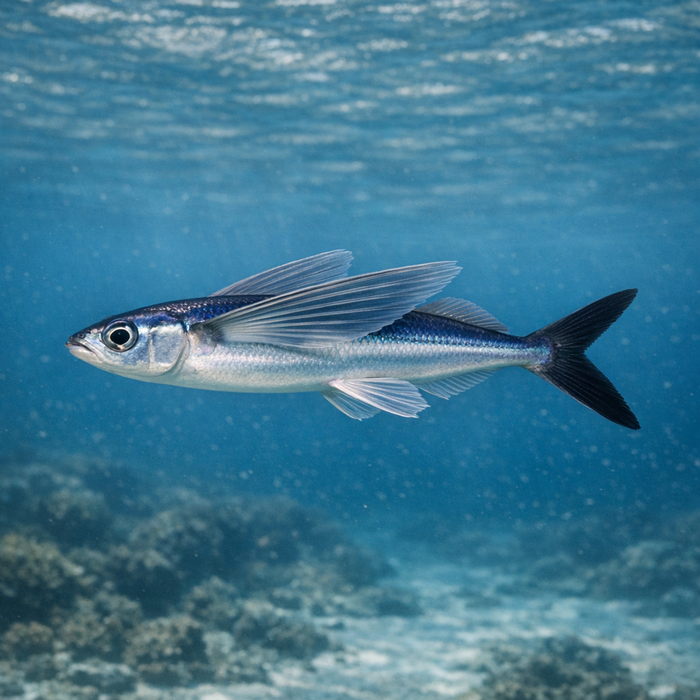
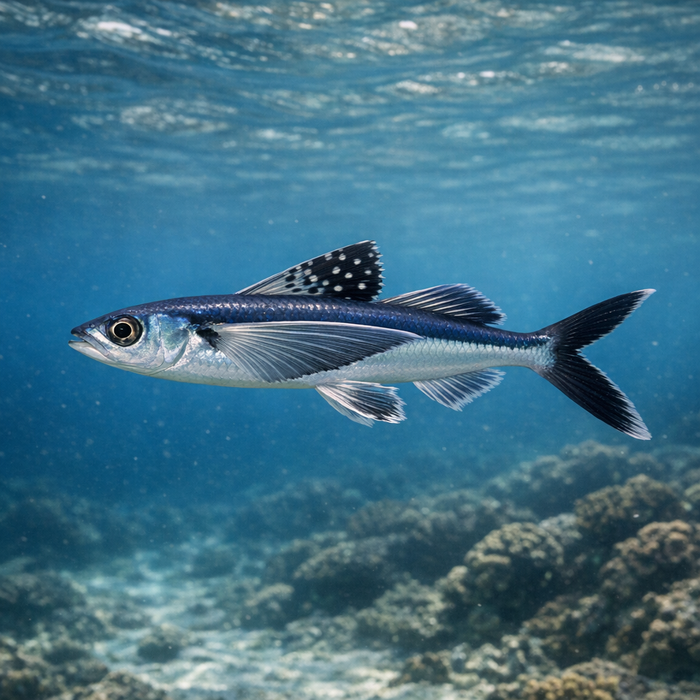
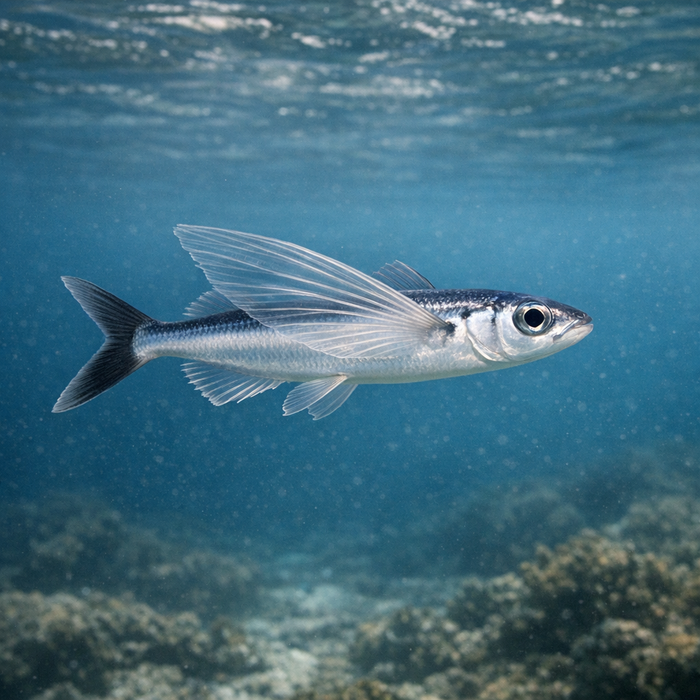
Sailfin Flyingfish (Parexocoetus brachypterus): The tiny torpedo with wings that embarrasses gravity and bait buckets alike.IntroductionIf you fish offshore long enough, a sailfin flyingfish will eventually blast out of the chop like a neon paper airplane. Then another. Then an entire squadron. They're the nightlife of bluewater, mobbing boat lights, dodging everything that eats baitfish, and sometimes landing on your deck with a thwack. You don't target them for bragging rights; you target them because they're ridiculous, abundant around Sargassum, and occasionally delicious to the predators you actually came to catch. Still, the sailfin flyingfish deserves its own spotlight and a proper set of Sailfin flyingfish facts.What Makes the Sailfin flyingfish Unique?Let's start with the namesake "sail." Those massively prolonged pectoral fins are proportionally among the largest of any flyingfish, grabbing air like fabric. Sailfin flyingfish turn surface panic into an art form, churning with the lower tail lobe, breaking free of the water, and riding ground effect for surprising distances. They're also tuned for the glare zone: a split cornea helps manage two visual planes at once, one looking through air, the other into water. The result is a specialist that lives fast, rides wind, and outmaneuvers pelagic bullies with style.Habitat & Global RangeThe sailfin flyingfish rides tropical and subtropical currents on both sides of the Atlantic, tying its life to lines of floating Sargassum, current rips, and glassy windrows. Picture bluewater highways dotted with weed mats, and you've got the Sailfin flyingfish habitat in one image. They're epipelagic and very surface-oriented, typically within the top few meters, with activity that spikes when light concentrates plankton and micro-crustaceans. Around islands and steep drop-offs, they work the edges where upwelling and current shear pile life together. In short: find the weed, the windrow, and the light, and you'll trip over them.Behavior & TemperamentNervous? Extremely. Schooling? Often. Aggressive? Not really. Sailfin flyingfish feed in roving groups, keying on tiny zooplankton, larval fishes, and micro-crustaceans strained through fine gill rakers. Spooked by anything with teeth or props, they slingshot from the water and glide, sometimes touching down to relaunch in quick bursts. Night flips a switch: artificial lights concentrate food and scatter their caution, so they mill under boats and piers like airborne sardines waiting to happen. They are fragile fighters on hook and line, but their escape performance is second to none.Ecological ImportanceSailfin flyingfish might weigh ounces, but they bankroll the pelagic food web. They convert dense swarms of tiny prey into snack-sized rockets that feed mahi, wahoo, tunas, billfish, and more. Their eggs adhere to Sargassum with sticky filaments, seeding the very habitat that shields their young while supporting a miniature universe of crabs, shrimp, and baitfish. Track sailfin flyingfish schools and you often track apex predators right behind them. Think of them as the airborne link that moves energy up the bluewater ladder.Conservation & Environmental PressuresOfficially, sailfin flyingfish sit comfortably as Least Concern, and there's no major commercial fishery targeting this exact species. But threats to their world don't ask for ID at the door. Sargassum loss, plastic pollution, and surface warming can reshape their nursery grounds and feeding lanes. Light pollution offshore can change behavior patterns, while incidental capture for bait at night rarely gets recorded. They're resilient, widely distributed, and fast-recruiting, but their fortunes still rise and fall with the health of Sargassum corridors and clean surface waters.The FishyAF TakeThe sailfin flyingfish is chaos in miniature: a bug-eyed, wing-suited speedster that turns weedlines into runways. You can ignore them as bait or you can appreciate the engineering. Those sails aren't for show, and the fish barely needs a runway to lift. If you're hunting mahi or tuna, treat sailfin flyingfish as living intel. Working weedlines loaded with them? Stay. Empty mats? Keep rolling. And if one slaps onto your deck, thank it for the tip, snap a pic, and send it back. The ocean's best scouting report sometimes wears wings and weighs six ounces. That's the kind of bluewater truth we live for-Sailfin flyingfish habitat, behavior, and absurdity, all rolled into a single airborne blink.