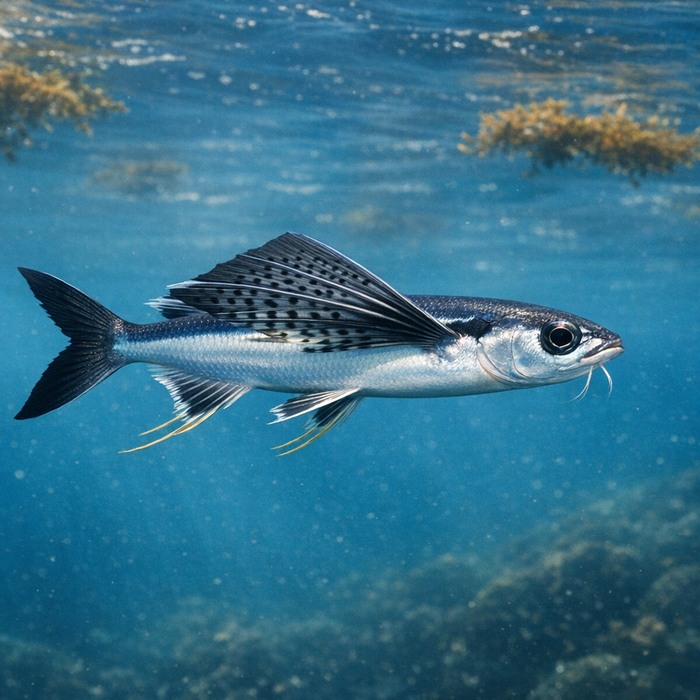
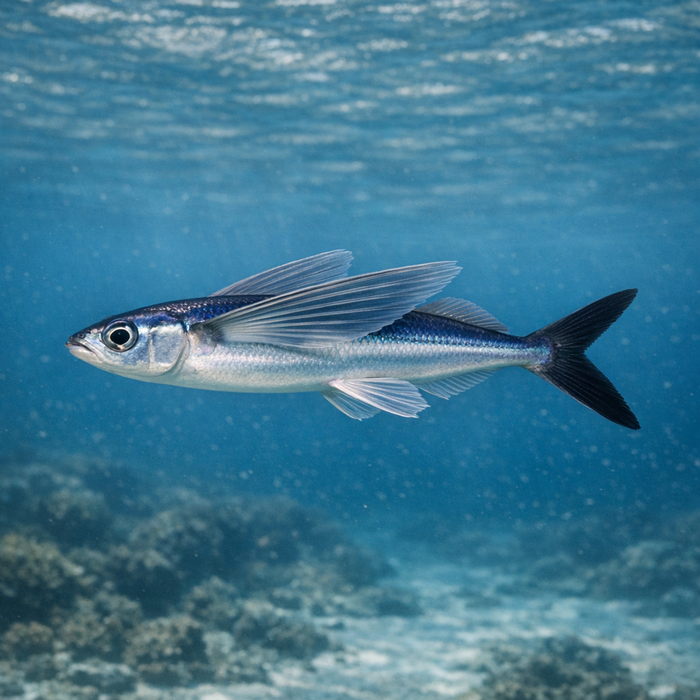
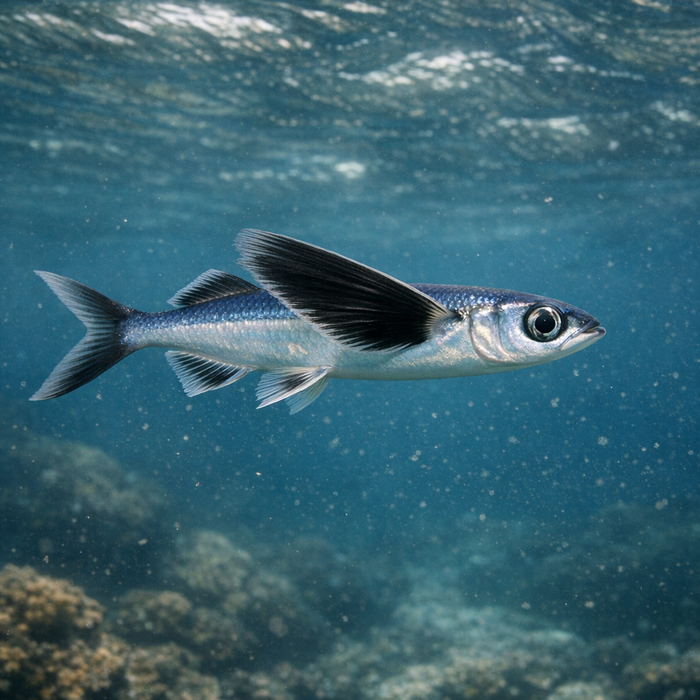
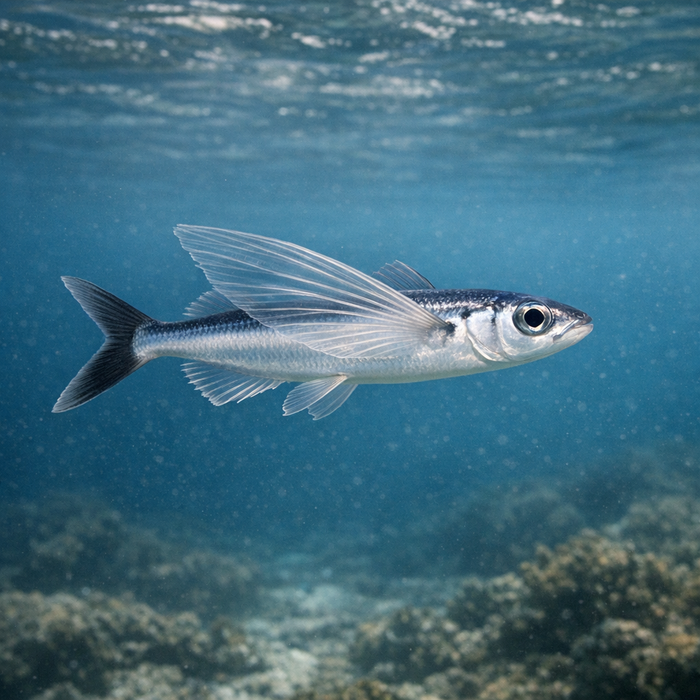
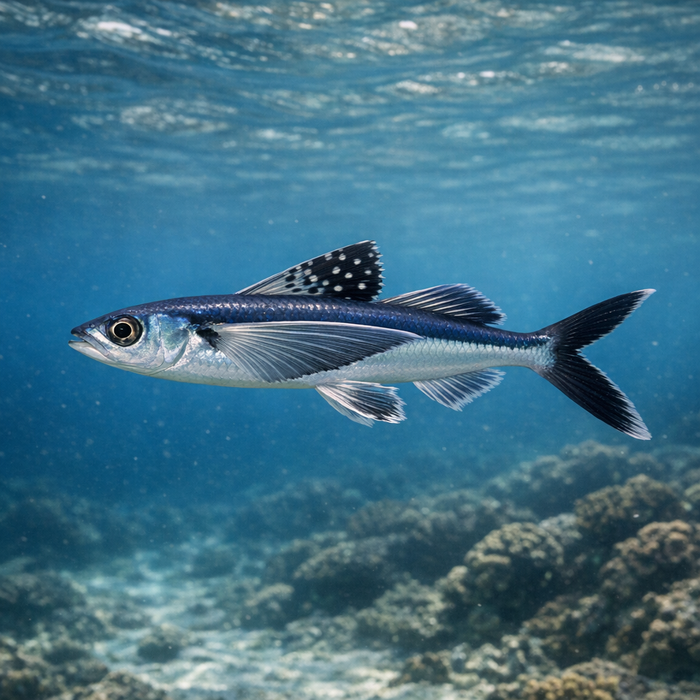
Fourwing Flyingfish (Hirundichthys affinis): Tiny Rocket With Real Air TimeIntroductionYou don't need to squint to spot the fourwing flyingfish; you need to look up. When the sea goes dark and the boat lights click on, these little torpedoes launch like bottle rockets, spreading two sets of oversized fins and gliding absurd distances above the chop. Anglers meet them as surprise deck landings, irresistible bait, or just mesmerizing bluewater acrobats. However you cross paths, the fourwing flyingfish delivers one of the ocean's best party tricks.What Makes the Fourwing flyingfish Unique?Plenty of flyingfish take to the air, but this species is a show-off. The fourwing flyingfish doesn't just rely on big pectoral fins. It throws open its enlarged pelvic fins too, creating four aerodynamic surfaces that add lift and stability. That four-fin spread is the signature silhouette. Before liftoff, it sprints at the surface using an elongated lower tail lobe, literally slapping the water to build speed, then vaults out, sometimes re-beating the tail while airborne to extend the glide. For anglers, that means the moment a predator or bright light appears, these fish can vanish into the air like stage magicians.Habitat & Global RangeThe fourwing flyingfish lives in the epipelagic zone, the sunlit skin of warm oceans. Think slicks, weedlines, rips, and cobalt highways where plankton concentrates and life stacks up. You'll see them near sargassum mats and tide lines, especially on calm nights when lights pull plankton and everything chasing it. They roam the tropical and subtropical Atlantic on both sides, from Caribbean passages and the Florida Straits to the Canary Current and West African bluewater. If you want a quick snapshot of Fourwing flyingfish habitat, picture open ocean with floating structure and moving water-classic pelagic setup.Behavior & TemperamentThese fish are built for panic escapes and constant motion. Schooling near the surface, they cruise in short bursts, then scatter skyward at the first bad vibe: mahi, tuna, or a curious transom light. The fourwing flyingfish is a plankton grazer with a sprinter's heart, snatching tiny crustaceans and then absolutely refusing to hang around. They're not brawlers on the line; they're bait-sized and delicate. But their agility makes them slippery customers to hook on purpose. Most anglers take them with sabiki rigs or dip nets at night, using lights to concentrate the action. If you're collecting Fourwing flyingfish facts for your next offshore run, remember this one: light equals life equals flyingfish.Ecological ImportanceThe fourwing flyingfish plays a vital middle role in bluewater food webs. It converts clouds of zooplankton into bite-size protein packets that fuel mahi, billfish, tunas, and near everything else with teeth and speed. Their eggs use sticky filaments to cling to floating debris and seaweed, turning sargassum mats into nurseries that also shelter half the open ocean's freeloaders. Wherever you find a steady stream of gliding bait, you can bet predators are setting the table. For billfish captains, a burst of flyingfish is both a show and a clue that the spread is in the right place.Conservation & Environmental PressuresGood news first: the fourwing flyingfish is not currently a conservation headline, and it's broadly classed as Least Concern. Still, epipelagic life is chained to ocean health. Sargassum dynamics, water temperature, and currents dictate everything from food availability to where eggs can stick and hatch. Plastic and lost gear are double trouble-entanglement hazards and fake habitat that fouls spawning. Nighttime light pollution offshore can also shuffle natural behavior. They're not heavily targeted commercially in most places, but any species welded to the ocean's surface layer is feeling climate's hand on the thermostat.The FishyAF TakeThe fourwing flyingfish is what happens when nature builds a baitfish with a pilot's license. For anglers, it's half entertainment, half utility. Want live candy for mahi? Flip on the lights, rig tiny sabikis, and keep a soft-mesh dip net handy. Expect more finesse than fight and more laughs than glory. No one brags about a personal best fourwing, but nobody forgets a midnight barrage of gliders smacking the cockpit. If you're chasing pelagic predators, learning the rhythms of these little aviators is sneaky-powerful intel. Where they're thick, the food chain is awake. And when they take off at your bow, you're not spooking bait-you're watching the ocean's panic button in real time.