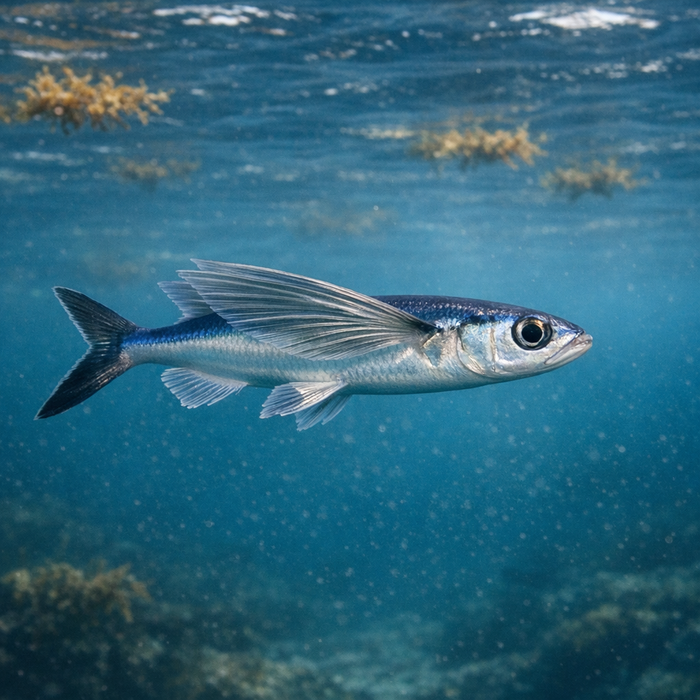
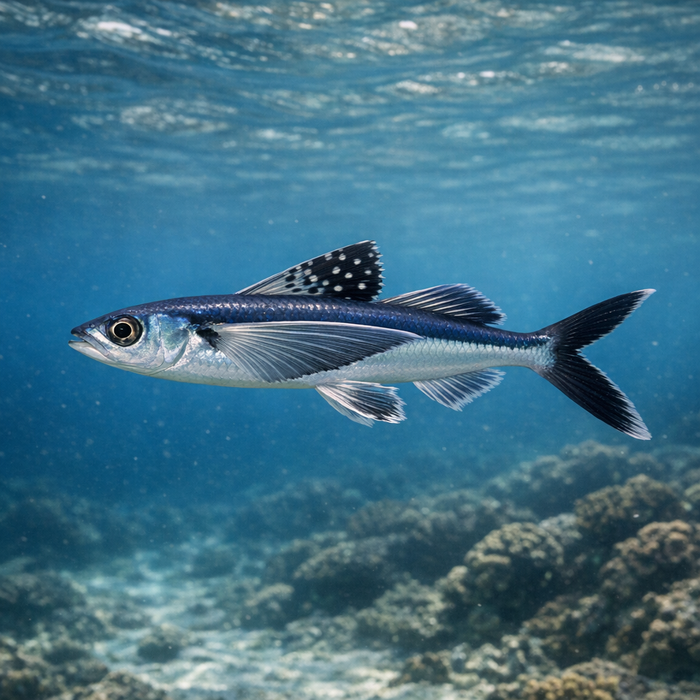
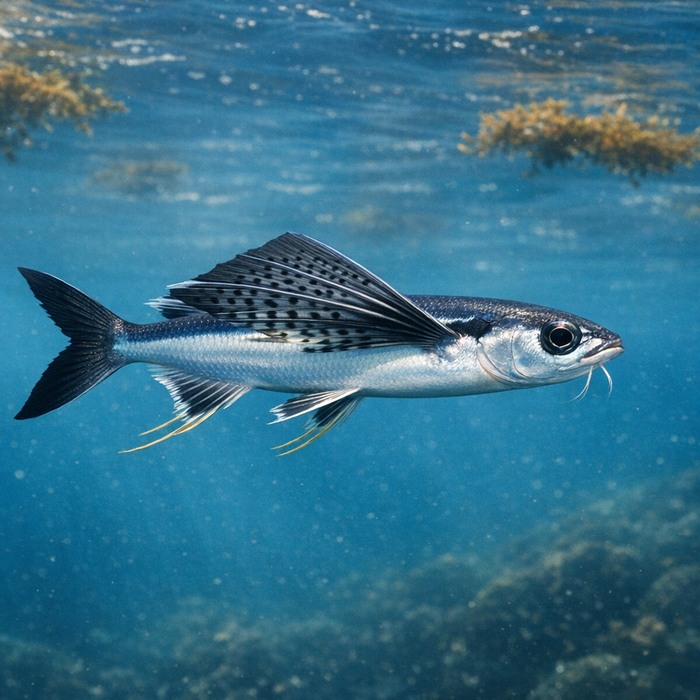
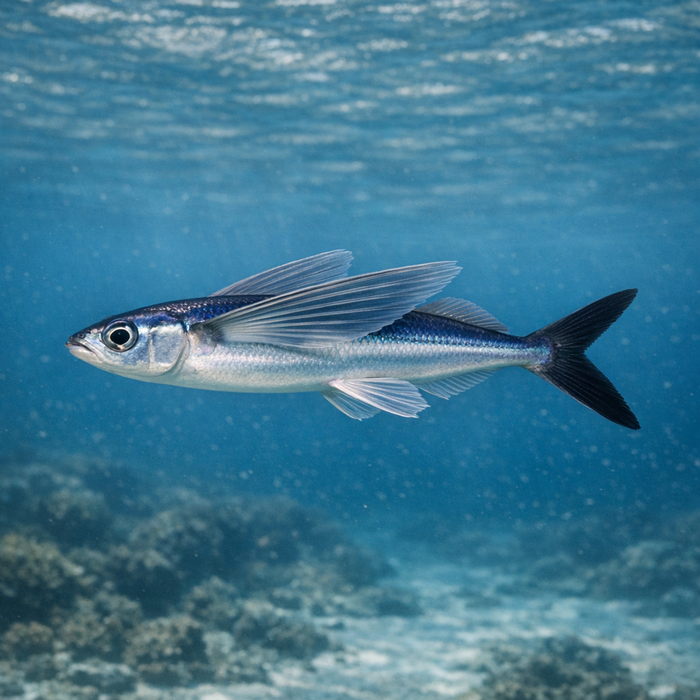
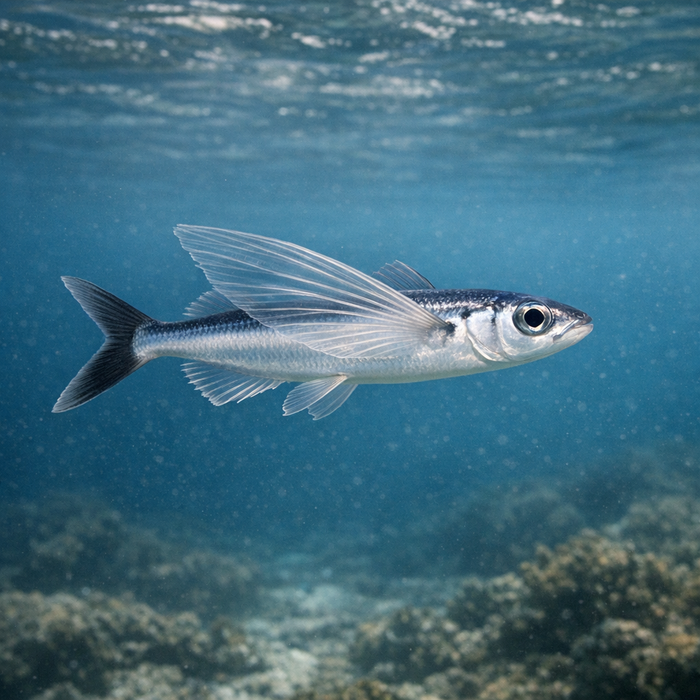
Atlantic Blackwing Flyingfish (Hirundichthys volador): A Bold, Memorable Hook LineIntroductionThe Atlantic blackwing flyingfish is that midnight torpedo you barely see until it cartwheels out of the chop and glides past your bow lights. It's built for speed, skimming, and not getting eaten. Anglers rarely target it, yet every offshore crew knows the silhouette and the splash. This is the hypermobile, winged snack powering half the bluewater food web, and it's sneakier than you think.What Makes the Atlantic blackwing flyingfish Unique?Start with the namesake wings. Black-edged pectorals unfold into legit airfoils that throw serious shade under moonlight, a stealth trick that helps the fish vanish from predators staring up from the dark. The long lower tail lobe works like a water propeller, hammering the surface for acceleration and quick relaunches. When conditions line up, the Atlantic blackwing flyingfish can chain multiple glides, banking across swells like a paper airplane with an attitude. Add in schooling instincts and reflexes set to twitch, and you've got a fish that makes a living by almost never being where jaws expect.Habitat & Global RangeThink warm blue water, not murky shore breaks. The Atlantic blackwing flyingfish lives in the upper few meters of tropical and subtropical Atlantic oceans, haunting current edges, Sargassum mats, and pressure lines where food concentrates. Weed lines are floating condos for this species: shade, cover, and a buffet of zooplankton and microcrustaceans. You'll bump into them along Gulf Stream rips, across Caribbean passages, near oceanic islands, and along eastern Atlantic upwelling zones. If you're collecting Atlantic blackwing flyingfish facts for planning, start with the weed lines and any stretch of calm, glassy surface at night.Behavior & TemperamentThis fish's baseline setting is "skittish." It schools tight, reacts faster than your eyes track, and treats the surface like another dimension to escape into. At night it's lights-out easy to attract with high-output LEDs, but actually getting one to eat a hook is another story. Most anglers meet them as deck landings or incidental sabiki guests around pilchard chum. Fights are brief and splashy. The fish relies on its glide, not brute force. In daylight, any noise or bow wake sends the school popping like popcorn in every direction.Ecological ImportanceThe Atlantic blackwing flyingfish is premium fuel for everything sharp-toothed offshore. Mahi, tuna, wahoo, billfish, even big jacks cash in on its calories. That makes it a critical midlink in the pelagic chain, converting tiny plankton into rocket-protein predators can use. Its eggs cling to Sargassum by fine filaments, knitting the species to drifting habitats that also shelter countless juvenile fishes, crabs, and invertebrates. Follow the weeds and you'll trace the energy highway this species helps maintain.Conservation & Environmental PressuresOverall, this flyingfish fares better than many glamour species, but it's not bulletproof. Sargassum dynamics are changing with climate and nutrient shifts. Lose stable mats and you disrupt spawning and cover. Light pollution offshore can scramble behavior in ways we don't fully understand. Bycatch in small-mesh nets takes a bite too. While not typically overfished as a target, the Atlantic blackwing flyingfish is only as safe as the floating neighborhoods and currents it depends on.The FishyAF TakeAnglers love a show, and few fish deliver like the Atlantic blackwing flyingfish. It's the jump-scare cameo in every bluewater film you've ever lived. You won't brag about the fight, but you'll talk about the takeoff. If you're curious, bring lights, tiny sabikis, and unreasonable patience. Treat weed lines like runways, keep wakes quiet, and enjoy the aerial circus. For quick-hit Atlantic blackwing flyingfish habitat planning, remember two words: calm rips. This species is more than tuna candy; it's the spark plug that keeps offshore life buzzing.