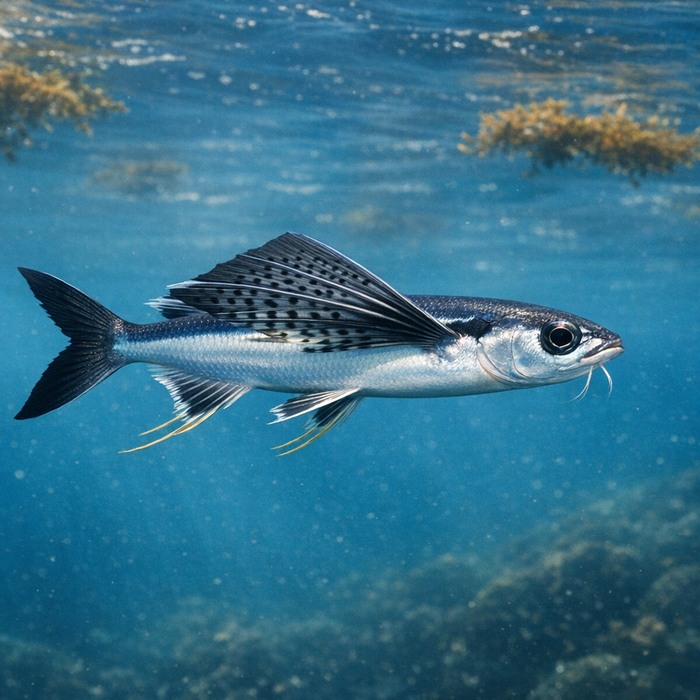
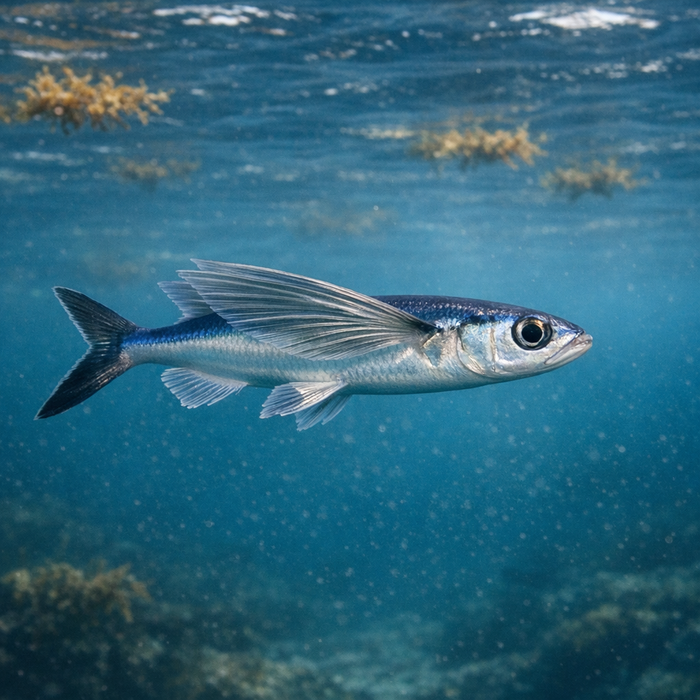
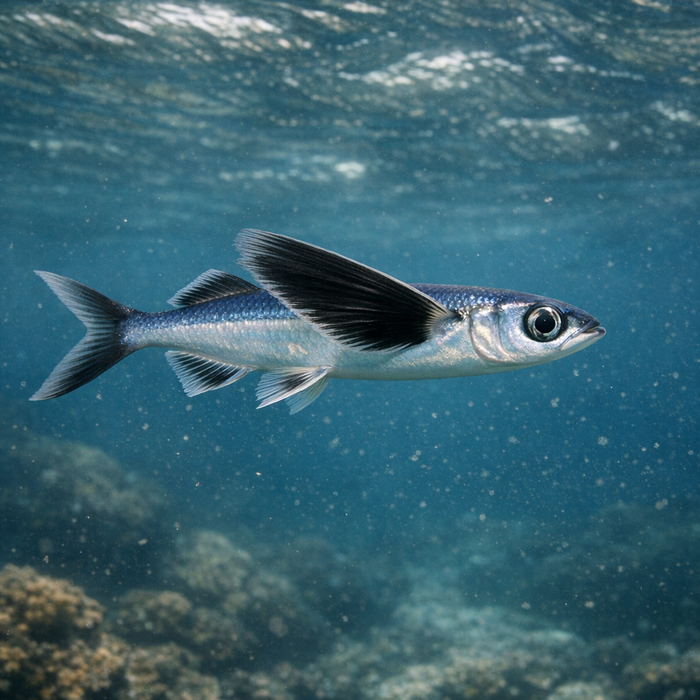
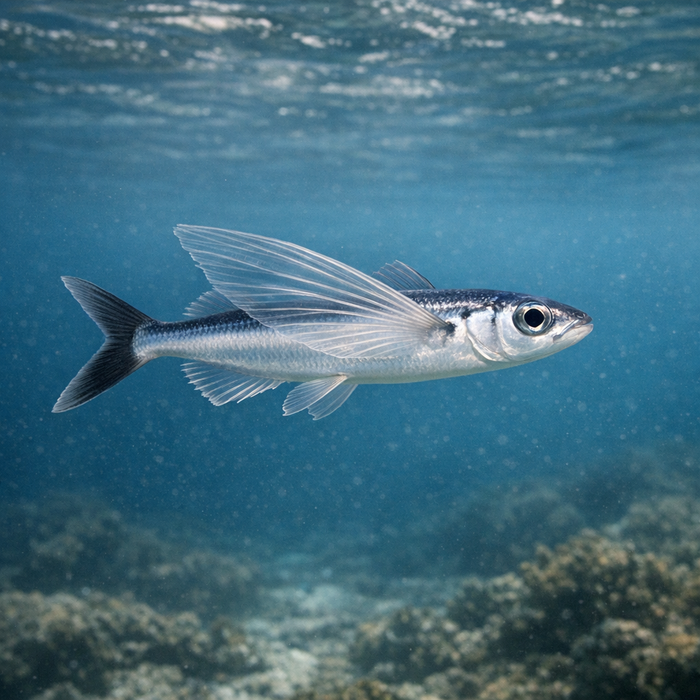
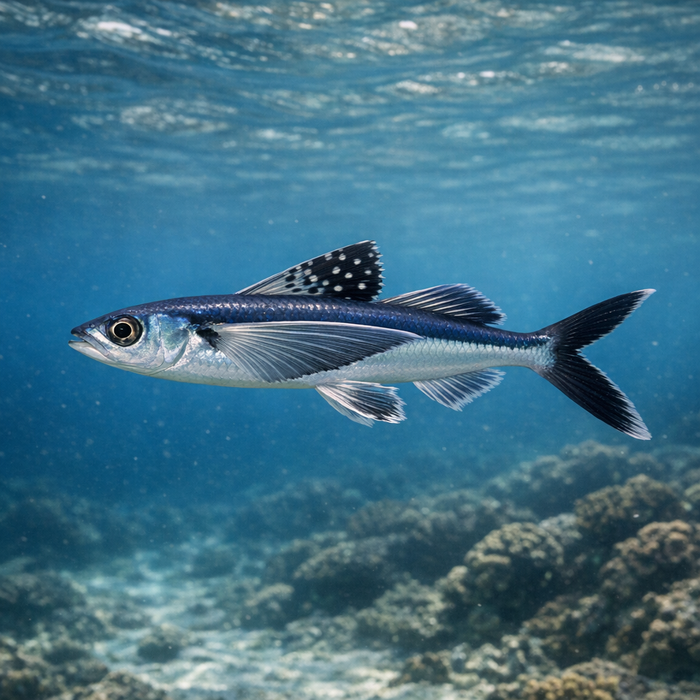
Tropical Two-wing Flyingfish (Exocoetus volitans): A Bold, Memorable Hook LineIntroductionMeet the ocean's original ultralight aircraft. The tropical two-wing flyingfish looks like a torpedo glued to a hang glider, bolting from the water and sailing hundreds of feet to dodge everything that wants to eat it. If you ply bluewater, you've watched these little stunt pilots shoot from a wave face, flash chrome, and vanish into the spray. Consider this your quick-start manual for tropical two-wing flyingfish facts and why this species matters to anglers.What Makes the Tropical two-wing flyingfish Unique?Not all flyingfishes are built the same. Exocoetus volitans is the classic two-winger: the pectoral fins are the sails, the pelvic fins stay small and don't become second wings. That sets it apart from four-wing species that look like airborne kites. Its tail is tweaked too, with a longer lower lobe acting like a water paddle to boost into flight and even tap the surface to re-launch mid-glide. Add a hard little snout that cuts on takeoff, and you've got a surface specialist engineered for speed, lift, and escape artistry.Habitat & Global RangeThe tropical two-wing flyingfish is a citizen of blue water. Think clear, warm, sunlit ocean near the top few meters, especially along weedlines, rips, and convergence zones where plankton stacks up. Sargassum mats act like floating highways: food concentrates, predators patrol, and flyingfish stay locked and loaded near the surface. It's circumtropical, so whether you're off Barbados, Hawaii, the Azores, or Panama, the same rules of tropical two-wing flyingfish habitat apply: warm water, open sky, and a whole lot of runway.Behavior & TemperamentSkittish? Absolutely. This species survives by going airborne at the first hint of trouble. Schools burst from the water in rolling waves as predators sweep through. At night, they're shameless light-chasers, stacking under boat lights where tiny crustaceans drift. The tropical two-wing flyingfish is quick to spook under moonlit slicks, but it also makes mistakes around glow and chum that bring micro-plankton and glass minnows tight. They're not bruisers; hooked fish dart and jink more than slug it out. Hook-sets can pull free thanks to soft mouths, making calm hands and tiny hooks your best friends.Ecological ImportanceIf pelagic predators were a sports team, flyingfish would be their power snacks. Mahi, tunas, marlin, wahoo, and even frigatebirds depend on these little gliders as high-octane fuel. The tropical two-wing flyingfish links plankton production to apex predators, moving energy up the ladder at warp speed. It also helps concentrate predator action along current seams and weedlines, giving anglers visual cues: if flyingfish are skittering, something mean is shopping below. In short, they're baitfish royalty that choreograph half the bluewater show.Conservation & Environmental PressuresGood news first: the species is generally considered Least Concern. Still, "open ocean" doesn't mean "bulletproof." Sargassum dynamics can shift with temperature and nutrient changes, and plastic debris increasingly competes with natural flotsam the fish use for egg attachment. Light pollution in busy shipping corridors may alter nocturnal behavior. And while targeted commercial pressure is limited in many places, regional harvests for food and bait do exist. Keep an eye on local conditions if your fishery relies on healthy weedlines and stable temperature bands.The FishyAF TakeThe tropical two-wing flyingfish is the plot twist that makes bluewater fishing addictive. It's not your hero fish, but it tells you exactly where the heroes are. Watch the rips, scan the Sargassum, and track the glides. When they're showering, everything with teeth is fired up. As a target, they're quirky fun on micro gear around lights, perfect for fueling a dawn tuna run or just geeking out on ultralight bites. Tropical two-wing flyingfish facts aren't just trivia; they're intel. Read the gliders, and you'll read the ocean.