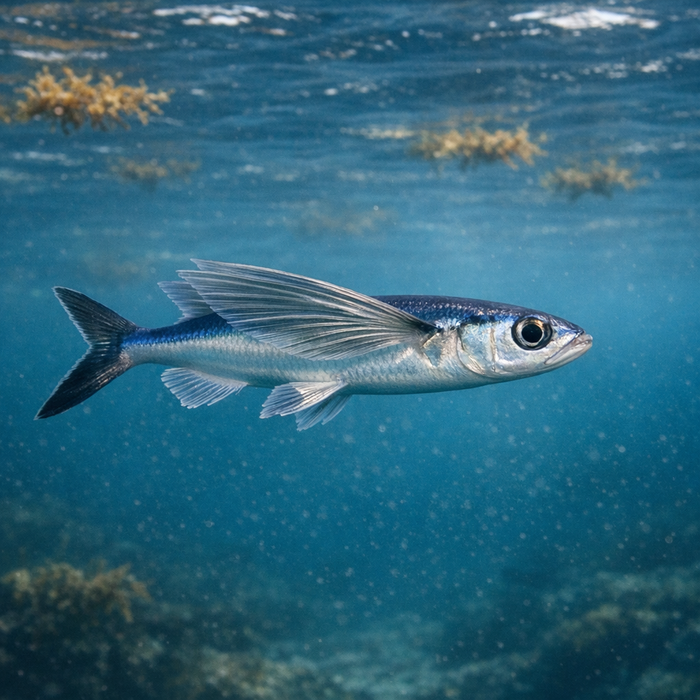
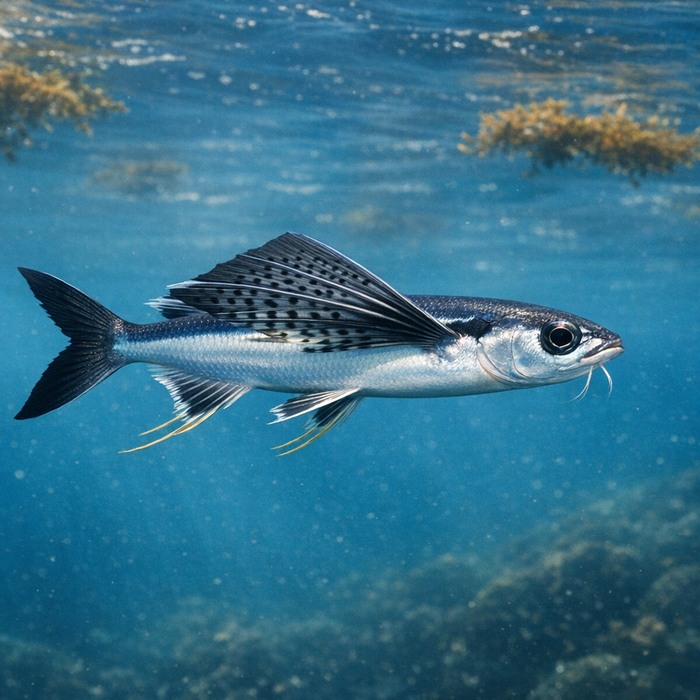
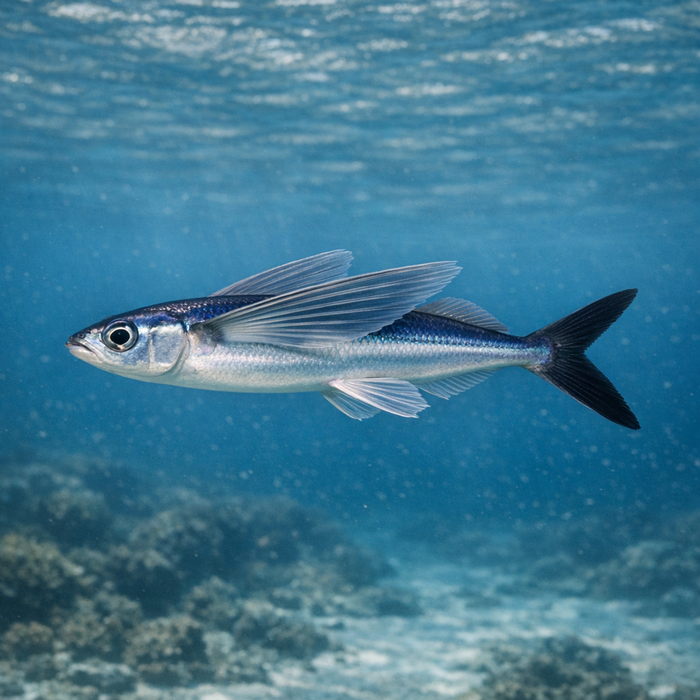
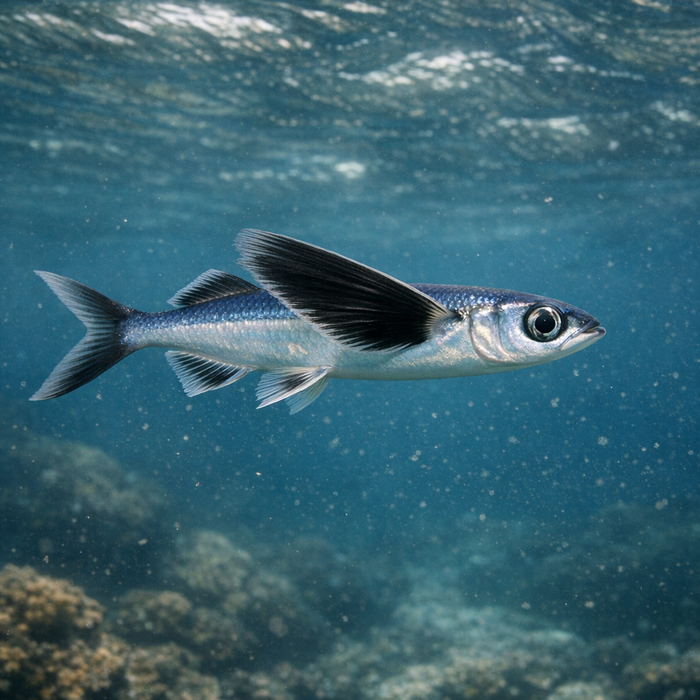
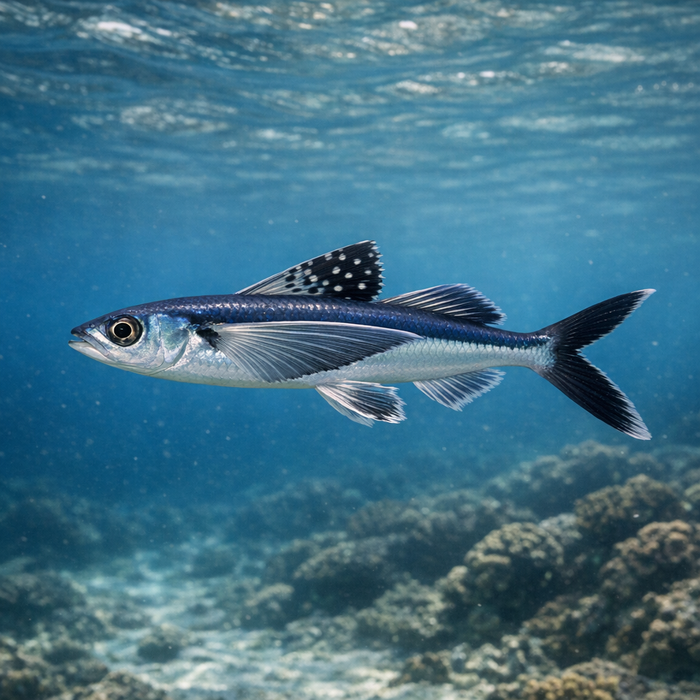
Clearwing Flyingfish (Cypselurus comatus): A Bold, Memorable Hook LineIntroductionThe clearwing flyingfish is the ocean's tiny stunt plane, built for speed, launch, and disappear. Blink and it's airborne. Blink again and it's gone, just a sliver of silver where a splash should be. This is a pelagic drifter with a fighter jet's takeoff game and the stealth of a ghost. For anglers who fish the blue water at night, the clearwing flyingfish shows up like a neon rumor under the lights, then rockets free the second you look twice.What Makes the Clearwing flyingfish Unique?Two things: those almost invisible pectoral fins and its runway-grade takeoffs. The clearwing flyingfish gets its name from wings so transparent they look like cellophane when held up to the sun. That transparency isn't just a party trick; it makes the fish harder to track when it leaves the water and glides from predators. Add a lengthened lower tail lobe that smacks the surface like a paddle, and you've got a micro-sized engine to extend airborne sprints. Among flyingfish, Cypselurus comatus is the slick, minimalist model: clean lines, lightweight wings, and a habit of meeting deck lights at warp speed.Habitat & Global RangeThis fish rides warm, open water highways. Think bluewater edges, current lines, and island drop-offs across the Indo-Pacific. You'll see the clearwing flyingfish near the surface, often in small packs steering along weeds, floating debris, and the thin places where currents collide. At night, lights draw them tight. During the day, they're a flash at the bow, a split-second scatter on the horizon, and a favorite snack for everything with teeth, beak, or a decent glide of its own. If you're scanning for Clearwing flyingfish habitat, look for life signs: flyingfish erupting, birds dipping, bait rippling, and a water color that says offshore.Behavior & TemperamentSkittish is an understatement. The clearwing flyingfish is wired to launch at the first hint of trouble. But it's also curious around steady light. That's why midnight transoms become impromptu aquariums, with clearwings circling just outside the glare, then zipping in and out like thieves. They school loose, tighten under pressure, and explode when a predator charges. The tail-powered skip-on-water trick isn't myth; it's how they tack on extra yards of glide. As fighters, they're not bruisers. Hook one on a micro rig and expect fast darts, short runs, and the classic "oh hey, flyingfish" tug.Ecological ImportanceThe clearwing flyingfish bridges the gap between planktonic life and apex predators. It eats tiny crustaceans and small prey, then moonlights as fuel for tuna, mahi, wahoo, billfish, and bird brigades. That's real ocean economics: airborne bait that keeps the food web humming from surface slicks to sky patrols. When you see clearwing flyingfish around your spread, it's a good sign the grocery store is open for pelagic shoppers. If you're studying Clearwing flyingfish facts, remember this: their presence often signals a healthy epipelagic scene.Conservation & Environmental PressuresNo smoking-gun crisis is stamped on Cypselurus comatus, but the usual offshore suspects lurk. Climate shifts can move warm-water corridors and jostle plankton communities. Light pollution around ports and fleets may disrupt natural patterns. Ghost gear and plastics turn floating shelter into hazards. And while commercial pressure on this particular species isn't headline material, any heavy harvest of flyingfishes in a region chips away at the buffet that powers offshore icons. As with many small pelagics, the story isn't alarms blaring; it's a quiet reminder that open-ocean systems are only as strong as their tiniest links.The FishyAF TakeThe clearwing flyingfish is the ocean's best magic trick: up, out, gone. For anglers, it's not a target so much as a signpost. Spot them and your odds for real bruisers go up. Want an oddball notch on the belt? Bring tiny sabikis, soft light, and patience. The clearwing flyingfish won't brawl, but on ultralight gear it's a brag-worthy micro. Beyond the hook, they're pure vibe: proof that evolution loves overkill and style. Next time a silvery blur helicopters past your bow, tip the cap. That little jet with see-through wings just wrote your scouting report for the day.