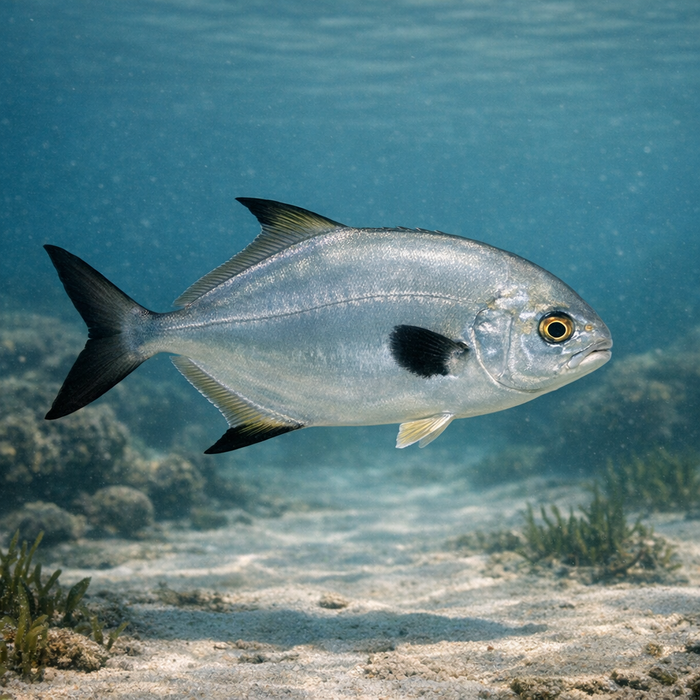
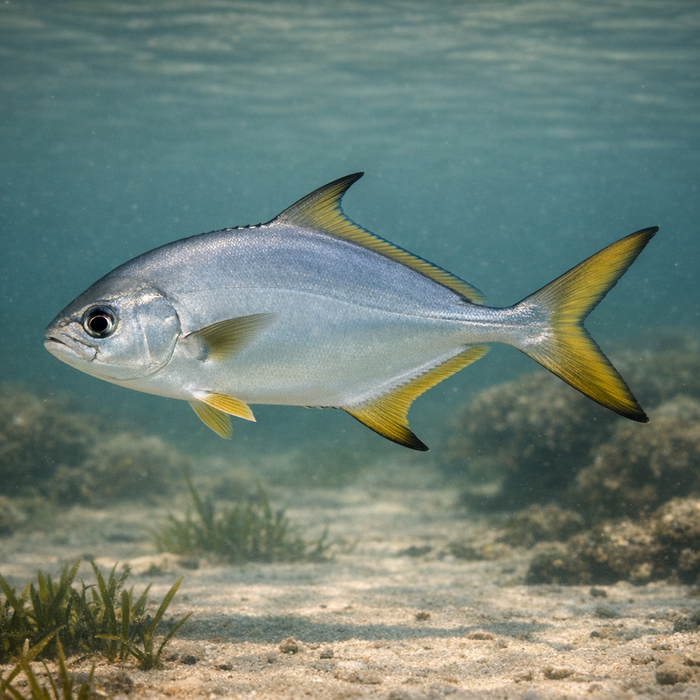
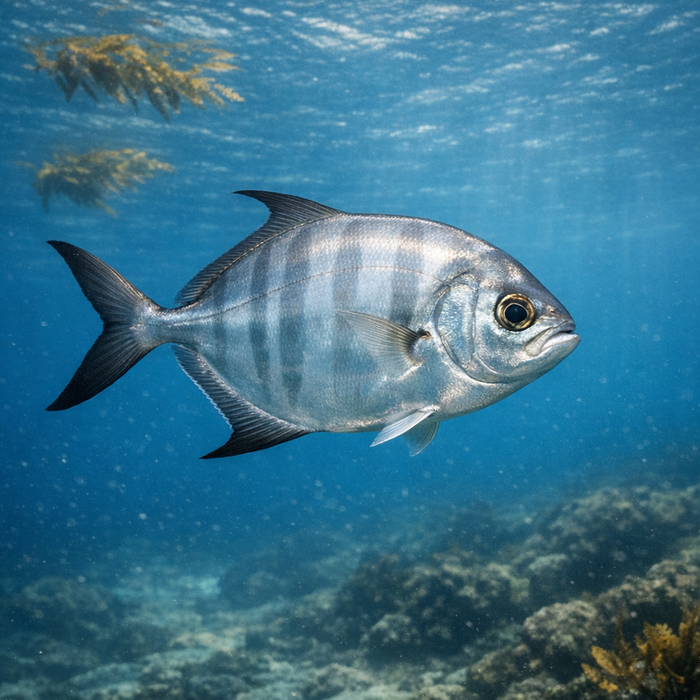
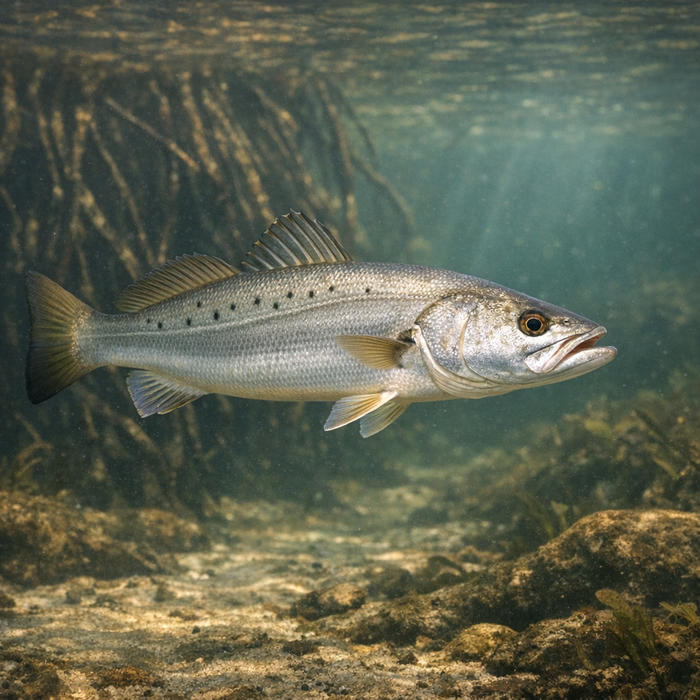
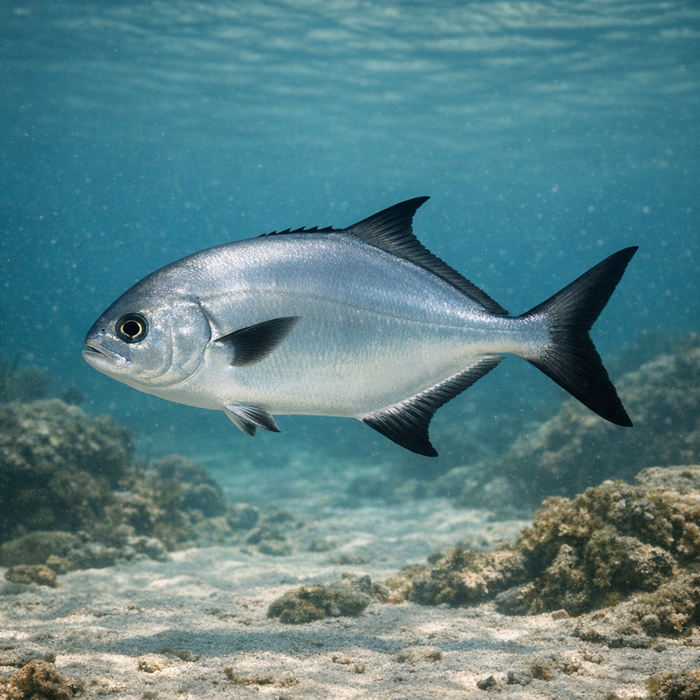
Pacific Tripletail (Lobotes pacifica): The leaf that bites backIntroductionThe Pacific tripletail is the fish that pretends to be trash and then wrecks your bait. One second it's a mottled "leaf" sunning under a buoy; the next it's a bulldog with fins. If you like sight fishing, weird behavior, and slab-sided power, this species is your jam. Consider this your quick hit of Pacific tripletail facts delivered without the biology lecture hangover.What Makes the Pacific tripletail Unique?Start with the silhouette. Those oversized, rounded dorsal and anal fins line up with the tail to create the "tripletail" profile. It looks like a pancake with fins, but accelerates like a kicked car door. Then there's the act: Pacific tripletail float on their sides near debris, mimicking a dead leaf to sucker in prey. They color-shift from bronze to almost black in seconds, flipping camouflage like a mood ring. Add their habit of loitering around anything that casts shade - buoys, logs, sea turtles, trash lines - and you've got a fish perfectly tuned to ambush in lazy-looking water.Habitat & Global RangePacific tripletail habitat is textbook "structure in the sunshine." They haunt calm bays, mangrove edges, harbor buoys, weed lines, and random flotsam from Southern California during warm pushes, through Mexico and Central America, down to South America's west coast. They often hold in the top few feet of the water column, sipping shade and opportunity. Offshore, they'll trail floating debris or current edges where bait gathers. They're warm-water oriented, so tropical and subtropical zones are prime, but a strong warm season can stretch their range north.Behavior & TemperamentDespite the lazy drift, they're calculating. Pacific tripletail tilt, hover, and slide with the chop, letting prey come to them. They're sight feeders with a high-placed eye and a surgical strike. The bite is often subtle followed by a sledgehammer head shake and short, dirty runs straight for whatever is closest to wrap you up. They're solitary or loosely bunched rather than schooling tight, and when the sun is high you can often spot them by that telltale side-float beside shade lines.Ecological ImportanceTripletail convert floating junk and natural flotsam into hunting platforms, connecting open-water bait with nearshore predators. Juveniles use debris as shelter, boosting survival in a risky neighborhood. As mid-level predators, they put pressure on small fish and crustaceans while serving as groceries for bigger hunters. They're also a barometer for marine debris dynamics: more floating stuff means more accidental habitat, with all the mixed feelings that brings.Conservation & Environmental PressuresThe species is generally considered stable, but it's wrapped up in the same issues hitting coastal fish everywhere: habitat loss in mangroves and estuaries, warming trends that shuffle distribution, and the ever-growing buffet of floating trash. Bycatch in nets and unreported catch can fuzz the numbers. The upside? Pacific tripletail aren't a high-pressure glamour target across most of their range, so heavy localized depletion is less common than with marquee inshore species.The FishyAF TakeThe Pacific tripletail is a confidence test. Can you spot what looks like a drifting leaf, believe in it, and make the perfect cast? Do that, and you'll watch a pancake-shaped ambusher turn into a street fighter. It's a thinking person's fish, heavy on observation and precision rather than brute-force gear. When you want a break from trolling and a dose of weird, roll the shoreline, scan the buoys, and trust your eyes. The leaf might be alive, and if it is, it's about to ruin a shrimp in spectacular fashion.