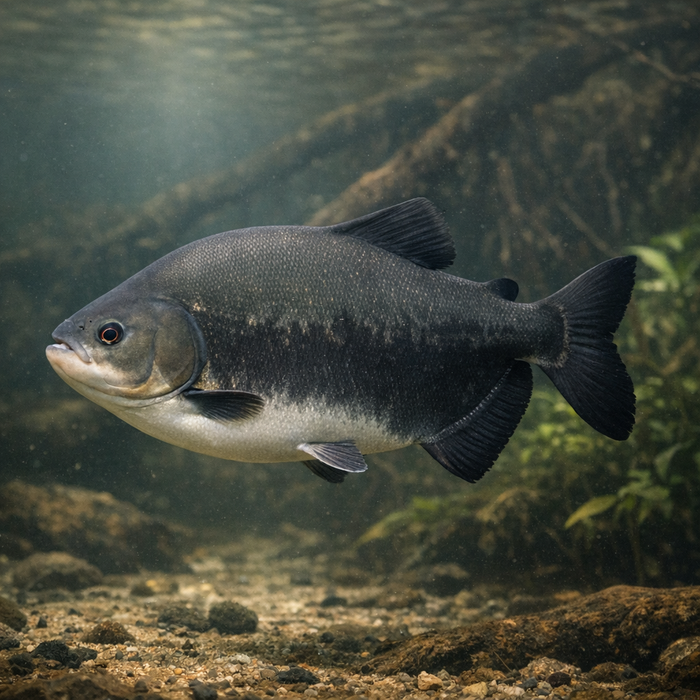
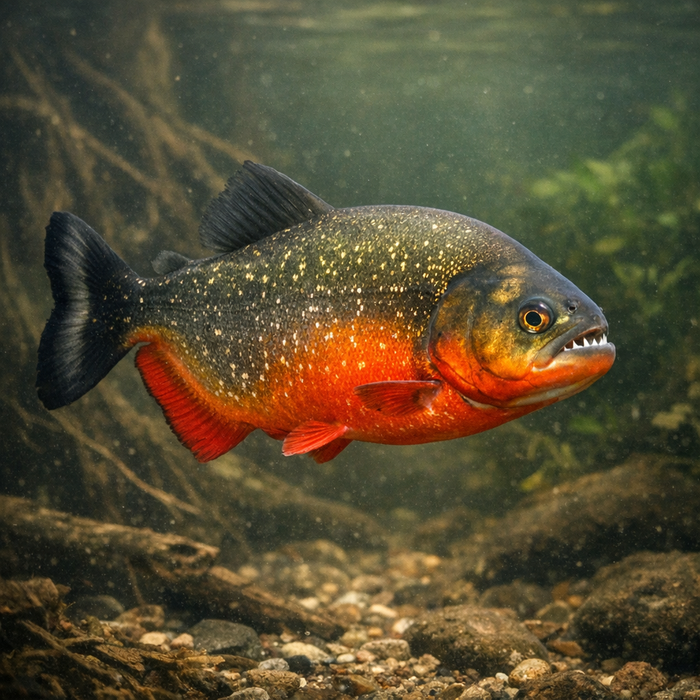
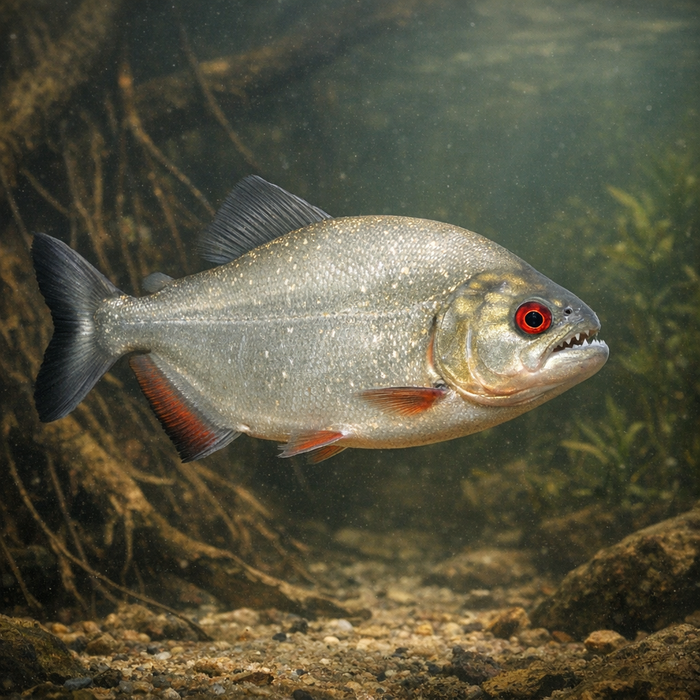
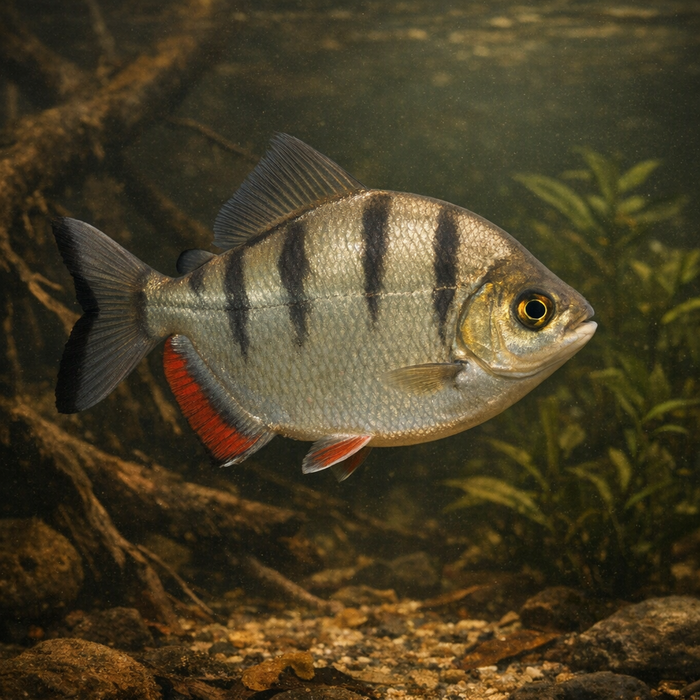
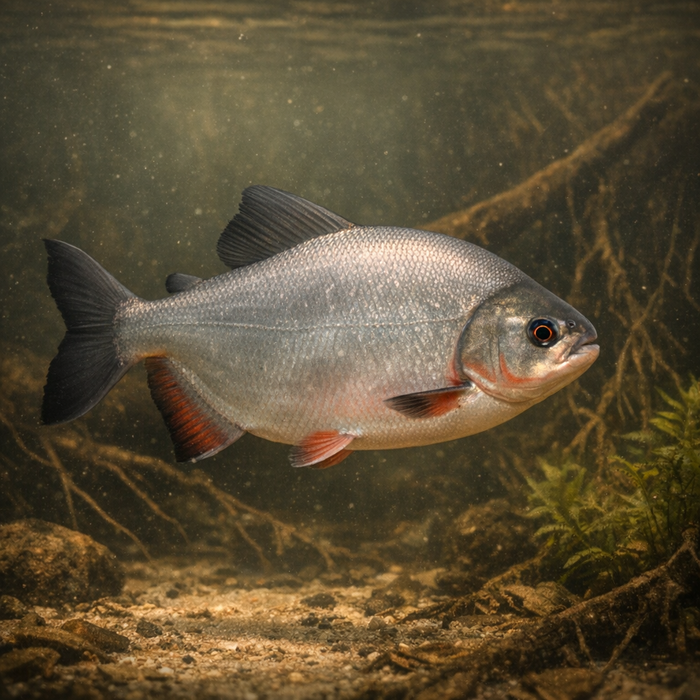
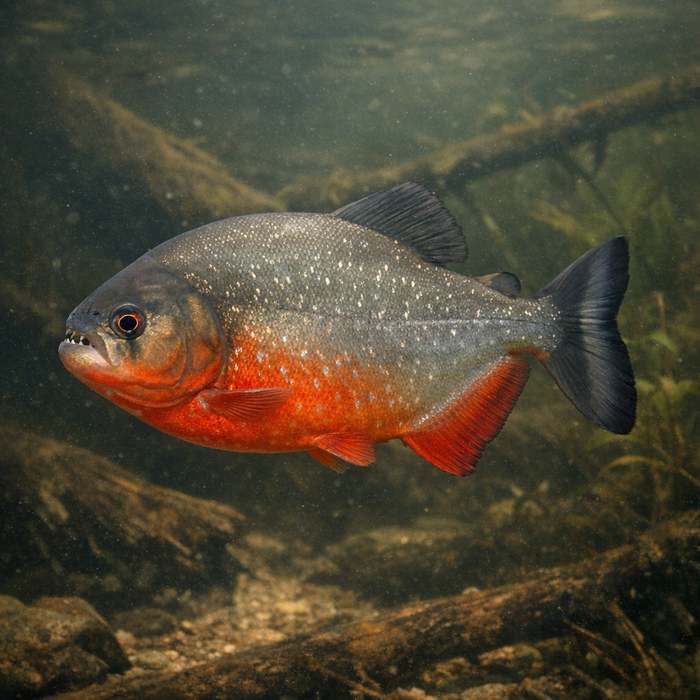
Pacu (Piaractus mesopotamicus): A Bold, Memorable Hook LineIntroductionThe pacu is the river's vegetarian bruiser: deep-bodied, square-toothed, and absolutely capable of wrecking light tackle. If you're picturing a piranha's chill cousin who raids fruit trees, you're close. This fish is built for floodplains, long runs, and crunching seeds, and it will happily humble anyone who underestimates it. If you came here looking for Pacu facts or curious about Pacu habitat, you're in good company.What Makes the Pacu Unique?Two things jump off the page. First, those uncanny humanlike teeth, evolved not to bite swimmers but to mulch nuts, seeds, and hard fruit. They're broad and molar-like, backed by serious jaw muscles and extra grinding gear in the throat. Second, the body plan: tall, slabby, and muscular, with a big tail that turns every hook-up into a sideways freight train. Unlike its sharper-toothed cousins, the pacu leans omnivore with a heavy fruit-and-seed bias, which is exactly why it stacks under overhanging trees like kids under a piñata.Habitat & Global RangeThis species is native to the Paraguay-Paraná basin and the sprawling Pantanal wetlands. Think warm, turbid rivers, seasonally flooded backwaters, and oxbow lakes with miles of gallery forest. Water levels rise and fall dramatically, and the pacu moves with that pulse-running channels when the rivers rise, then spreading into lagoons to raid seasonal fruit. Outside South America, it shows up in farms and a handful of reservoirs, sometimes via stockings or escapees, but the classic pacu experience is South American floodplain water with trees literally feeding the fish.Behavior & TemperamentPacu aren't stupid. They're wary in clear water, twitchy around clanks and splashes, and they inspect baits like a picky chef. But when the buffet opens-rains push fruit off branches or seeds drift along current seams-these fish switch to hoover mode. Schools and loose aggregations form under shade, along cutbanks, and near snags. Hook up and expect violent side runs, broad-shouldered surges, and a relentless tug-of-war. They're not acrobats; they're bulldozers with fins.Ecological ImportanceThe pacu is a seed ferry. It ingests fruits whole, hauls them miles, and drops viable seeds wherever nature needs a gardener. That makes it a keystone link between forest and river. Its migrations synchronize with the flood pulse, moving nutrients and genetic material through a huge landscape. When pacu numbers slide, the forest feels it. Fewer seeds get dispersed, fewer seedlings take root, and a feedback loop begins.Conservation & Environmental PressuresPressures are classic floodplain problems: altered flow from dams, deforestation along riverbanks, and intense netting during migrations. In some places, aquaculture hybrids blur the genetics of wild stocks. Regulations vary by country and even by state, and seasonal closures may target spawning runs. Healthy pacu water still exists, but it thrives where floodplains can breathe seasonally, forests touch water, and harvest is managed with a long view.The FishyAF TakeThe pacu is the most polite-looking bully you'll ever meet. It eats fruit. It plants trees. Then it rips 30 yards of line sideways and smiles at your frayed leader. If you want a freshwater fight with real culture-jungle soundtrack, muddy water, fruit smacks on the surface-put pacu on your list. Just remember: go quiet, go natural, watch the trees, and respect the flood pulse that built the stage. That's the Pacu habitat in a nutshell, and now you've got the Pacu facts to play it smart.