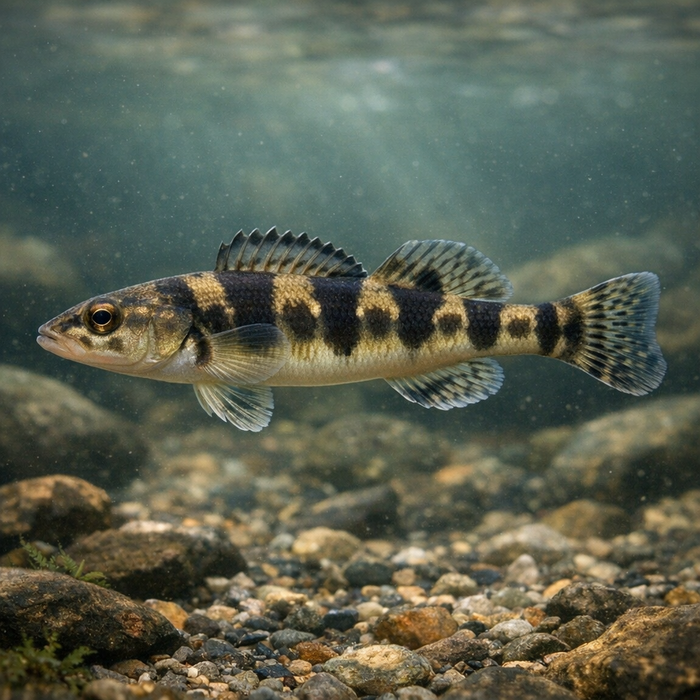
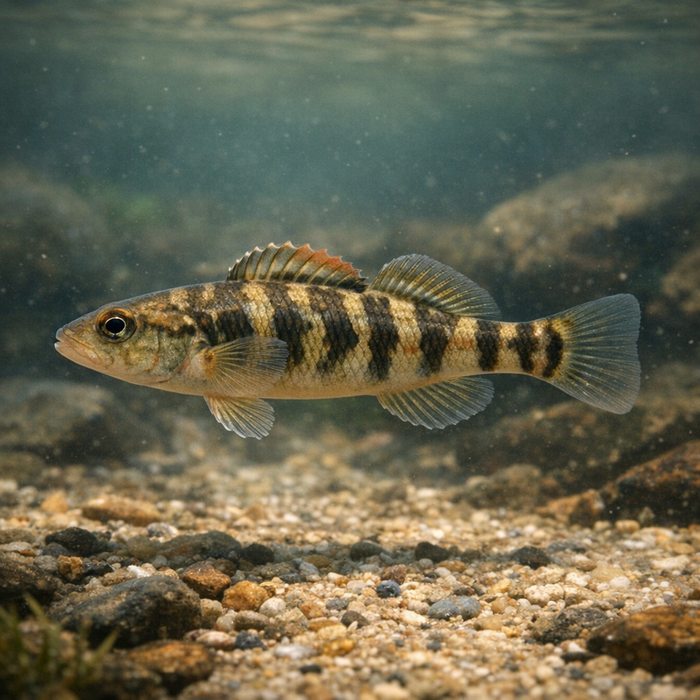
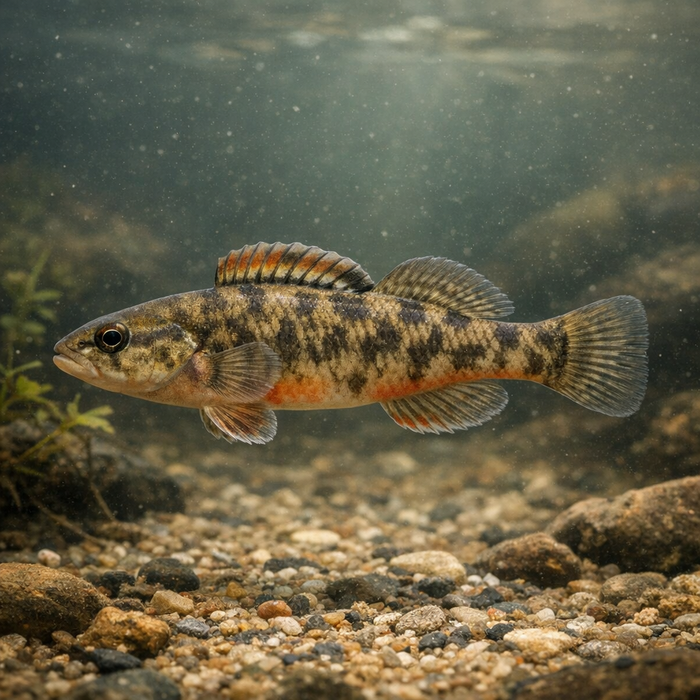
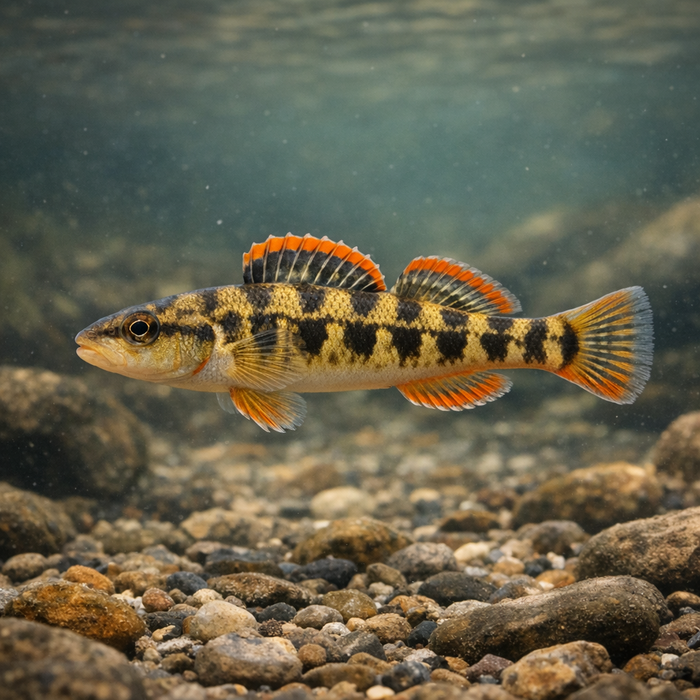
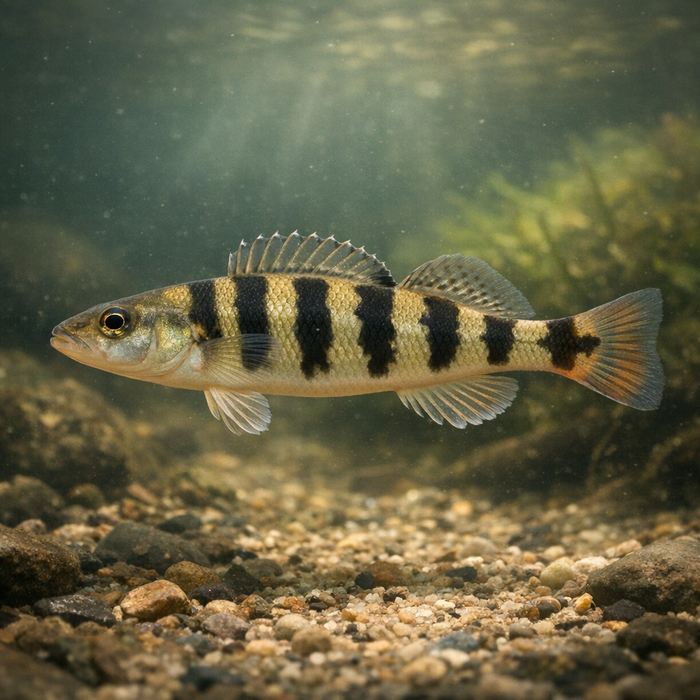
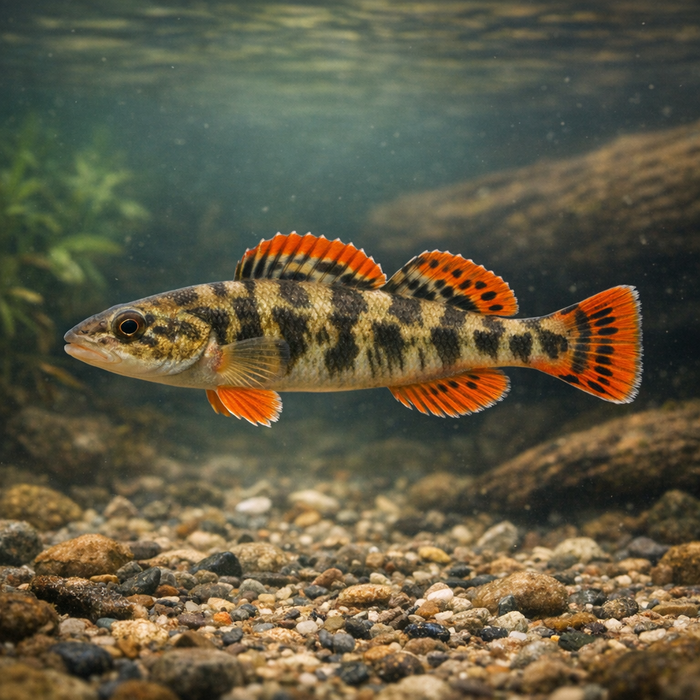
Pearl Darter (Percina aurora): A small fish with a big conservation storyIntroductionThe pearl darter might be pocket-sized, but it's carrying heavyweight status among river nerds and fish geeks. This is a stealthy sand-run specialist with a name that's practically a warning label: lose the river, lose the fish. If you're here for Pearl darter facts, buckle up. The fish is tiny, the stakes are big, and the story is very Mississippi.What Makes the Pearl darter Unique?Start with scale: the pearl darter is a legit microfish, topping out around three inches. It's a bottom rocket, built to lean into current and dart across sand like a skipping stone. Then there's the look: subtle iridescence, dusky patterning that sharpens during the spawn, and the classic darter posture, all business on the riverbed. Finally, rarity. The species name shows up in papers more than in tackle logs because Pearl darter habitat is pinpoint-clean, shifting sand and gentle runs below riffles-and the fish has vanished from parts of its historic footprint. This one's for the conservation set.Habitat & Global RangeShort range, long story. The pearl darter is a Pascagoula River drainage specialist, closely tied to small and medium rivers with clean sand and light gravel. Think current that nudges, not hammers; cover that's more about texture than boulders. Historically linked to the Pearl River, it's now a headline case for how sediment, pollution, and flow tweaks can shuffle an entire species off the map. If you're thinking Pearl darter habitat, imagine sandbars, gentle runs below riffles, and water that clears after rains without dumping silt into every nook.Behavior & TemperamentThis fish is a minimalist. No big migrations, no drama, just precise bottom hugging and quick bursts that look like teleports. Darters skip the swim bladder lifestyle, so they stay glued to the substrate, picking off micro-invertebrates with surgical timing. They spook easily, settle fast, and use structure-by-texture: subtle depressions, the lee of a stick, the edge seam of a sand patch. Spawning happens in spring when temperatures nudge into comfy territory; males darken up, energy spikes, and then it's back to the quiet business of staying alive in clear current.Ecological ImportanceThe pearl darter is a water-quality tattletale. You want a barometer for clean, stable sand-bed rivers? Here it is. Healthy populations mean sediment loads are reasonable, flows are seasonally honest, and the near-bottom invertebrate menu is humming. Lose any of those, and darters are among the first to fold. Their role won't headline a food-web poster, but as a mid-level insectivore, they cycle energy upward and serve as a quick-read indicator for the whole river community.Conservation & Environmental PressuresHere's the blunt part: the species is listed as Threatened, with shrinking, fragmented habitat. Fine sediments blanket sand runs after sloppy land use. Channelization and poorly timed withdrawals flatten seasonal flow pulses. Even "clear" water can be chemically noisy. Because the fish is small and site-faithful, local damage hits like a hammer. The bright spots are targeted protections, habitat designations, and watershed groups who know their sand from their silt. It's not a lost cause, but it is a tightrope.The FishyAF TakeThe pearl darter is proof that not every great fish throws wake or smokes drags. Some just demand we pay attention. If you're the kind of angler who cares about what makes rivers tick, this fish is your spirit animal. Invisible to most, essential to those who know, the pearl darter keeps the story honest: clean water, living sand, and a species that refuses to be anything but specific. Respect the rules, celebrate the rivers that still run right, and keep the conversations loud enough that this little fish never needs a eulogy.